
How Does a Telehealth Practice Do SEO Without a Physical Location? (Keyword Research + City Pages Before a Dollar of Ad Spend)
A virtual women’s health practice in Florida came to a strategy session wanting to talk about paid ads.
The founder — an OB-GYN still working hospital shifts almost three years into building her practice — got a different plan: launch the site now, do the keyword research, and build a city-page engine before spending a dollar on ads.
The reasoning fits any telehealth practice without a storefront: SEO “doesn’t cost us any more money at this time,” and patients still search with local intent even for virtual care.
Here’s the FAQ.
How does a telehealth practice do SEO without a physical location?
Build one landing-page template around your best keyword and programmatically localize it per city — because patients search locally even when care is virtual.
A brick-and-mortar clinic gets local SEO gravity from its Google Business Profile and address.
A telehealth practice has neither — but the patient in Orlando still types Orlando into the search bar.
The play from this call: create one excellent page targeting the top term, then replicate it city by city across the state you’re licensed in.
“It’ll be in all those different cities… I think it’ll be massively valuable because I don’t know anybody who’s really trying to do that.”
The competitive gap is real: most virtual practices market like national brands and lose every local search to whoever bothered to show up for it.
What keyword should my virtual practice actually target?
The one people actually type — which is usually not the one you’d guess.
For this practice: “online gynecologist,” not “virtual gynecologist.”
The keyword research on this call found that among all the variants — virtual gynecologist, virtual gynecology, online gynecology — “the most commonly searched term is online gynecologist.”
That single finding names the page template, the H1s, and the city-page pattern (“Online Gynecologist in [City]”).
Guessing wrong here means ranking for a phrase nobody uses.
Ten minutes of keyword research beats ten months of optimizing the wrong term.
It’s the same discipline that anchors all of our medical practice marketing work: find the words patients use, then build the asset around them.
Should I run paid ads or do SEO first for my new virtual practice?
SEO first.
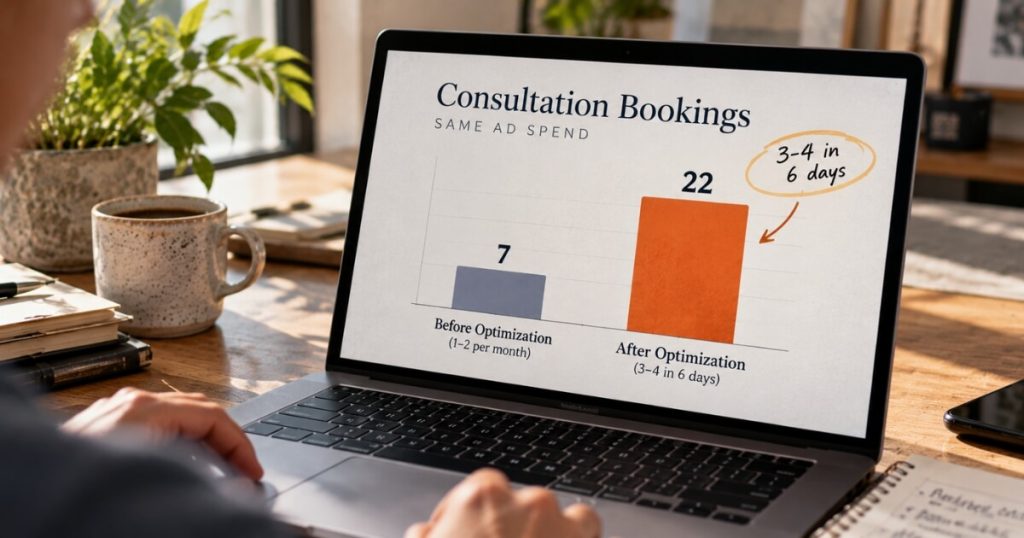
“Before ads… I would rather get the site live and get started on SEO. Blogging, posting, optimizing… that doesn’t cost us any more money at this time.”
The sequencing logic is financial, not ideological.
A young practice’s scarcest resource is cash, and ads consume cash the moment they start.
SEO consumes effort — which the founder can supply — and compounds instead of evaporating.
The rule from the call: revisit ads once “the revenue of the business pays for” them.
The ceiling on this approach is high: a regenerative practice we work with generated $309,590 in cash-pay revenue in 10 months from SEO alone — zero ad spend.
Organic isn’t the slow lane.
It’s the lane that doesn’t charge tolls.
Should I wait until my website is perfect to launch?
No.
This practice launched with three edits still pending.
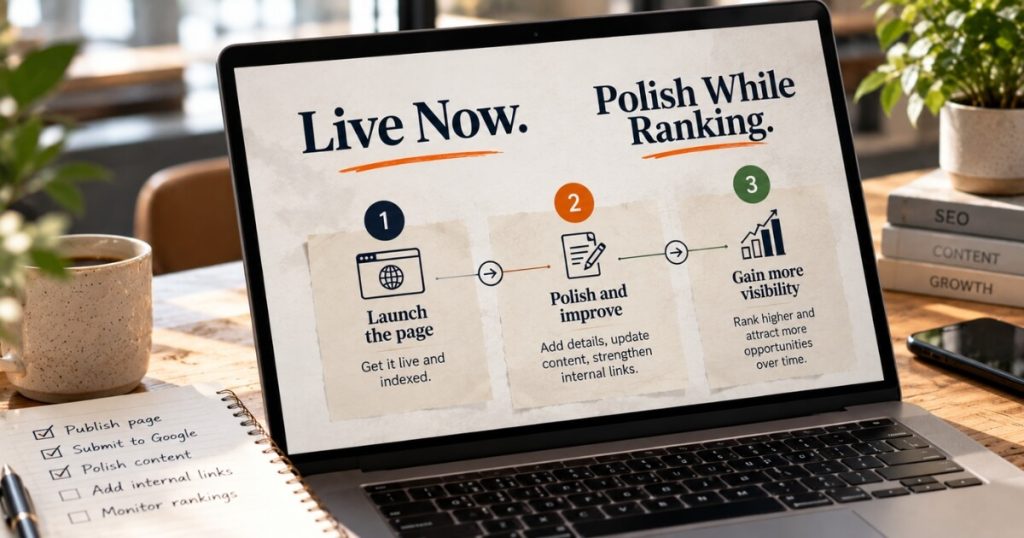
“I want to get it live and start working on getting traffic to it as soon as possible… We don’t just stop working on the site.”
Google can’t index a site that isn’t live, and every week of polishing is a week of ranking history you didn’t build.
Launch, then iterate in production.
The punch list gets fixed while the domain ages and pages index.
Two operational notes from the same call for anyone mid-migration: forward the old domain properly, and expect that DNS changes can break your workspace email.
Plan the switch, don’t discover it.
Should the founder be building systems or making content?
Content.
“The business is not held back by systems right now. We just need new customers.”
The founder was burning limited hours building internal systems — while still taking 24-hour hospital shifts.
The reframe on the call: “you might feel constrained by systems… but the business is not held back by systems right now.”
For a practice short on patients, the founder’s face, credibility, and clinical voice are the highest-leverage assets.
“That’s the highest and best use of your time.”
Blogs, videos, and the city pages all run on founder-generated raw material.
Systems matter when volume strains them.
Until then, systems work is productive-feeling procrastination.
How do I take deposits when telehealth patients self-book?
Attach an automatic deposit to the self-serve booking link.
This practice charges $99, applied toward the package if the patient enrolls.
Self-booking without a deposit invites no-shows from strangers who’ve never met you.
A deposit converts curiosity into commitment.
The $99 figure came straight off the practice’s live booking flow: “That’s the actual charge, and it says amount due: 99.”
Credited toward the program, it costs a serious patient nothing extra — and filters out everyone else before they consume a provider hour.
Telehealth practices live and die on consult show rates.
The deposit is the cheapest show-rate tool that exists.
FAQ’s About SEO for Telehealth Practices
Do city pages work if my practice has no office in those cities?
Yes — for telehealth, the page targets patients in that city, not a building.
The page says plainly that care is virtual and available statewide.
The city term is how the patient searched, not a claim of physical presence.
How many city pages should a telehealth practice build?
Start with your state’s major metros and expand.
One strong template localized well beats fifty thin duplicates.
Each page needs genuinely local touches — city name in title, H1, meta, and body context — to avoid being treated as doorway spam.
What should a virtual practice do about Google Business Profile?
You can’t fake a storefront, so win the channels you do control: the city-page cluster, service pages, blog content, and reviews on the profile you legitimately have.
The city pages do the local work the missing GMB can’t.
When should a telehealth practice start paid ads?
When revenue can fund them — the benchmark from this call.
SEO first builds the asset.
Ads later amplify a site that already converts, with a deposit-protected booking flow to defend the calendar.
Is it worth switching EHRs before growing?
Not if the current one is HIPAA compliant and working.
This practice kept its inexpensive EHR.
“No, I don’t think we need to switch right now.”
The constraint was customers, not software.
What’s the next step?
If your practice is virtual and your marketing plan is “run some ads eventually,” you’re skipping the free compounding step.
Book a strategy call.
In 60 minutes we’ll run the keyword research for your specialty, identify the term your patients actually type, and map the city-page cluster for your state — before you spend anything on traffic.