
How Should a Marketing Agency Train My Clinic’s Sales Team? (Why One Training Call Is a Red Flag)
If the marketing agency you’re working with gives your team one training call and then disappears, that’s not training — that’s a waste of time. Think about how you onboard your own staff: you’d never give a new hire one day of orientation and expect them to nail it. Yet that’s exactly the deal most clinics accept from agencies — one Zoom call, a sales script thrown at the team, and suddenly the front desk is expected to close high-ticket programs. Here’s what real training looks like, and how to demand it before you sign.
Is one training call from a marketing agency enough to prepare my clinic’s team?
No — and you already know it’s not because you’d never onboard your own employees that way.
If you hire someone new in your clinic, you don’t give them one day of training and expect them to perform.
Instead, they shadow, they practice, they get corrected, and they improve over weeks.
Selling a high-ticket cash-pay program — a $5,000 regenerative treatment, a $500-a-month hormone membership, or a functional medicine package — is a genuine skill, and your front desk didn’t go to school for it.
One call can transfer information. It cannot transfer skill.
Skill only comes from repetition with feedback, and a disappearing agency provides neither.
The reason agencies sell the one-call model anyway is simple: ongoing training is expensive to deliver and doesn’t fit a productized retainer.
So the agreement lists “team training — included,” the box gets checked on a single Zoom, and three months later the agency blames “your team can’t close” for the campaign’s poor numbers.
The leads were real.
The training was theater.
Why does the one-call training model fail for high-ticket cash-pay programs?
Because the sale your team has to make is hard, and the script alone doesn’t survive contact with real patients.
Here’s the typical sequence: one Zoom call, maybe weekly access to a portal, a sales script thrown at your team, and then they’re expected to close high-ticket programs.
It’s not how this works.
The first time a real patient says, “I need to talk to my spouse,” “Why isn’t this covered by insurance?” or “The clinic across town is $200 cheaper,” the script runs out.
Without someone reviewing what happened on that call and rehearsing the better answer, your team improvises.
Unfortunately, improvised answers to money objections cost you patients every single day.
The failure compounds quietly.
Marketing keeps producing leads, the team keeps converting a fraction of what they should, and the owner concludes paid ads “don’t work” for their market.
The ads were fine.
The handoff from lead to close was never actually built, which is exactly the part of patient acquisition that determines whether ad spend turns into revenue or into overhead.
What does real ongoing sales training look like inside a clinic?
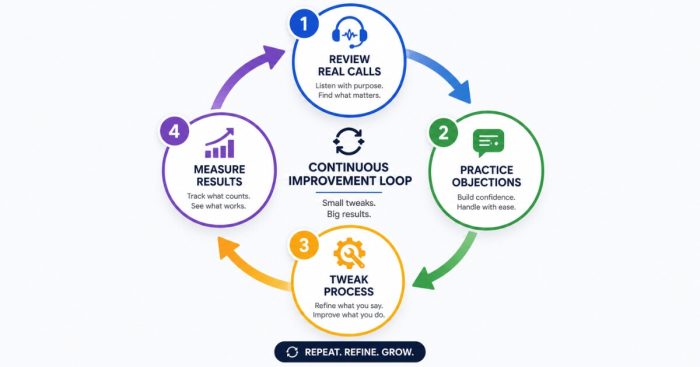
A weekly meeting with three non-negotiable ingredients: reviewing real patient calls, practicing objection handling, and tweaking the sales process in real time.
That’s why we meet weekly with the clinics we work with.
We pull actual recorded patient calls — not roleplay hypotheticals — and review them together. We identify where the team member built trust, where they buried the price, and where the patient signaled interest but nobody caught it.
Next, we practice handling the objections that actually came up that week, so the next answer is rehearsed instead of improvised.
Finally, we tweak the sales process itself in real time. If patients keep stalling at the same step, the step changes that week, not at the quarterly review.
The result is a team that isn’t winging it — they’re improving week after week.
That’s how you build a system that actually works, not one that simply looks good on the agreement you were sent.
The inside-sales system at a regenerative practice we work with converts 79.4% of leads into booked appointments — a number that no script alone produces.
It’s the compound interest of weekly reps.
What questions should I ask an agency about training before I sign?
Five, and the answers separate partners from vendors in about two minutes.
- What’s the training cadence after launch — weekly, monthly, or one-time? Anything that isn’t recurring is onboarding, not training.
- Will you review recordings of my team’s real patient calls? If they don’t listen to real calls, every piece of coaching is a guess.
- What happens when our close rate dips — who notices, and what changes? You want a named feedback loop, not a support ticket.
- Who on your side does the training, and how many clinic teams have they coached? A media buyer reading a script deck is not a sales trainer.
- Can I talk to a clinic whose team you’ve trained for six months or more? References from 30-day clients prove nothing about ongoing support.
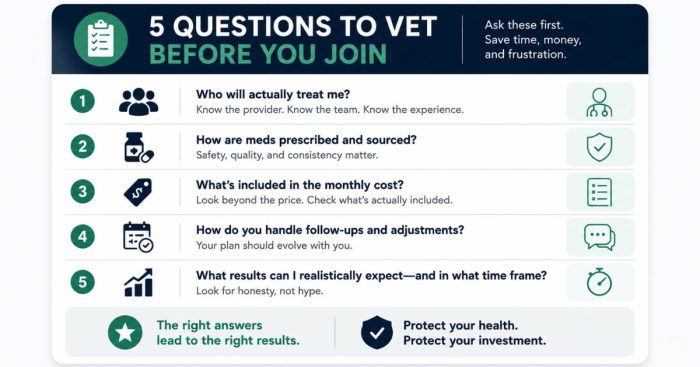
Agencies that deliver real training answer these instantly because the machinery already exists.
However, agencies that don’t will pivot the conversation back to leads and impressions.
That pivot is your answer, and it’s the single fastest filter when you’re evaluating medical practice marketing consultants against each other.
How do I know if my team’s sales training is actually working?
The weekly numbers move: close rate on consults, show rate on bookings, and revenue per lead should all trend up within 60 to 90 days.
Training that works is visible in the same dashboard you already review.
Watch the conversion rate from inquiry to booked consult, the show rate, and the close rate from consult to paid program.
Each one is owned by a trainable conversation.
If six weeks of “training” hasn’t moved any of them, the training isn’t training.
You should also see qualitative markers:
- Team members volunteering calls for review instead of hiding them
- Objections being logged and answered in a shared document
- New hires ramping in weeks because the rehearsal system catches them up quickly
There’s a retention bonus most owners don’t expect.
Teams that get coached weekly stay longer because people don’t quit jobs where they can feel themselves getting better.
A specialist pain practice we work with grew monthly revenue by $40K+ while team retention went up — the same system that closes more patients also keeps the people who close them.
FAQ’s About Marketing Agency Sales Training for Clinics
Is one training call from an agency a red flag?
Yes. One Zoom call and a sales script is onboarding theater, not training.
Closing high-ticket cash-pay programs is a skill, and skill requires repetition with feedback. That means a weekly cadence of real-call review and objection practice, not a single session at launch.
What should ongoing sales training include at a cash-pay clinic?
Three things every week:
- Reviewing recordings of real patient calls
- Practicing the objections that actually came up
- Adjusting the sales process in real time when patients keep stalling at the same step
Information transfers in one call. Skill only builds through this feedback loop.
How long before sales training shows up in my clinic’s numbers?
Expect movement in 60 to 90 days across three metrics:
- Inquiry-to-consult conversion
- Show rate
- Consult-to-paid close rate
If none of them move after six weeks of coaching, the training isn’t real.
Why do agencies only offer one training call?
Because ongoing training is expensive to deliver and doesn’t fit a productized retainer.
Listing “team training — included” and checking the box with one Zoom lets the agency later blame your team for poor campaign results while charging you for leads your team was never equipped to close.
What’s the next step?
If your team got one training call and a script — and your close rate shows it — book a strategy call.
In 60 minutes we’ll review how your patient calls are being handled today, show you how we structure weekly sales training inside real clinics, and map what your numbers should look like 90 days after your team stops winging it.