
30 Leads and 3 Booked Consults From One Local Event: How a Cash-Pay Clinic Makes Community Events Pay
While most clinic owners argue about advertising budgets, one cash-pay weight loss and wellness clinic set up a booth at a weekend community event.
They brought a prize wheel and a sign-up form.
Thirty people signed up. Three booked consultations.
The total cost? A small sponsorship fee and some handout materials.
This article breaks down that event, the consultant’s verdict — “it’s so overlooked, man” — and the follow-up system that determines whether an event list becomes patients or just another pile of paper.
Are local community events worth it for a cash-pay clinic?
Yes. For a small sponsorship fee and some printed materials, one clinic generated 30 leads and booked three consultations from a single weekend event.
And instead of treating it as a one-time experiment, the clinic decided to make local events a weekly activity.
The setup was straightforward.
First, the clinic sponsored a local community event.
Then, the team staffed a booth and brought a prize wheel to attract visitors.
Anyone who wanted to spin the wheel had to complete a sign-up form.
That simple approach generated 30 leads.
The clinic then called the people who signed up.
By the following week’s consulting call, three consultations had been booked.
The consultant’s reaction was immediate.
“This is such an overlooked way to do this… it’s so overlooked, man.”
And the clinic was already planning its next event.
“Another one coming up this Saturday — goal is one a week.”
That’s what makes this strategy interesting.
It doesn’t require a complicated advertising funnel or a large monthly budget.
Instead, it puts the clinic directly in front of people in its community.
However, there’s an important limitation.
During the same conversation, the consultant explained:
“There will come a point in the business’s life where it doesn’t make sense for you to do that with your time.”
Early in a clinic’s growth, having the owner at the booth can be extremely valuable.
The owner knows the services, understands the offer, and can build trust through direct conversations.
But as the practice grows, that time becomes more expensive.
Eventually, staff members may take over event marketing.
Or the clinic may decide the channel no longer justifies the time involved.
For a newer clinic that needs patients now, though, community events can be a relatively inexpensive source of leads.
And unlike paid advertising, the clinic gets to meet potential patients face-to-face.
How do you capture leads at a clinic event booth?
Combine a simple game, a sign-up form, and prizes people actually want.
Every interaction should create an opportunity for the clinic to follow up.
Otherwise, the booth might attract attention without generating measurable results.
At this event, the prize wheel did most of the work.
People stopped because they wanted to play.
But before spinning, they had to complete a form.
That turned a casual interaction into a lead.
The prizes were also selected carefully.
As the clinic explained:
“Some people want a vitamin shot, some people want a credit, some people want a compression therapy session.”
These weren’t just random giveaways.
Each prize created a reason for someone to visit the clinic.
That’s the important distinction.
A generic promotional item might leave with the visitor and never generate another interaction.
But a vitamin shot or compression therapy session requires the person to come into the practice.
Once they’re there, they meet the staff.
They see the clinic.
And they experience the service environment firsthand.
That first visit creates an opportunity to build a longer-term patient relationship.
For this particular clinic, walk-in relationships ranged from approximately $400 to $3,000.
So even a relatively small number of new patients could make the event worthwhile.
The lesson is to design the booth around two connected goals.
First, give people a reason to stop.
Second, give them a reason to visit the clinic afterward.
The prize wheel attracts attention.
The form captures contact information.
And the prize creates the next step.
When those three pieces work together, the booth becomes more than a community sponsorship.
It becomes a patient acquisition opportunity.
How do I follow up with the leads from a patient event?
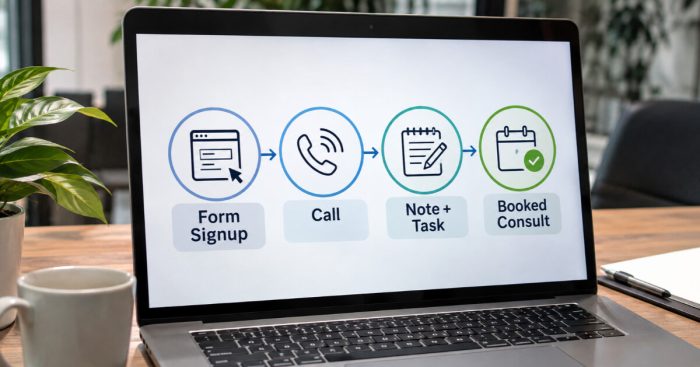
Call every person on the list.
Document each conversation.
Then, create a CRM task for anyone who isn’t ready to book yet.
Thirty signatures don’t mean much if nobody follows up.
The real value comes from what happens after the event.
In this case, the clinic called through its list of 30 leads.
Those calls produced three booked consultations before the next week’s meeting.
But that still left 27 people who hadn’t booked immediately.
And those remaining leads were the focus of the follow-up discussion.
The consultant explained that every conversation should have a note in the CRM.
For example:
“Called, texted. Very interested, not ready right now… wants to think about it — call in the next week.”
That note gives the next person handling the lead important context.
They can see what happened during the previous conversation.
They also know when to follow up.
However, the note alone isn’t enough.
The clinic needs an actual task.
As the consultant explained:
“If you’re going to handle it yourself and you have other stuff going on, make a task. If someone else should do it, assign the task to them… tasks keep things very organized.”
That’s the system.
Every lead gets contacted.
Every conversation gets documented.
And every prospect who isn’t ready receives a scheduled follow-up task.
The task should have a date and an assigned person.
That way, the clinic isn’t relying on someone remembering to call later.
Consider the difference.
One clinic collects 30 leads, books three consultations, and stops.
Another clinic collects the same 30 leads, books three consultations, and continues working the remaining 27.
The second clinic has more opportunities to turn the event into additional appointments.
The difference isn’t necessarily the booth, the prize wheel, or the sponsorship.
It’s the follow-up process.
That’s the unglamorous side of patient acquisition.
And it’s often where the money is.
Why aren’t my clinic’s leads booking consultations?
Before assuming you need more leads, audit the ones you already have.
Start by reviewing the CRM notes.
Then, listen to the actual call recordings.
Ask one question.
What are we saying to these people that’s preventing them from booking?
During the same consulting call, the team reviewed the clinic’s pipeline.
The numbers included four website leads, 40 calls, and 16 first-time calls.
The consultant summarized the situation:
“Four sellable units, none of them booked.”
Those were existing opportunities.
The clinic had already generated the inquiries.
But the leads weren’t turning into consultations.
Instead of immediately recommending more advertising, the consultant pointed to the stalled pipeline.
“If you said, Anton, find me the money, I’d say — here’s the money.”
Then, they listened to an actual sales call.
The purpose wasn’t to criticize the employee.
It was to understand why an interested prospect hadn’t booked.
And the result was surprising.
The sales pitch was fine.
The offer had been explained clearly.
The employee had even included available discounts.
As the consultant put it:
“I can’t see any reason why he wouldn’t want to get started.”
The prospect wasn’t rejecting the service outright.
He was simply guarded.
And he ended the conversation by saying:
“It definitely sounds like something I’m very interested in.”
That should have been a clear signal to follow up.
But no callback had been scheduled.
The consultant’s diagnosis was straightforward.
“He just needs a call back.”
Not another advertising campaign.
Not a completely new sales script.
Just a scheduled follow-up.
That’s the problem many clinics overlook.
They continue spending money to generate new inquiries while interested prospects remain untouched in the CRM.
Before increasing your advertising budget, find out how many existing leads need another conversation.
The lesson is simple.
More leads aren’t always the answer.
Sometimes, the next appointment is already sitting in your pipeline.
Someone just needs to make the call.
How do you extend the event strategy into partner referrals?
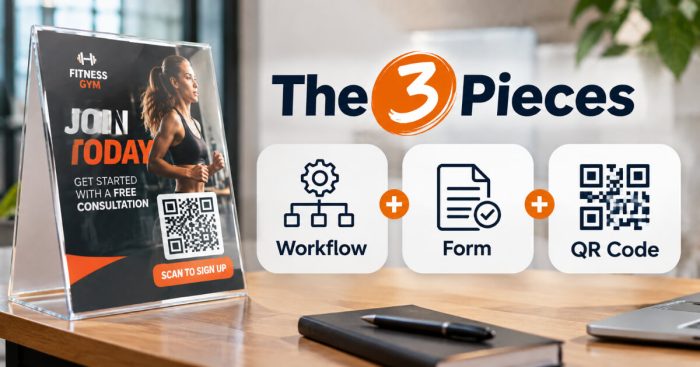
Give every local partner a flyer with its own QR code.
Then, connect each QR code to a dedicated form so every referral can be captured, attributed, and routed automatically.
The community event strategy worked because it brought the clinic directly in front of potential patients.
But there’s a way to extend that same approach beyond weekend events.
Build ongoing referral partnerships with local businesses.
For example, a weight loss or wellness clinic might partner with nearby gyms.
The gym already has relationships with people who care about their health.
And the clinic can provide services that may be relevant to those customers.
Instead of staffing a booth every weekend, the clinic can leave a flyer at the partner’s front desk.
That flyer includes a QR code.
When someone scans it, they land on a form where they can submit their contact information.
However, the important part is how the clinic tracks those submissions.
During the consulting call, the team demonstrated the setup step by step.
First, create a separate form for each partner.
Start with one lead capture form.
Then, duplicate it for every participating business.
Each partner gets its own version.
That way, the clinic can identify exactly where each referral originated.
Second, generate a unique QR code.
The QR code should link directly to that partner’s form.
For example, one gym receives a flyer with its own code.
Another gym receives a different code.
Both forms can collect the same information, but the clinic can distinguish between their submissions.
Third, build the CRM workflow.
When someone submits a partner’s form, the workflow should trigger automatically.
It creates a new opportunity in the clinic’s pipeline.
Then, it tags the partner as the referral source.
Finally, the system sends an internal notification to the team.
That email identifies the submission as a new partner referral.
The consultant summarized the entire setup:
“It’s just three pieces — the workflow, the form, the code.”
That’s all the clinic needs to create a trackable referral system.
And because each partner has a dedicated form, the clinic can measure results over time.
Six months later, the owner can review which gyms are generating inquiries.
They can also see which partners are producing booked consultations.
That makes it easier to decide where to invest more time.
Without source tracking, every referral becomes another name in the database.
With it, the clinic can identify which partnerships are actually producing patients.
Think of it as the community event booth operating 24 hours a day.
Except now, the booth sits at someone else’s front desk.
How do events fit into a clinic’s monthly patient goal?
Treat events as one channel within a larger patient acquisition system.
They can contribute meaningful appointments, but they shouldn’t be expected to carry the entire growth plan.
During the consulting call, the clinic discussed its monthly target.
The practice generally needed about 30 new patients per month.
The weekend event had already produced three booked consultations.
The consultant’s response was simple.
“27 more.”
That kept the conversation focused on the bigger goal.
Three consultations were a useful contribution.
However, they weren’t enough to meet the clinic’s monthly patient target.
And booked consultations aren’t the same as acquired patients.
The clinic still needed to convert those appointments into actual patient relationships.
That’s why community events should work alongside other marketing channels.
For this clinic, those channels included search engine optimization, local partnerships, and ongoing content.
The same call also reviewed the clinic’s SEO progress.
Website clicks had increased from four to 10 month over month.
Meanwhile, impressions grew from 60 to 700.
Those numbers were still relatively small.
But they showed that the clinic was beginning to build visibility through search.
At the same time, the team was planning weekly community events.
They were also developing referral partnerships with local gyms.
And content marketing continued in the background.
None of those channels needed to produce every new patient.
Instead, each contributed to the overall goal.
That’s how sustainable cash-pay clinic growth often works.
Several modest channels build on one another.
Over time, the combined results become more valuable than relying on a single source of leads.
We’ve seen that approach work at a larger scale.
The principle applies to local events, referrals, SEO, and paid advertising.
Each channel should support the others.
For a weight loss clinic marketing strategy, community events offer an additional advantage.
Weight loss services often require a significant level of patient trust.
People may have questions about the treatment process, the provider, or what to expect.
And those questions can be easier to address in person.
A community event gives potential patients an opportunity to meet the team before committing to an appointment.
They can see the people behind the clinic.
They can ask questions.
And they can begin building familiarity with the practice.
Sometimes, that first interaction happens over something as simple as a prize wheel.
The event creates the introduction.
The follow-up system creates the opportunity.
And the clinic’s broader marketing strategy helps turn those opportunities into consistent growth.
FAQ’s About Patient Events and Event Lead Follow-Up
How much does a local event cost a clinic?
It depends on the event, sponsorship requirements, staffing, and promotional materials.
In this case, the clinic paid a small sponsorship fee and covered the cost of its handout materials.
That investment generated 30 signups from one weekend booth.
Three consultations were booked before the following week’s call.
Compared with many paid advertising campaigns, the initial cost per lead can be attractive.
However, clinics should also account for staff time, prizes, and the cost of following up.
The best way to evaluate an event is to track the total cost against booked consultations and patients acquired.
A low-cost event becomes especially valuable when the clinic continues working the leads afterward.
What should a clinic give away at an event booth?
Choose prizes that encourage people to visit the practice.
At this event, the options included a vitamin shot, an account credit, and a compression therapy session.
Each prize gave the winner a reason to come into the clinic.
That matters because the first visit creates an opportunity to build trust.
The person can meet the staff, see the facility, and experience an appropriate service.
From there, the team can introduce other services when relevant.
The goal isn’t simply to give something away.
It’s to create a meaningful first interaction with a potential patient.
Of course, any promotional offer should comply with applicable healthcare marketing rules and clinical requirements.
How many patients should I expect from one event?
Results vary depending on the event, audience, offer, and follow-up process.
For the clinic in this article, one weekend event produced 30 leads and three booked consultations before the following week.
That’s a 10% initial lead-to-booked-consultation rate.
However, those three consultations weren’t necessarily three new patients.
And the remaining 27 leads still represented potential opportunities.
That’s why the clinic needed a structured follow-up process.
Rather than treating the first three bookings as the final result, the team could continue contacting interested prospects.
The event’s full value would depend on how many additional consultations and patients came from the list.
Track both the immediate bookings and the results of ongoing follow-up.
What do I do with event leads who say they’re not ready?
Document the conversation in your CRM.
Then, create a dated follow-up task and assign it to a specific person.
For example, if someone says they’re interested but need time to think, record that information.
Include any relevant context from the conversation.
Then, schedule a callback for the following week or another appropriate time.
This prevents interested prospects from disappearing into the database.
During the live pipeline audit discussed in this article, the consultant reviewed a call with a prospect who seemed genuinely interested.
The offer had been explained well.
The prospect simply wasn’t ready to commit during that conversation.
The consultant’s conclusion was that the person needed another call.
But nobody had scheduled one.
That’s why CRM tasks matter.
They turn a vague intention to follow up into an assigned action.
Do I need a separate newsletter tool to invite people to events?
Not necessarily.
During the consulting call, the clinic considered using Beehiiv or HubSpot for its newsletter.
However, the consultant recommended staying within the CRM the clinic already used.
As he explained:
“Anything you could consider purchasing another tool for, HighLevel can do.”
The point was to avoid adding unnecessary software when the existing system could handle the job.
GoHighLevel can support email campaigns, contact lists, forms, and follow-up workflows.
That allows the clinic to manage event invitations and lead capture within the same database.
It also makes tracking and attribution easier.
Instead of spreading contact information across several platforms, the team can keep its marketing and follow-up activity organized in one place.
Before purchasing another tool, check whether your current CRM already supports the features you need.
What’s the next step?
If your clinic needs patients this month, you don’t necessarily have to wait through another quarter of advertising tests.
Start by looking at the opportunities already available in your community.
Local events can introduce your clinic to potential patients.
Referral partnerships can keep those introductions coming.
And a properly configured CRM can make sure the leads don’t disappear after the first conversation.
During a strategy call, we’ll help you map the local event and partner-referral channels that make sense for your practice.
We’ll also show you how to connect the QR code capture system.
As the consultant explained, it comes down to three pieces.
“The workflow, the form, the code.”
Then, we’ll look at your existing pipeline.
Because in many clinics, the next opportunity isn’t hiding in a new advertising campaign.
It’s already sitting in the CRM.
Someone just needs to make the follow-up call.