
How Do I Reactivate Cold Web Leads With an Outbound Call? (The Script That Reopens “I Requested an Appointment” Leads)
A patient filled out your website form, then went quiet. Most clinics treat that lead as lost. It isn’t — it’s a warm lead who raised their hand, and a single well-crafted outbound call reopens a surprising number of them. This is the FAQ on that call, built from a real integrated-medicine outbound script: how to open so it doesn’t feel like cold-calling, what to ask, how to present an exam-first offer, and how to handle the insurance and “I just want one service” objections.
How do I reactivate a cold web lead with an outbound call?
Call the patient, confirm they requested an appointment, and if they don’t remember, gently remind them of the concern they originally submitted.
From there, continue with a normal discovery conversation.
The key insight is simple: a website lead is not a cold call because the patient contacted you first.
Open with something like:
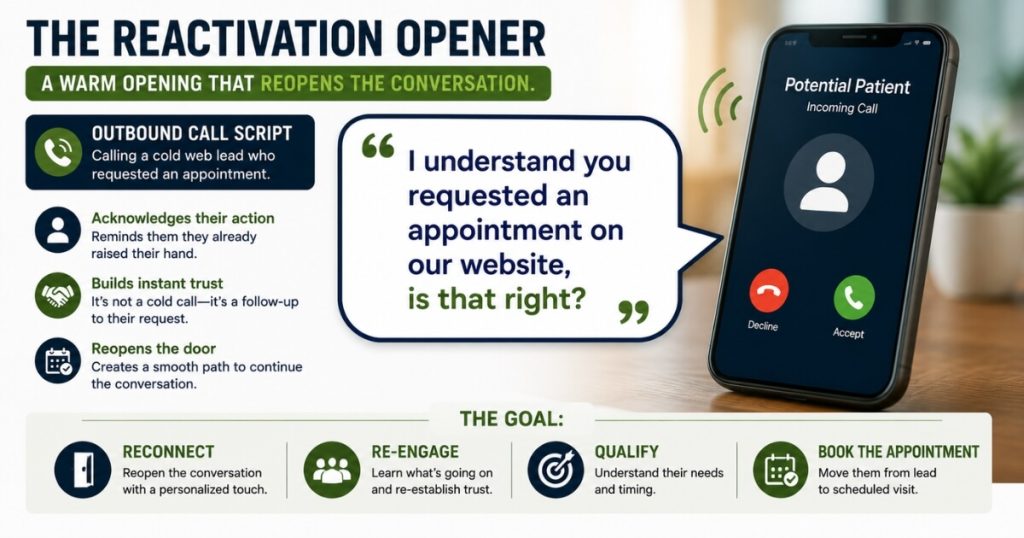
“Hello, is this ___? This is [name] with [clinic]. I understand you requested an appointment on our website, is that right?”
Most people immediately remember.
However, if they don’t, remind them why they reached out.
For example, you might say, “You contacted us about your knee pain.”
That usually brings the conversation back instantly.
Instead of interrupting a stranger, you’re helping someone who already asked for assistance.
As a result, the conversation immediately feels warmer and more natural.
This small shift completely changes the tone of the call.
Consequently, outbound reactivation becomes one of the lowest-cost forms of patient acquisition because you’re reconnecting with leads you’ve already paid to generate.
What’s the exact opener for an outbound reactivation call?
Use this opening:
“Hello, is this ___? This is [name] with [clinic]. I understand you requested an appointment on our website, is that right?”
If they don’t remember, simply remind them why they originally contacted your clinic.
This opener accomplishes three things immediately.
First, it confirms you’re speaking with the correct person.
Next, it identifies your clinic.
Finally, it explains why you’re calling based on something they already did.
Because the conversation begins with their own request, it doesn’t feel like an unsolicited sales call.
Once they confirm, move directly into discovery.
If they respond with, “I don’t remember filling anything out,” don’t end the conversation.
Instead, remind them of the problem they submitted.
People often forget completing an online form.
They rarely forget the pain or concern that motivated them to complete it.
Once they reconnect with that original reason, they’re usually ready to continue the discussion exactly as if they had remembered from the beginning.
What do I ask after they confirm the appointment request?
Run a warm discovery conversation.
Focus on understanding how they found your clinic, why they reached out, how long they’ve had the problem, how they usually pay for healthcare, and what they’ve already tried.
Good questions include:
- How did you hear about us?
- Were you referred, or did you find us online?
- How long have you been dealing with this issue?
- Have you tried anything else to solve it?
- How do you normally handle medical expenses—insurance or out of pocket?
- Has anything provided relief so far?
These questions gather useful information while building trust.
If the patient starts telling a long story, guide the conversation naturally.
A simple interruption like, “Hold on—you mentioned something there I’d like to ask about,” helps keep the discussion focused without making them feel rushed.
Most importantly, discovery allows patients to explain their own situation.
As they do, your recommendation naturally becomes the logical solution instead of feeling like a sales pitch.
The goal is for every lead to feel heard, understood, and confident enough to continue toward booking.
How do I present the offer so a reactivated lead books the visit?
Present a simple exam-first process.
Explain exactly what happens during each step before discussing the investment.
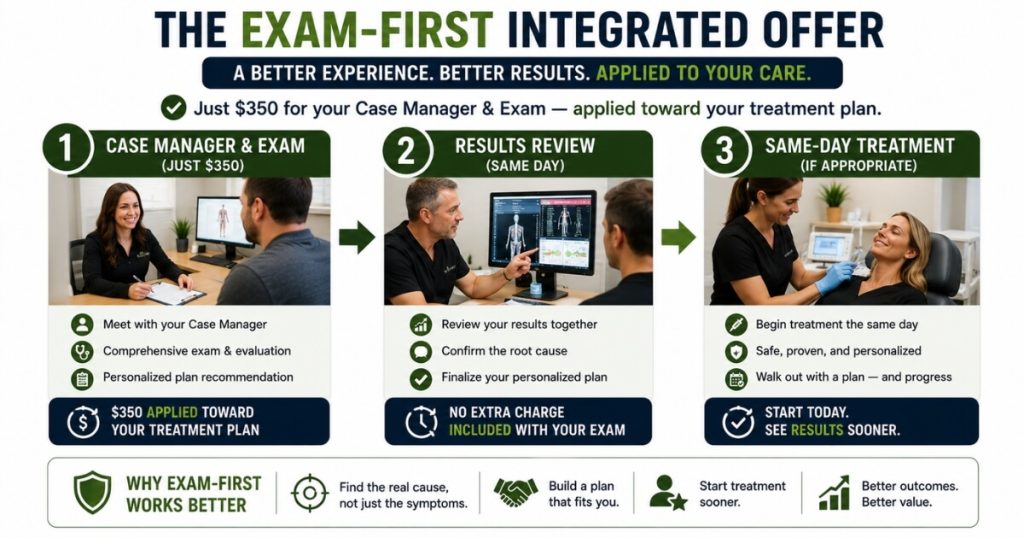
One integrated clinic structures the process like this:
- Step 1: Meet with a dedicated case manager to review goals and the notes from your call, followed by a provider exam that includes an orthopedic examination, neurologic testing, and X-rays.
- Step 2: Return to review your examination results and the personalized care plan prepared by the medical team.
- Step 3: If the plan makes sense, begin treatment the same day.
Patients appreciate knowing exactly what happens next.
As a result, the process feels clinical instead of sales-focused.
When discussing the investment, be completely transparent.
For example:
“The consultation, exam, neurologic testing, and X-rays are $350. That entire $350 is applied toward your treatment plan when you move forward.”
Applying the exam fee toward treatment significantly lowers the perceived risk.
Instead of paying simply to access care, patients see themselves investing in treatment they’ll likely receive anyway.
After explaining the process, transition directly into scheduling.
A simple question like, “Do you have any questions, or are you ready to schedule?” keeps the momentum moving naturally.
How do I handle “can I use my insurance to cover the exam?”
Acknowledge the question honestly, offer to check their benefits, and explain that the initial exam usually isn’t covered.
Then bring the conversation back to the value of the visit and the fact that the fee applies toward treatment.
A simple response sounds like this:
“We’ll collect your insurance information and check for you. However, most of the time we find that the initial exam isn’t covered.”
That straightforward answer builds trust.
Instead of overpromising coverage, you’re setting realistic expectations while keeping the conversation moving.
Next, reinforce the value of the exam.
Explain that the $350 isn’t simply an evaluation fee—it applies toward the patient’s treatment plan if they move forward.
That changes how patients view the investment.
Rather than paying to clear a hurdle, they’re putting money toward the care they already need.
As a result, honest communication combined with the applied-fee structure makes the exam-first offer much easier to accept.
How do I handle “I just want acupuncture” (or chiro, or PT) instead of the full workup?
Validate the patient’s request first.
Then explain that your integrated, multidisciplinary approach produces better outcomes while still allowing treatment to begin quickly.
Rather than arguing with the patient, reframe the conversation.
For example, you might say:
“We’re most known for our integrated approach, which generally combines multiple therapies to ensure the best outcome for our patients. Most patients also begin treatment as soon as they visit us.”
This response respects what the patient wants while showing why your process exists.
Instead of making the examination feel like an upsell, it becomes the reason your clinic consistently delivers better results.
Just as importantly, reassure patients they won’t spend weeks waiting before treatment begins.
Because the care plan and treatment can often start during the same visit, patients realize the comprehensive evaluation doesn’t slow their progress.
That combination of better outcomes and immediate action makes the integrated model much easier to accept.
It’s also the foundation of effective functional medicine & longevity clinic marketing because you’re selling the outcome rather than an individual service.
FAQ’s About Reactivating Web Leads With Outbound Calls
How soon after a web form should I call the lead?
Call as quickly as possible.
Ideally, reach out within minutes of the form submission.
Speed-to-lead dramatically improves conversion because a patient contacted immediately is much warmer than someone contacted several days later.
Set up instant notifications so someone on your team can call as soon as a new lead arrives.
Then reserve the reactivation script for older leads that slipped through the cracks.
What if the lead genuinely doesn’t remember requesting an appointment?
Remind them of the specific concern they submitted.
People often forget completing an online form.
However, they almost never forget the pain or goal that motivated them to fill it out.
A simple reminder such as, “You reached out about your knee pain,” or “You were looking for help with your energy,” usually reconnects them immediately.
Once they remember the problem, the conversation flows naturally again.
Should the exam or consult fee apply to the treatment plan?
Yes.
Applying the consultation fee toward treatment lowers the perceived risk and increases conversions.
Instead of paying for access, patients feel they’re pre-paying toward their care.
That small structural change transforms the fee from an expense into an investment.
Consequently, saying yes to the first appointment becomes much easier.
How do I make outbound calls not feel like cold-calling?
Always anchor the conversation to the patient’s own action.
They requested an appointment, so you’re simply following up.
Lead with their concern rather than your services.
Then ask thoughtful discovery questions that demonstrate genuine interest.
Because you’re responding to something they already requested, the conversation feels like customer service instead of a sales call.
What’s the next step?
If your web leads go quiet, don’t assume they’re lost.
You’re sitting on patients who already showed interest and simply need the right conversation to re-engage.
A warm outbound call that references their appointment request, reminds them why they reached out, uncovers their goals through discovery, and presents an exam-first offer with the consultation fee applied toward treatment can recover a surprising number of those leads.
Then strengthen the process even further by improving your speed-to-lead so fewer prospects become cold in the first place.
On a strategy call, we’ll help you build the exact outbound reactivation script your clinic should use and show your team how to deliver it naturally.
It’s the same conversion process behind a longevity and functional medicine clinic where we lifted website leads by 900% and inbound calls by 100+ a month and then ensured those additional leads actually became booked appointments.