
How to Market to Your Existing Patient List Without Feeling Gross (Working Your List, the Value-First Way)
Your existing patient list is the highest-trust, lowest-cost audience your practice will ever have — and most clinic owners barely email it. Not because they don’t know how, but because it feels uncomfortable to sell to people who already know you. This is the playbook I teach clients for working the list: lead with value, make it about them, and let a monthly newsletter carry the relationship.
Why does marketing to my existing patients feel so uncomfortable — and should I do it anyway?
Because you have real relationships with these people, and there’s a quiet mix of pride and shame in selling to them.
Do it anyway — with the right intention, almost nobody gets upset.
The fear is specific: the next time that patient comes in, you don’t want them to say something about the email you sent trying to sell them more stuff.
So most owners solve the discomfort by never emailing at all. That means the most valuable audience in the business hears from the practice exactly never.
Here’s the reframe.
If you lead with the right intention, you’re not gross and salesy in your emails. Instead, you focus on delivering value and helping people. It’s very rare that anybody will ever be upset.
The discomfort isn’t a sign you shouldn’t email your list.
It’s a sign you’re about to email them the wrong thing — an offer instead of something useful. Fix the content, and the discomfort resolves itself.
What did network marketing teach a 19-year-old about working a list?
That warm lists respond when the outreach is genuinely about them — and that conviction beats polish.
When I was 19, I got started in a network marketing business that was heavy on recruiting.
The first thing the guy who enrolled me had me do was hand-write a list of everyone I knew who was healthy, financially aware, or a person of influence — contacts in my phone, Instagram followers, Facebook friends.
Reaching out to those people was one of the most uncomfortable things I’d ever done.
But it worked because those people already liked, trusted, and respected me.
They were going to be my friends regardless of what I said. If they thought it was stupid, they told me so — which was fine.
What I learned in that process was to make it about them.
It wasn’t about recruiting for my own gain. It was about sharing something I had deep conviction in because I didn’t want them to miss out.
Your patient list is the same asset, with more trust.
These people have already paid you, been treated by you, and gotten results from you.
Memberships don’t renew because of ads. They renew because of relationship.
What should I send my patient list instead of discount offers?
Something you made for them.
A free four-video mini-course beats “$100 off treatment” every time.
If you need to spend extra time creating something specifically for your list, it’s worth doing.
Make a four-video mini-course on medical weight loss, knee pain, hormones, or peptides.
Taking two or three hours on a Saturday morning to record those videos — and then giving the course away free to your people — will go way further than blasting a coupon.
The economics stack twice.
The same mini-course also becomes the giveaway in your paid ads. So one Saturday morning of recording feeds both your existing list and your cold acquisition at once.
This is the same education-first logic behind the biggest personal brands in medicine.
Dr. Joy Kong became the #1 stem cell expert on YouTube by teaching the science instead of pitching the procedure, and the patients came as a byproduct.
Your list doesn’t need a discount to re-engage. It needs a reason to remember you’re the expert.
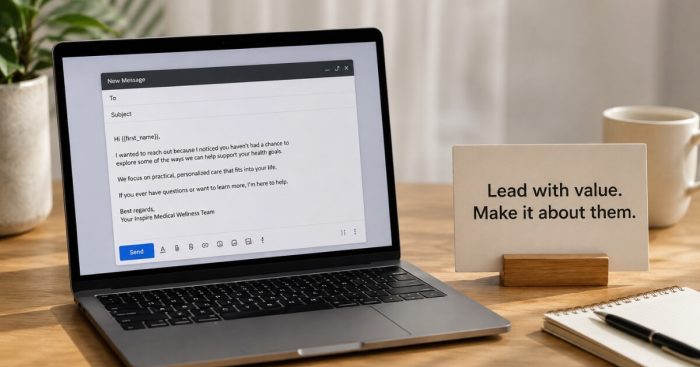
How often should a cash-pay clinic email its patient list?
Monthly, minimum — and the monthly newsletter is the single best format to build the habit on.
A monthly newsletter is the absolute best thing to do for list nurture.
You want to build a relationship with these people, and you obviously don’t want them calling your cell phone to keep that relationship alive.
The newsletter is how they keep tabs on you and the practice without any friction.
Frequency matters more than brilliance here.
A practice that shows up in the inbox every month with something warm and useful stays top-of-mind. That matters when a patient’s knee flares up, their energy crashes, or their friend asks, “do you know anyone who does hormones?”
By contrast, a practice that emails twice a year — both times with an offer — trains its list to ignore it.
If your only touchpoints are transactional, every email feels like a sales email, even the good ones.
That consistency habit is a core piece of the medical practice marketing systems we build with clients.
The list is an asset, and assets get maintained on a schedule.
What actually goes in a monthly patient newsletter?
Current events at the practice — not promotions.
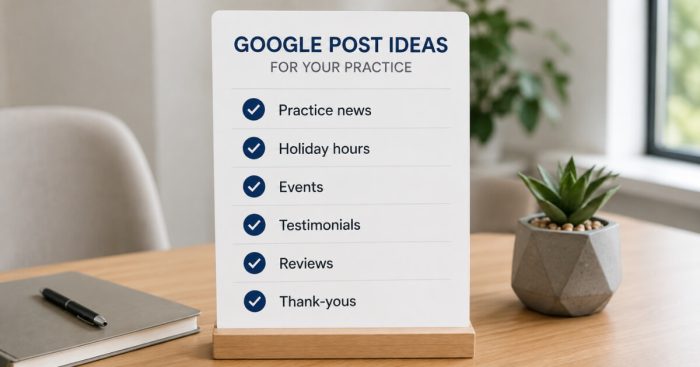
News, holidays, closures, events, testimonials, reviews, and thank-yous.
The formula is deliberately simple: what’s happening at the practice this month, upcoming holidays and dates of closure, events you attended, new patient testimonials, new reviews, and thank-yous to patients and staff.
That’s it.
It reads like a letter from a practice that’s alive and busy, not a flyer from a business that needs revenue.
Notice what this does psychologically.
Testimonials and reviews are social proof delivered as news.
Nobody reads a patient’s story about finally getting her energy back after years of being told her labs were normal as an advertisement. Yet it sells harder than any coupon.
Closure dates and holiday hours give the email a practical reason to be opened.
Meanwhile, the thank-yous make patients feel like members of something rather than entries in a database.
One value-dense newsletter a month, every month, outperforms any clever reactivation blast you’ll ever send — because the list never went cold in the first place.
How do I write a monthly newsletter without spending hours typing?
Talk it, don’t type it. Tools like Fathom and Otter AI transcribe you speaking and hand you the draft.
The biggest objection to the monthly newsletter isn’t philosophical — it’s “I don’t have time to write.”
So don’t write.
Open Fathom or Otter AI, then talk through your month the way you’d tell a patient in the chair — what’s new, who joined the team, what event you went to, and a patient win you’re proud of.
The tool transcribes it. Copy, paste, clean up, send. It’s real quick.
This matters because the newsletter’s voice should sound like you anyway.
Patients chose a cash-pay practice largely because of the relationship with the provider. A newsletter that reads like it was assembled by a marketing intern breaks that spell.
A transcribed five-minute ramble, lightly edited, keeps the exact voice patients already trust.
The barrier to working your list was never skill. It was the blank page — and the blank page is now optional.
FAQ’s About Marketing to Your Existing Patient List
Will my patients get annoyed if I email them monthly?
Very rarely — if you lead with value and good intention.
The discomfort owners feel is about selling to people they know. Patients receiving a genuinely useful newsletter with practice news, testimonials, and education don’t experience it as selling.
The unsubscribes you do get are list hygiene, not relationship damage.
Should I send discounts to my patient list?
Not as your lead play.
A free educational asset — like a four-video mini-course on weight loss, knee pain, hormones, or peptides — goes way further than a “$100 off treatment” email.
The same asset can also be reused as the free giveaway in your paid ads.
How often should I email my existing patients?
Monthly at minimum, anchored by a newsletter covering practice news, holiday hours and closures, events, new testimonials, new reviews, and thank-yous.
Consistency beats cleverness — the goal is staying top-of-mind, not maximizing any single send.
What tools make writing a patient newsletter faster?
Voice-transcription tools like Fathom and Otter AI.
Talk through your month, let the tool transcribe it, then copy, paste, and lightly edit.
It keeps your natural voice — which is what your patients signed up for — and removes the blank-page problem.
Why does an existing patient list outperform cold marketing?
Because trust is already established.
These people have paid you, been treated by you, and gotten results.
Cold traffic has to be convinced you’re credible. Your list already knows — which is why recurring-revenue models like memberships are built on list relationships, not ad impressions.
What’s the next step?
If your patient list hasn’t heard from you in months and every idea you have for emailing them feels salesy, the fix is a system, not more willpower: one value asset, one monthly newsletter, one transcription tool.
Book a strategy call. In 60 minutes we’ll audit what your list looks like, what it’s worth in recoverable revenue, and exactly what your first 90 days of working it should contain.