
How Do I Get My Clinic Staff to Actually Use the CRM? (The 3 Habits of Practices That Do)
You bought the CRM. You paid for the setup, the automations, maybe even the training. And your team still runs the day off sticky notes, memory, and a spreadsheet someone made in 2021. Before you switch platforms or add another automation, understand this: in ten-plus years of working inside cash-pay medical practices, the clinics whose teams actually live in the CRM all share the same three habits — and none of them are software features.
Why won’t my clinic staff use the CRM?
Because it feels optional.
Leadership sets the tone.
If your staff isn’t taking the CRM seriously, there’s a good chance you’re not either.
Your team will do what you do, not what you say.
If you’re never logging in, never referencing the CRM during team meetings, and never asking,
“Hey, what happened to this lead?”
your team quickly learns two things:
- The CRM is optional.
- Nobody is paying attention.
When something feels optional inside a busy clinic, it gets ignored.
Every time.
The front desk isn’t lazy.
They’re triaging.
Between ringing phones, patient check-ins, and providers running behind schedule, the CRM loses the priority battle unless the owner makes it visibly important.
What do practices whose teams actually use the CRM do differently?
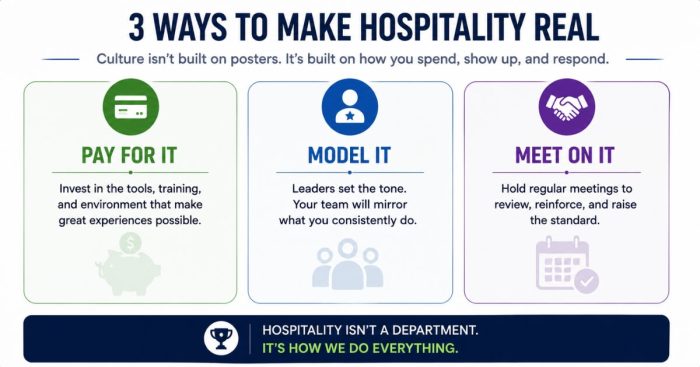
They consistently do three things:
- They pay their people according to the behaviors they want.
- The owner never asks the team to do something they won’t do themselves.
- They hold regular team meetings.
Those three habits appear in every one of our highest-performing client practices.
They’re also present in the case studies everyone wants to copy.
Here’s the honest part.
Those owners would have built these habits even if we had never worked together.
The habits—not the software—separate clinics where every lead is logged, updated, and followed up from clinics where the CRM becomes an expensive address book.
Notice what’s missing from that list.
Not:
- A specific CRM platform
- More automations
- Better onboarding videos
If those three habits don’t exist, no software survives a busy Monday.
How should I pay my clinic team so they actually use the CRM?
Create a commission or bonus structure that rewards production.
Then make the CRM the scoreboard that proves it happened.
Pay your team according to what you actually want them to do.
Every high-adoption practice we work with has some type of bonus or commission tied to outcomes.
Examples include:
- Consults booked
- Follow-up calls completed
- Memberships sold
The moment compensation depends on documented activity, the CRM stops feeling like administrative work.
It becomes the scoreboard.
If the call isn’t logged, it didn’t happen.
If it didn’t happen, it doesn’t get paid.
That’s the same accountability system behind a predictable patient acquisition system.
Leads only convert when someone owns the follow-up.
Someone only owns the follow-up when their paycheck notices.
The compensation plan doesn’t need to be complicated.
A simple bonus tied to booked-and-attended consultations recorded inside the CRM can change behavior within weeks.
Do I have to use the CRM myself before my team will?
Yes.
Speed of the leader becomes speed of the team.
Don’t ask your team to do anything you aren’t willing to do yourself.
That includes:
- Using the CRM
- Returning phone calls
- Completing productivity tasks
If you want someone to do something consistently, demonstrate it first.
That also includes quality assurance.
If your team knows you’re never checking the work, reviewing records, or giving feedback, they’ll either stop doing it or develop their own version of “good enough.”
That’s exactly why we hold weekly meetings with every client practice.
We know most owner-providers don’t consistently log in and review the pipeline.
Instead of hoping they will, we review it together.
At one regenerative practice, that discipline resulted in 631 opportunities and 3,490 inbound calls tracked once the CRM was actually being used.
The numbers get reviewed every week.
As a result, the numbers get entered every day.
How much of my time does this actually take every week?
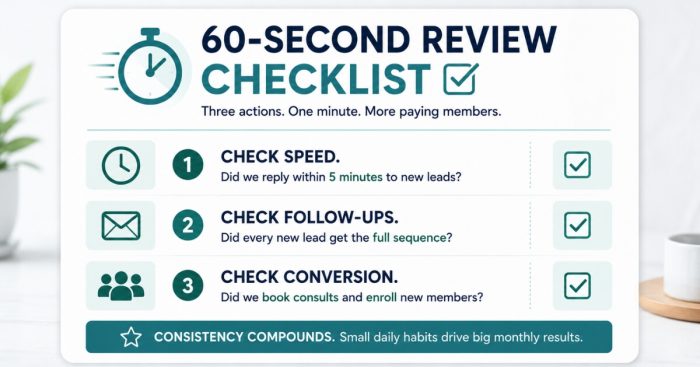
About 60 seconds.
Seriously.
You don’t need to spend hours inside GoHighLevel every day.
Even 60 seconds once a week is enough.
Review the pipeline.
Ask a question.
Point out something incomplete.
That’s all it takes to send a clear message:
This matters.
When the owner spends even one minute reviewing the CRM, the team notices.
People begin updating notes more consistently.
Follow-up becomes more reliable.
Not only because of bonuses, but because people naturally want to do good work.
They simply need to know someone cares enough to check.
That’s what leadership looks like inside a cash-pay practice.
It isn’t constantly switching software.
It isn’t adding another automation.
It’s consistently demonstrating that the work matters.
What should my team meetings have to do with the CRM?
Run the meeting from the pipeline.
Not from memory.
Team meetings are the third habit.
They’re also where the first two habits compound.
When the weekly meeting starts with the pipeline displayed on the screen, everyone immediately sees:
- Who came in
- Who booked
- Who ghosted
- Which leads have no next step
The CRM becomes the meeting agenda instead of an afterthought.
Nobody wants to be the team member whose pipeline column is full of untouched leads for two consecutive weeks.
Likewise, everyone appreciates seeing their follow-up efforts turn into booked consultations.
A weekly rhythm built around:
- Pay-for-production
- Owner quality assurance
- Pipeline-driven meetings
is how practices achieve conversion rates that most clinics assume are impossible.
That type of conversion isn’t a marketing statistic.
It’s a follow-up discipline statistic.
Should I just switch CRMs or add more automations instead?
No.
If the three habits are missing, the next CRM will fail for the same reasons.
Changing software feels productive.
In reality, it usually:
- Resets the learning curve
- Consumes a month with migration work
- Places your team into another interface while keeping the same behaviors
Automations certainly help.
Reminders, task assignments, and pipelines all have value.
However, no automation can force someone to:
- Update a note
- Return a phone call
- Complete follow-up
if they aren’t paid, shown, or held accountable for doing those things.
Fix the habits first.
Then, if your current platform truly limits your business, switch from a position of strength.
You’ll have a team that will actually use the new system.
If you’d like an outside perspective on your compensation plan, pipeline structure, and meeting cadence, that’s exactly what good medical practice marketing consultants should help you build.
Not just your advertising.
FAQ’s About Getting Your Clinic Team to Use the CRM
Why does my clinic staff ignore the CRM?
Because it feels optional.
Leadership sets the tone.
If the owner never logs in, never references the CRM during meetings, and never asks,
“What happened to this lead?”
the team quickly learns two things:
- The CRM is optional.
- Nobody is paying attention.
In a busy clinic, anything optional eventually gets ignored.
What are the three habits of practices whose teams actually use the CRM?
The three habits are:
- Pay your people according to what you want them to produce.
- Never ask your team to do something you aren’t willing to do yourself, including reviewing the work.
- Hold weekly team meetings using the CRM pipeline.
Those three habits are the common thread across the highest-performing cash-pay practices we work with.
How often should a clinic owner check the CRM?
At least once each week.
Even 60 seconds is enough.
Review the pipeline.
Ask about one lead.
Point out one incomplete record.
That simple review signals that the CRM matters.
When leadership pays attention, teams naturally keep notes and follow-up activities current.
Will switching to a different CRM fix low adoption?
No.
If compensation, leadership modeling, and weekly meetings are missing, the next CRM will fail exactly like the current one.
Changing software simply restarts the learning process without changing incentives.
Build the three habits first.
Only change platforms if the software itself is genuinely limiting your practice.
Should I tie my team’s bonus to CRM activity?
Tie compensation to outcomes the CRM can verify.
Examples include:
- Booked-and-attended consultations
- Completed follow-up calls
- Memberships sold
Avoid paying people simply for entering notes.
When compensation depends on documented production, the CRM becomes the scoreboard.
If the call isn’t logged, it didn’t happen.
If it didn’t happen, it doesn’t get paid.
What’s the next step?
If your team treats the CRM as optional and leads continue slipping through the cracks, the solution starts with structure.
Not software.
Book a strategy call.
In 60 minutes, we’ll review:
- Your compensation plan
- Your CRM pipeline
- Your meeting cadence
We’ll identify exactly which of the three habits is missing and show you what implementing it looks like over the next 30 days.
We conduct this weekly review alongside our client practices for one simple reason.
It works.
Whether or not the owner has time to log into the CRM every day.