
How Do I Get Patients to Come Back for Overdue Blood Draws? (The Recall System of Tasks, Text Snippets, and Inbox Zero)
A concierge functional medicine practice in Southern California had a quiet leak: patients who needed follow-up labs just… didn’t come back.
“Sometimes it’s 50-50 of when they come back,” the team admitted.
For a cash-pay practice, that’s not a scheduling nuisance. Every lapsed draw is a lapsed protocol, a stalled outcome, and recurring revenue walking out the door.
In one 36-minute working session, we built the recall system live: assigned tasks, one-click text snippets, and a daily inbox-zero routine.
Staff reaction by the end: “Gosh, this is so much more efficient.”
Here’s the FAQ.
How do I get patients to come back for overdue blood draws?
Create a dated, assigned recall task for every patient.
Then send the reminder with a one-click saved snippet instead of composing texts from scratch.
On the call, we filtered the clinic’s overdue list and texted three lapsed blood-draw patients live.
One patient’s last contact was August 22nd — months stale.
The snippet did the work:
“Hi [name], this is [clinic]. You’re due for a blood draw. Can we kindly help you get that scheduled?”
One click, personalized, and logged on the patient record.
Recall fails not because patients refuse. It fails because reminding them requires effort when the front desk has fourteen other things to do.
Snippets remove the effort; tasks remove the forgetting.
Why do recall tasks pile up without getting done?
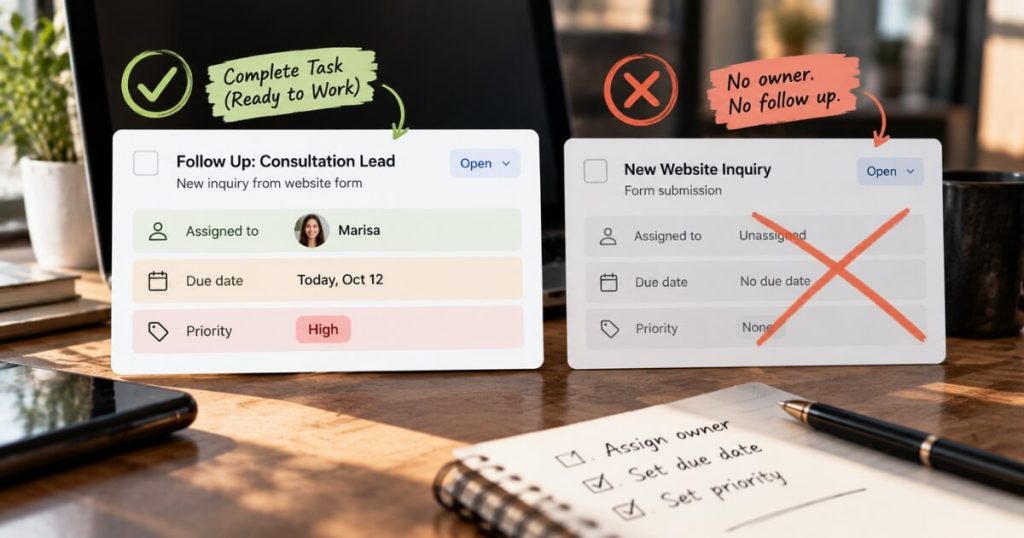
Missing assignees, missing due dates, and missing descriptions.
A task nobody owns by no particular date is decoration.
The audit found tasks “due October 11th” with no owner, sitting untouched for weeks.
The fix is a hygiene trio we now treat as non-negotiable.
Every recall task gets an assignee (a named person, not “front desk”), a due date, and a description specific enough that staff “would really know” what to do.
That means specifying which patient, which panel, and which fulfillment channel.
Then work the backlog with an advanced filter for due-yesterday and clear it in one sitting, the way this team did live on the call.
What should a lab recall text actually say?
Short, named, and helpful — with a variant per fulfillment path.
The clinic’s standard snippet:
“Hi Ryan, this is Prime… You’re due for blood draw. Can we kindly help you get that scheduled?”
On the call, we also drafted the mobile-draw variant:
“Hi, this is [clinic]. You are due for a blood draw. Our records show you prefer a mobile blood draw. Can we send you over some next steps via email to get that scheduled?”
The difference matters because the next steps differ.
An in-office draw books straight to the calendar, while a mobile draw routes through pricing and prepay first.
One snippet per path means the right process starts with one tap.
How should mobile blood draws be handled differently?
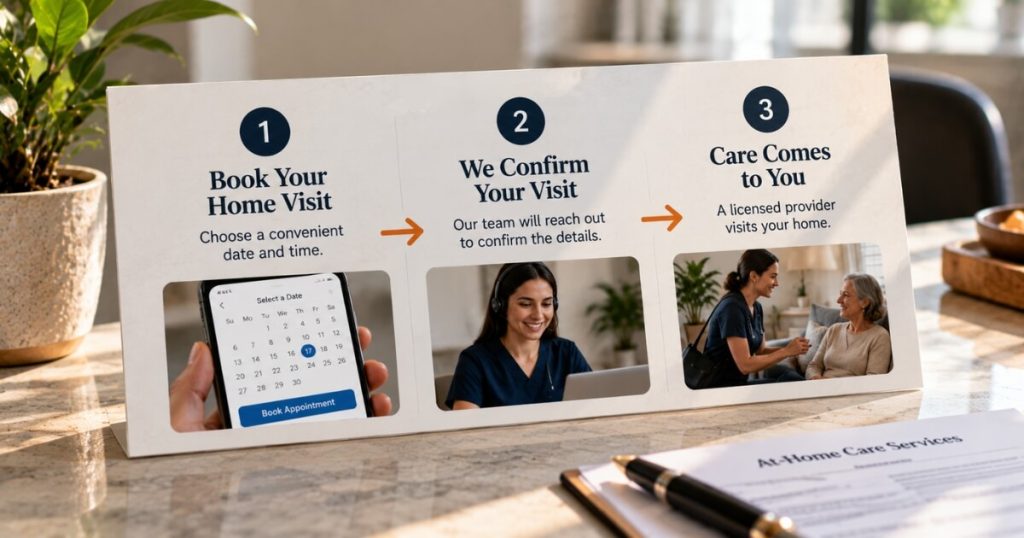
As a three-step flow — show pricing, confirm by email with the address, and collect the prepay.
That’s because a third party does the scheduling, not your front desk.
This practice’s mobile draws run about $150 unless routed through a partner lab network.
There are three fulfillment channels in play: two lab networks plus walk-ins.
The sequence starts by sending the pricing.
Next, confirm by email with the patient’s address and collect the roughly $150 prepayment before dispatch.
Collecting payment before dispatch isn’t bureaucracy.
It’s what makes a house-call service survivable in a cash-pay model.
The email confirmation also creates a paper trail on the patient record.
That matters when an outside phlebotomy service owns the appointment.
Who should answer which message in our shared inbox?
Filter by channel, answer what’s yours, and mark read ONLY when nothing is owed.
“The goal is just to get to Inbox Zero… make sure that people are not falling through the cracks.”
The daily routine from this call: each staffer filters the shared CRM inbox to their channels, answers, and applies one rule.
“If we answered it, you can mark it as read. But if there is a next item needed, we’re going to need to take care of it.”
An unread message is an open loop; a read message is a closed one.
That single convention turns the inbox from an anxiety pile into a work queue.
Give each staffer their own login, too.
Every sent text is then auto-stamped — “it documents the day and the time the text was sent, and it shows who did it.”
No manual charting notes required.
What happens after the patient books the draw?
Push the recall task about eight weeks — the cycle restarts itself.
When a texted patient books, the task doesn’t die; it moves.
Mark it complete and create the next one, or simply push the due date roughly eight weeks out to match the protocol interval.
That’s the difference between a reminder and a recall system.
A reminder fires once; a system loops for the life of the patient relationship.
This kind of retention machinery is the unglamorous core of functional medicine & longevity clinic marketing.
Recurring care only produces recurring revenue when the recall loop actually closes.
It’s the same discipline that keeps 250 members paying $1,000 a month at the HRT practice we grew from $1M to $4M a year: nobody lapses quietly.
FAQ’s About Patient Recall Systems for Labs
What return rate do clinics typically see on follow-up labs without a recall system?
This practice estimated “50-50” — a coin flip per patient.
With tasks, snippets, and the inbox routine, every overdue patient gets a logged touch instead of depending on staff memory.
How many text snippets does a clinic actually need?
Start with two: the standard recall (“You’re due for a blood draw — can we help you get that scheduled?”) and the mobile-draw variant that routes to pricing and prepay.
Add one per recurring workflow as they prove out.
Should recall texts come from a shared number or individual staff lines?
A shared, tracked clinic number — with individual staff logins so every message is stamped with sender, date, and time.
Patients see one consistent identity; you see exactly who did what.
How do we test a new recall workflow without risking patient annoyance?
The way this clinic did: run it on a house test subject first.
In their case, it was the owner’s father.
“We have everyone work through the office the same way… just so things won’t get lost.”
Then go live on the overdue list.
What’s the eight-week push for?
It matches the draw interval.
Once a patient books, pushing the task roughly eight weeks re-arms the recall for the next cycle automatically.
No one has to remember to remember.
What’s the next step?
If your follow-up labs are a coin flip, your protocols — and your recurring revenue — are running at half power.
Book a strategy call.
In 60 minutes, we’ll audit your overdue list, write your recall snippets, and set up the task hygiene rules.
We’ll also leave your team with the same system this practice rated a 10 out of 10.