
How to Automate a Cash-Pay Membership Retention Journey (Every Touchpoint From Intake to Month 12)
Most cash-pay clinics treat retention as a vibe—great care, friendly staff, and hope. Clinics that keep members paying for years treat it as an engineered journey instead. They build a fixed sequence of automated touchpoints that starts before the first consultation and continues through month 12 and beyond. Here’s the blueprint, touchpoint by touchpoint.
Why do cash-pay membership patients cancel even when their treatment is working?
Because retention fails in the silence between appointments, not in the exam room.
A membership patient’s experience of your clinic mostly happens in the gaps.
Those gaps include the days between the first consultation and the first visit, the weeks between refills, and the months between labs.
During those gaps, members slowly forget how bad they felt when they signed up.
For example, a hormone member who feels normal again by month four no longer remembers month zero.
Instead, they simply see a recurring charge.
Likewise, a weight-loss member who reaches their goal weight sees even less reason to keep paying.
That’s why smart GLP-1 & weight loss clinic marketing treats the retention journey as part of the offer itself, not as an afterthought.
The uncomfortable truth is simple.
Working treatment doesn’t retain members.
Remembered progress does.
However, memory doesn’t maintain itself.
You have to schedule it.
That’s exactly what a retention journey is.
It’s a calendar of moments, built once and automated, that keeps each member’s progress in front of them so the monthly charge always has a clear “why.”
What touchpoints should an automated member retention journey include?
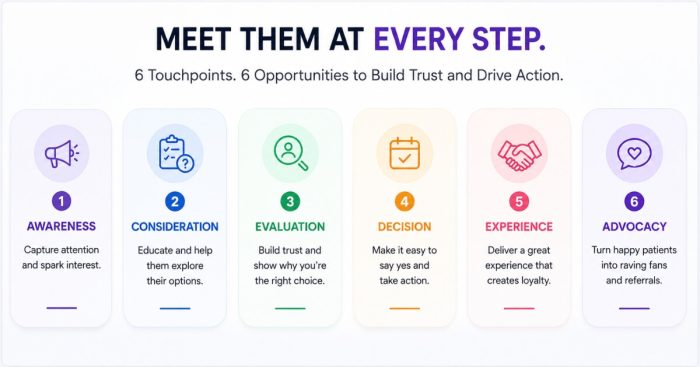
Six, in this order:
- A pre-consultation intake form.
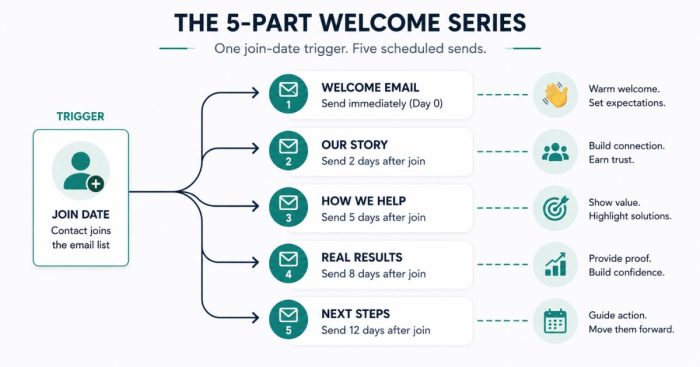
- A welcome email with a video explaining the next steps.
- A welcome box with branded swag.
- A 90-day re-intake form.
- A self-grading question on treatment-plan adherence.
- Automated email and SMS at every milestone.
Each touchpoint has a specific retention job.
1. Pre-consultation intake form
Send it before the first visit.
It documents baseline symptoms, energy, sleep, weight, and goals in the member’s own words.
Think of it as the written version of a “before” photo.
Every later touchpoint compares against it.
2. Welcome email with video
Send it within minutes of joining.
A short video from the provider or team explains exactly what happens next, including the first appointment, labs, and how to reach the clinic.
As a result, it eliminates much of the buyer’s-remorse window during the first 48 hours.
3. Welcome box with branded swag
A physical box makes an intangible membership feel real.
It’s also the first thing many new members photograph and show their friends.
4. 90-day re-intake form
Use the same questions from the original intake.
Send it during the first major churn danger zone.
The member restates their progress in their own words.
5. Self-grading question
Include one question inside the 90-day form asking members to grade how well they’re following their treatment plan.
We’ll explain why this works in the next section.
6. Milestone automation
Pre-build emails and SMS messages for every milestone—90 days, 6 months, 9 months, and beyond.
That way, no touchpoint depends on a staff member remembering to send it.
What should happen at the 90-day mark to stop the first cancellation wave?
Send a second intake form that encourages members to restate their own progress.
In other words, let them sell themselves on staying.
Ninety days is where the first churn wave usually appears.
By then, the novelty has faded.
Results feel “normal.”
Meanwhile, the third or fourth monthly charge has already posted.
Most clinics respond with a discount or a plea.
A better approach is to hold up a mirror.
Re-send the same intake form the member completed on day zero.
Use the same symptom questions and the same 1-to-10 scales.
Then let them see the difference for themselves.
A member who originally wrote, “Exhausted by 2 p.m. every day,” and now writes, “Energy is good most days,” has just reminded themselves why they joined.
Nobody at the clinic had to make that case.
Next, add the pro tip from the original playbook.
Ask members to grade how well they’ve followed their treatment plan.
That grade quietly works in two directions.
A member who gives themselves a C often attributes a plateau to their own adherence instead of blaming the program.
As a result, they usually recommit.
Meanwhile, a member who gives themselves an A has documented—in their own handwriting—that the plan works when they work it.
Either way, the renewal conversation becomes easier long before it actually happens.
Which retention touchpoints should be automated and which should stay human?
Automate the cadence. Keep the meaning human.
The rule from the source playbook is blunt: automate your customer journey completely.
Build automated emails and SMS messages for every touchpoint—90 days, 6 months, 9 months, and every milestone after that.
Cadence is exactly what software is for.
A team member might forget the six-month check-in during a busy week.
However, a CRM never will.
If the value of a touchpoint depends on happening on time, automate it without guilt.
Still, a handful of moments matter precisely because a person delivers them.
Examples include:
- a handwritten note inside the welcome box
- the provider personally calling a member whose 90-day self-grade came back low
- the front desk greeting a month-nine member by name
Automation should create those moments, not replace them.
The CRM flags the low self-grade.
Then a human makes the call.
Hormone memberships are where this balance matters most.
A TRT member who feels great at month six is quietly deciding whether the monthly charge is still worth it.
A well-timed progress recap becomes the retention half of men’s hormone clinic marketing.
The acquisition half fills the funnel.
The retention journey keeps it full.
How do I set up the retention automation without hiring a tech team?
Use one CRM that handles email, SMS, and forms.
Then build six templates and trigger them from the membership start date.
This is an afternoon of setup, not a software project.
Follow this build order:
- Pick one system that manages email, SMS, and forms in the same place. That way, a form submission can trigger a message automatically.
- Build the two forms first: the pre-consultation intake form and the 90-day re-intake form. Use the same questions, then add the self-grade question to the 90-day version.
- Write the welcome email and record the welcome video once. One take with a phone camera is enough. The provider simply explains the next steps. Done is better than cinematic.
- Create one automation triggered by the membership start date. Schedule the welcome message immediately, then the 90-day re-intake, the six-month check-in, the nine-month check-in, and the 12-month renewal recap.
- Add one internal alert. Any 90-day form showing a low self-grade or worsening symptom score should automatically create a follow-up task for a team member.
That’s the entire stack.
The welcome box is the only touchpoint that lives outside the CRM.
Batch-assemble one month’s worth at a time.
Then make shipping it a checklist item on day one of every new membership.
How do I know the member retention journey is actually working?
Watch two numbers every month:
- membership churn rate
- average member lifespan
A healthy retention journey should show movement within one 90-day cycle.
Churn tells you whether the bleeding slowed.
Average member lifespan tells you whether every new patient became more valuable.
That’s where the money hides.
That recurring revenue exists because members stay.
At $1,000 per month, extending average member lifespan by only three months across 100 members creates an additional $300,000.
For many clinics, that’s more than an entire year’s advertising budget.
And it comes from forms, emails, and a cardboard box.
That’s the real argument for the retention journey.
Acquiring patients becomes more expensive every year.
Retention is the only lever that increases the value of every acquired patient without spending another advertising dollar.
FAQ’s About Automating a Cash-Pay Membership Retention Journey
When should the first retention touchpoint happen?
Before the first consultation.
The pre-consultation intake form documents baseline symptoms and goals in the member’s own words.
That creates the “before” record every future touchpoint—especially the 90-day re-intake—compares against.
What should a new-member welcome email include?
Include a short video explaining exactly what happens next.
Cover the first appointment, labs, and how to reach the team.
Also include one clear action for the member to take.
Send it within minutes of joining, while excitement is highest and buyer’s remorse hasn’t started.
Do welcome boxes with branded swag actually improve retention?
Yes.
Not because of the swag itself, but because a physical box makes an intangible membership feel real and shareable.
It’s often the first thing a new member photographs and shows friends.
As a result, a retention touchpoint also becomes a referral touchpoint.
Why ask members to grade themselves on following their treatment plan?
Because a self-assigned grade reframes the results conversation.
A member who gives themselves a low grade usually attributes a plateau to their own adherence instead of blaming the program.
Meanwhile, a member who gives themselves a high grade has documented their own progress.
Either way, the clinic doesn’t have to make the case for staying.
How often should automated emails and SMS go out to members?
Send them at every milestone in the journey.
That includes the welcome message, 90 days, 6 months, 9 months, and annual milestones.
Also send practical reminders for appointments and refills.
However, milestone messages should always recap the member’s progress instead of promoting new services.
What’s the next step?
If your cash-pay clinic signs members up successfully but watches them quietly cancel between months three and nine, the problem usually isn’t your medicine.
It’s the silence between visits.
Book a strategy call.
In 60 minutes we’ll map your current member journey, identify the missing touchpoints, and show you the exact automation sequence—from intake through month 12—that fits your specialty and your CRM.