
How to Launch an HRT Campaign at an Established Cash-Pay Practice (The Pre-Launch Checklist That Decides Your Results)
Adding a women’s HRT program to an established practice is one of the highest-LTV moves in cash-pay medicine—and one of the easiest launches to fumble. Last October, we sat on the launch call with a multi-location vein and cosmetic practice we work with across Michigan and the Carolinas as they added women’s HRT. In 43 minutes, we locked the budget, the targeting, the attribution setup, and the lead follow-up plan, then pushed the campaign live the next day. Here’s that launch, turned into the FAQ every clinic owner asks us.
What do I need in place before spending money on HRT ads at my existing practice?
Five things: ad creative, a dedicated landing page with its own form, a tested CRM integration, a lead-response plan, and a written patient target.
You don’t need a rebrand or a brand-new website before launching. You need those five pieces working together.
The practice we launched had two video ads filmed by its own team and a landing page we built specifically for the campaign.
However, the step most clinics skip is the one that protects the launch.
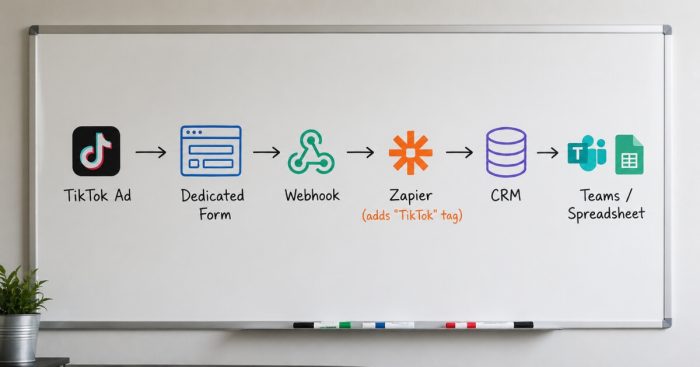
We tested the entire integration live during the call. We submitted a fake lead, watched it flow from the landing page through a webhook and Zapier into the CRM, and confirmed the new “best time of day” field mapped correctly from one radio button to another.
The first test failed silently because the test contact already carried the required tag. The second test worked exactly as intended.
That small test prevented a costly mistake. A campaign that launches without testing its integration can spend the entire first week generating leads nobody ever sees.
Finally, write down a specific patient goal.
This practice targeted 50 new HRT patients during month one across all locations, with growth planned each month afterward.
For context on what an established practice can build toward, we’ve also seen an established practice that added 102 HRT and concierge members.
That single number transforms “let’s try some HRT ads” into a real medical practice marketing plan. Once you know the target, you can size the budget, targeting, and staffing accordingly.
How much should I budget to launch an HRT campaign?
Start at $50 per day for each market, then scale based on results.
Don’t overspend during the first month.
For this three-state practice, that meant running three separate campaigns:
- Michigan — $50/day
- South Carolina — $50/day
- North Carolina — $50/day
Together, the launch budget totaled roughly $4,500 per month.
Larger markets can justify more spend. For example, Detroit could comfortably begin at $75 per day while smaller markets remain at $50.
Set expectations using real campaign data instead of optimistic guesses.
A comparable women’s health campaign we manage currently spends about $100 per day and generates leads at approximately $10 each. However, it reached that efficiency after four months of optimization.
When that campaign first launched, leads averaged roughly $20 each.
Plan your first month around the higher number and allow the algorithm to improve performance over time. In our experience, optimized campaigns often reduce cost per lead by roughly half.
Growth comes from proving the economics before increasing spend.
NuLevel Wellness Medspa added $6,708,600 in revenue and 3,727 new patients in a single year on multi-channel paid ads. However, that scale came after the launch numbers proved profitable—not before.
Who should I target with HRT ads (and which channel should I launch on)?
For a women’s HRT campaign, target women aged 45 and older who qualify as engaged shoppers within driving distance of each clinic location.
This practice launched on TikTok first.
Engaged shoppers represent users who actively purchase products online. As a result, they’re generally more likely to click, complete forms, and become paying patients.
The age targeting deserves deliberate thought.
Our default audience for many women’s campaigns begins around age 35 because established practices usually offer multiple services that appeal to younger women.
For this campaign, however, the offer focused exclusively on hormone replacement therapy.
Therefore, we shifted the minimum age to 45, where symptoms like hot flashes, poor sleep, and perimenopause immediately make the messaging relevant.
Campaign structure matters, too.
Instead of combining every market into one campaign, build one campaign for each state or geographic area.
Doing so gives you independent budget control, cleaner reporting, and the flexibility to increase or decrease spending by market without affecting every location.
How do I track which ad produced which HRT patient?
Give every advertisement its own landing-page form.
That simple structure solves attribution by design.
The form used in this campaign existed only on the landing page connected to that advertisement.
It wasn’t linked from the main website, Google Business Profile, or anywhere else.
Consequently, every form submission automatically belonged to that specific campaign.
There’s no guessing and no modeled attribution.
When it’s time to launch on another platform, clone the funnel, create a new form, and assign that form its own source tag.
During this launch, the CRM workflow moved each submission from the form through a webhook and Zapier into the CRM. We even renamed the source tag to include “TikTok” so the client’s business-intelligence team could follow the data downstream into Microsoft Teams and its reporting dashboard.
The client originally planned to build hidden UTM fields for source, medium, and campaign.
Ultimately, they didn’t need them.
One form per ad is simpler.
More importantly, simple systems survive handoffs between your agency, your CRM, and your operations team.
What should happen in the first five minutes after an HRT lead comes in?
The first message should arrive while the prospect is still holding their phone.
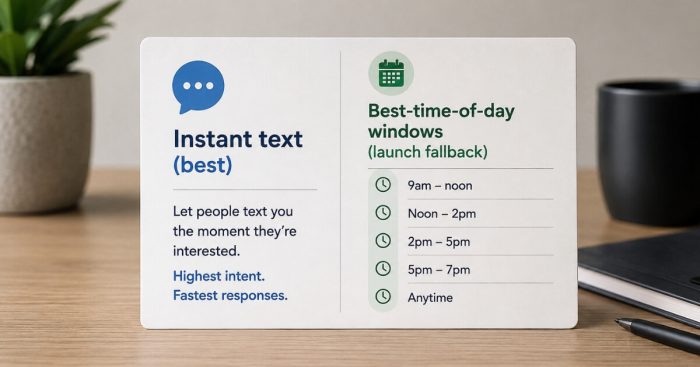
A simple text works best:
“We got your results. Would you prefer we help you schedule by text or by phone?”
Most people reply “text.”
Now you’re having a scheduling conversation instead of leaving another voicemail.
Think about when someone completes a hormone quiz from TikTok.
They’re usually eating lunch, relaxing on the couch, or scrolling before bed.
At that moment, they’re emotionally committed to solving the problem.
Four hours later, life has taken over.
That’s why speed to lead consistently outperforms nearly every other optimization.
During this launch, we told the client directly that every paid campaign would underperform until follow-up happened in real time.
Advertising buys the opportunity.
A strong patient acquisition system converts that opportunity into appointments.
Do I need a call center before I can launch an HRT program?
No. Launch with the team you already have, but build a structured follow-up process instead of hoping someone eventually calls the leads.
This practice launched with a three-person follow-up team and no call center because the owner wasn’t ready to outsource patient communication.
Instead, the lead form included one required question:
“What’s the best time of day to connect?”
The available options were:
- 9 a.m.–noon
- Noon–2 p.m.
- 2–5 p.m.
- 5–7 p.m.
- Anytime
Each lead was routed immediately into the team’s Microsoft Teams channel and tracking spreadsheet.
That fallback worked better than expected.
During the practice’s internal trial, five out of five leads answered the phone during the time window they selected, and four of those five scheduled appointments.
It’s a small sample, but it illustrates an important principle.
When the patient chooses the time, they’re much more likely to answer the call.
Your follow-up staff also don’t need to become hormone experts.
Their role is simply to identify the problem, show empathy, and schedule the consultation.
The conversation can be as straightforward as:
“You’re having hot flashes? Gosh, how long has that been going on? I think we can probably help you.”
Launch with your current team first.
Then, once campaign volume justifies it, invest in dedicated real-time coverage.
That sequence produces better returns than delaying the campaign while waiting to hire.
What conversion rate should I expect from a new HRT campaign?
Use approximately 13% lead-to-booked paid consult as your minimum benchmark for a friction-heavy funnel, then work to improve it through faster follow-up and stronger systems.
That 13% figure comes from a real September campaign for a comparable telehealth hormone practice.
The funnel generated:
- 320 leads
- 40 booked paid consultations
Those results came despite requiring patients to enter a credit card when booking and offering little beyond a free consultation.
That’s significant friction.
If your campaign combines a stronger introductory offer with the text-first follow-up process described above, you should outperform that benchmark.
The ceiling is considerably higher.
However, the difference doesn’t come from better ads.
It comes from better follow-up.
Orthobiologics Associates converts 79.4% of its leads into booked appointments using a structured inside-sales process for organic leads.
The difference between 13% and nearly 80% isn’t creative quality.
It’s what happens after someone submits the form.
FAQ’s About Launching an HRT Campaign at an Existing Practice
How fast can an established practice launch an HRT campaign?
If your assets already exist, you can launch within a day.
The practice featured here finalized its budget, targeting, and tracking during a Wednesday strategy call. The campaign went live the very next day.
Typically, the longest parts of the process are creating ad creative and testing CRM integrations—not building campaigns inside the ad platform.
Should I run one HRT campaign or one campaign per location or state?
Run one campaign for each market or state.
Doing so gives you independent budget control, cleaner reporting, and the ability to pause or scale one location without affecting every campaign.
Within each campaign, target a driving radius around your physical clinic rather than an entire state.
What is a realistic cost per lead for HRT ads?
Budget around $20 per lead during launch.
As the campaign gathers data and optimizes, expect costs to trend closer to $10 per lead.
Those numbers come from a comparable women’s health campaign spending approximately $100 per day.
Treat unusually low cost-per-lead promises with skepticism until someone shows you the actual ad account.
Do HRT ads work on TikTok?
Yes.
This campaign launched on TikTok, targeting women aged 45 and older who qualified as engaged shoppers within driving distance of each clinic.
Authentic provider videos and patient-story content consistently outperform polished commercial-style ads.
Once TikTok proves profitable, duplicate the funnel for Meta so each platform maintains its own landing page, form, and attribution.
Can I launch an HRT campaign without dedicated salespeople?
Yes.
Start by adding a required “best time of day to connect” field to your lead form and routing new leads immediately to whoever handles follow-up.
One practice’s internal test produced five answered calls out of five attempts and four scheduled appointments because every patient selected their preferred callback window.
Expect dedicated real-time coverage to improve performance later.
However, it isn’t required before launching.
What’s the next step?
If you’re adding HRT—or any other high-lifetime-value service—to an established cash-pay practice, the decisions in this guide don’t require six months of planning.
They require one focused strategy session.
Book a strategy call, and we’ll map your offer, establish your per-market budget, build your one-form-per-ad attribution system, and design a follow-up process your current team can execute immediately.
The same playbook works for vein practices, med spas, hormone clinics, and other cash-pay specialties.
Ultimately, the results come from doing the unglamorous work first: testing the integration, verifying the CRM, and responding within five minutes—before spending the first advertising dollar.