
What Should My Front Desk Say to Sell a Paid Consultation at a Women’s Health Clinic? (The Verbatim Phone Script)
Most front desks answer a new-patient call like a receptionist: hours, prices, “would you like to book?” The clinics that convert callers into paid consultations run the call like a consultation itself. Below is the actual script arc we built with a cash-pay women’s health and hormone clinic. It includes the exact questions, the risk-reversal pricing presentation, and the two-option close. We install this same structure as part of a predictable patient acquisition system. Steal it word for word.
What’s the structure of a front-desk call that sells a paid consultation?
Eight beats, in order: identify the problem, salt the cut, offer the solution, explain just a little, take away risk, add urgency, ask for the business, and present two options so the caller chooses.
That’s the entire mental outline your coordinator needs taped to their monitor.
The call starts with one deceptively simple question:
“How did you hear about us? Were you referred by a friend, or did you look us up online?”
It sounds like small talk. In reality, it routes the conversation.
A referral already carries trust, so the follow-up is:
“What’s going on that your friend referred you to us?”
An online searcher needs the problem drawn out first, so the follow-up is:
“So tell me, what’s going on that has you looking for women’s health doctors online?”
Either way, the caller now tells you her problem in her own words.
The script’s most important instruction appears right there, in capital letters:
LISTEN.
Everything that follows—the empathy, the solution framing, and the close—comes from what she says during that first minute.
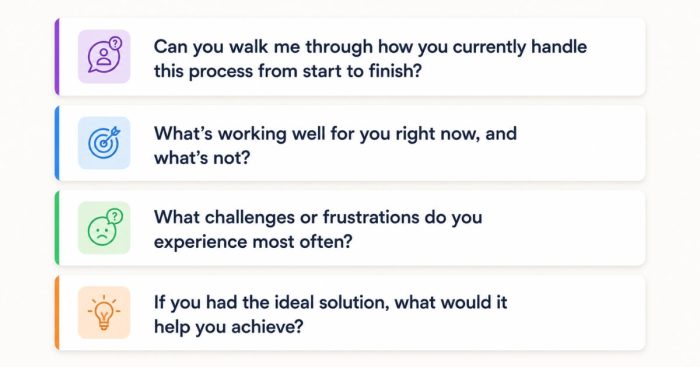
What discovery questions get a caller to open up about her health problem?
Four questions, asked gently and in order, do the selling for you.
- “What are you doing right now to try and solve this problem?”
- “What have you tried in the past?”
- “Has there been anything that’s given you any relief? Anything that’s worked?”
If the moment calls for it, ask the why-now question—especially for weight loss:
“Is there anything going on in your life right now that has you wanting to lose this weight now?”
Weddings, reunions, holidays, or a doctor’s warning—there’s almost always a reason the call happened today.
This is what the script calls “salting the cut.”
You aren’t manufacturing pain. You’re letting the caller explain how frustrating the problem already is and how little her previous attempts have worked.
A woman who has just said out loud that she’s tried three things, none worked, and her daughter’s wedding is in five months doesn’t need convincing that she should act.
She needs a credible place to act.
That’s exactly when your coordinator delivers the solution line:
“Well, I’m glad you found us—because solving [her problem] is exactly what we do. In fact, we’ve written books on it. We specialize in exactly that.”
How do I present a paid consultation without scaring the caller away?
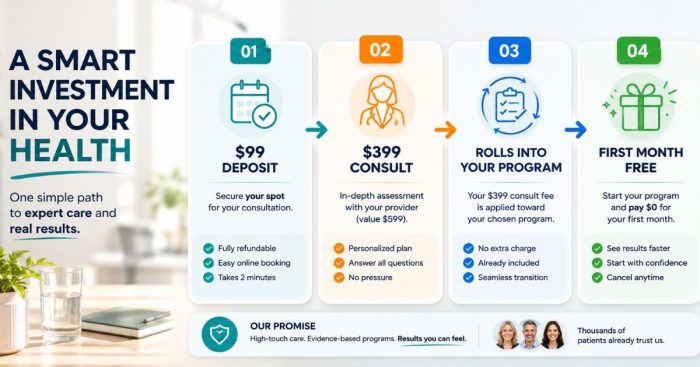
Take away the risk before you say the price. The consult fee should roll into her program, so it never feels like money burned.
The structure from the script is simple.
Present a $99 deposit option. Then present the $399 consultation.
Explain it this way:
“You can roll the initial consultation investment into any ongoing program of your choice, whatever is most appropriate to help you accomplish your goals.”
The caller hears this:
- Worst case, I’ve paid for an expert consultation.
- Best case, it became a credit toward my program.
For a new hormone patient, the script gets even more specific:
“To get started, we’ll do labs and an initial consultation to review your lab work with you. The labs are $375 and the initial consultation is $349. After the consultation, if it’s appropriate for you to move forward with hormone treatment, your first month is free.”
Notice what this does.
Every dollar has a stated purpose—labs and expert review.
The first-month-free bridge also removes the sting of paying twice before treatment starts.
Charging for consultations filters for serious patients. It also raises show rates.
Clinics that run this model well build the kind of recurring-revenue base that took one HRT practice from $1M to $4M a year with 250 members paying monthly.
Should we do labs in-house or send patients to Labcorp or Quest?
Offer both. Frame the in-house option around convenience. Then warn honestly about possible insurance surprise bills and let the caller choose.
The script’s verbatim framing is:
“You can either come into our clinic before your consultation and do the labs here—without waiting in line or dealing with difficult scheduling—for $375. Or we can send a lab requisition to LabCorp or Quest, depending on your insurance company. You’ll just want to verify those labs are covered by your insurance, to avoid a frequently large surprise bill.”
Then move directly into the choice close:
“Do you want me to schedule the lab work here at our clinic, or send you the requisition to schedule on your own?”
Both answers move the sale forward. That’s the point.
The moment she chooses, continue with:
“Okay, great—I can get that scheduled. I just need to collect a little basic information from you.”
The close hides inside logistics.
There’s no awkward “So…do you want to book?” moment where the call can die.
How should the front desk answer “Do you take insurance?”
Use the superbill pivot. Acknowledge the question, redirect to value, and explain every payment option you support.
Verbatim from the script:
“We’re completely out of network with insurance. However, we’d be happy to help you by providing a superbill at the end of your treatment that you can submit to your insurance company for potential reimbursement. We do accept HSAs and FSAs, and we offer financing options.”
Three things make this answer work.
First, it’s honest and unapologetic. There’s no discount energy or over-explaining why you don’t take insurance.
Second, it gives the caller a path to recoup costs through a superbill.
Third, it immediately explains the payment options that make treatment easier than she assumed, including HSAs, FSAs, and financing.
For high-consideration cash-pay care—hormones, weight loss, and longevity programs—this objection often determines whether the caller books a consultation or says, “I’ll think about it.”
It’s also a cornerstone of functional medicine and longevity clinic marketing, where nearly every caller asks this question.
Why should we only present two options at the end of the call?
Because two options produce a choice, while five produce a callback. Most “let me think about it” responses come from option overload, not doubt.
The script is explicit:
“Present options, let them choose. Show ONLY 2 options ideally.”
Before presenting anything, ask permission:
“Do you want me to explain what it looks like to become a patient here?”
That earns a yes and makes the presentation feel invited instead of imposed.
Two options also reframe the decision.
“Labs here or a requisition to Quest?” and “the $99 deposit or the full consult today?” are both choices between two yeses.
The caller never faces the raw yes-or-no question of spending money.
Instead, she chooses which path fits her best.
That’s not a trick. It’s respect for how people make decisions during a phone call with a stranger.
Train your coordinator to maintain the two-option discipline, even when she’s excited. Then track call-to-consult conversion before and after. That one habit routinely moves conversion by double digits.
FAQ’s About Front Desk Paid Consultation Scripts
Should a cash-pay clinic charge for the initial consultation?
Yes, in most cases.
A paid consult ($99–$399 depending on market and specialty) filters for serious patients, reduces no-shows, and positions the visit as expert time worth paying for—especially when the fee rolls into the patient’s ongoing program so it never feels lost.
What’s the first question the front desk should ask a new caller?
“How did you hear about us—were you referred by a friend, or did you look us up online?”
It routes the conversation.
Referrals carry borrowed trust and need less convincing. Online searchers need discovery questions before you discuss pricing.
How does the front desk handle “How much does it cost?” early in the call?
Answer briefly, then return to the problem.
Pricing sounds expensive when the caller hasn’t yet explained her problem.
Acknowledge the question (“I’ll walk you through exactly what it costs in a second”), then ask what prompted the call.
Price lands differently after she’s explained what the problem is costing her.
What should we say about insurance at a cash-pay women’s health clinic?
“We’re completely out of network with insurance. However, we’d be happy to provide a superbill at the end of your treatment that you can submit for potential reimbursement—and we accept HSAs, FSAs, and offer financing.”
Keep the answer confident, honest, and immediately follow it with the payment options you offer.
How many options should the front desk present at the end of the call?
Two.
“Show ONLY 2 options” is the rule.
Offer labs in-house or a requisition. Offer a deposit or the full consultation.
Two options create a choice between yeses.
More options create “let me think about it.”
What’s the next step?
If your front desk is answering new-patient calls with hours and prices instead of a script like this one, you’re paying for marketing that dies at the phone.
The script above is the fix. However, it only works when someone installs it, trains it, and holds the team accountable to the numbers.
Book a free strategy call.
In 60 minutes we’ll listen to how your calls are handled today, map where callers fall out, and show you what a trained front desk should convert in your specialty.
Bring your call recordings if you have them—we’ve listened to a lot of calls.