
What Should a Women’s Hormone Quiz Ad Actually Say? (6 Proven 60-Second Scripts for a Cash-Pay Clinic)
INTRO:
A women’s hormone quiz ad has one job: make a busy woman feel seen in the first three seconds, then offer her a 60-second path to clarity. The clinics filling their hormone programs aren’t running ads about testosterone, estrogen, or HRT — they’re running ads about the 2 p.m. crash, the scale that won’t move, and the brain fog that made her read the same email three times. Here’s the FAQ on exactly what a women’s hormone quiz ad should say, with six proven 60-second scripts you can film this week.
What should a women’s hormone quiz ad actually say?
Lead with the symptom she feels every day — not the hormone, the lab panel, or the treatment.
A woman scrolling at 2 p.m. is not searching for “estrogen optimization.”
She feels:
- Exhausted
- Foggy
- Frustrated that clean eating and daily steps aren’t working
The ad that converts names that exact experience:
“Women 30–55: exhausted by 2 PM?”
Then it:
- Reframes the problem as biology rather than a personal failing
- Removes blame
- Offers a free 60-second quiz as the next step
The structure never changes:
- Symptom hook
- Reframe (“it might be your hormones, not your willpower”)
- One clear CTA to take the quiz
Why do symptom-led hooks beat treatment-led hooks for women’s hormone ads?
Because most women are Problem Aware, not Product Aware — they know something is wrong but haven’t decided that HRT is the answer.
A treatment-led hook like:
“Now offering bioidentical hormone therapy”
only speaks to women already shopping for HRT.
A symptom-led hook like:
“Eating clean, moving daily… scale stuck?”
speaks to the much larger audience that:
- Feels off
- Knows something isn’t working
- Hasn’t identified the cause yet
Map the message to the awareness stage and the quiz becomes the bridge:
I feel off → Maybe it’s my hormones → I should book
Reframing the struggle as biology —
“you don’t need more willpower, you need better inputs”
— removes the shame that quietly stops most women from reaching out.
What are the best 60-second hook scripts for a women’s hormone quiz funnel?
Six scripts, each built on a symptom she recognizes in the first second, all ending on the same quiz call to action.
1. The 2 PM Crash
“Women 30 to 55: exhausted by 2 PM? Sara did everything right — clean meals, steps, supplements — and still felt wiped by lunch. It wasn’t laziness; her hormones were waving a flag. Take the 60-second Women’s Hormone Quiz and get your next steps.”
2. Doing Everything Right
“Eating clean, moving daily, and the scale won’t budge? If fat won’t move and your sleep is trash, it might be your hormones, not your willpower. The quiz shows where to look first — then what to do.”
3. Mood, Sleep, Cycle
“Mood swings, broken sleep, and weird cycles? Emma thought she was ‘just stressed.’ Our quiz flagged the pattern that pointed to hormone imbalance — so she had a plan, not guesses.”
4. Brain Fog at Work
“Reading the same email three times? Fog, the afternoon slump, and low spark are classic signs something’s off. The quiz helps you see if it’s likely hormones, nutrition, or lifestyle.”
5. Willpower Isn’t the Problem
“You don’t need more willpower — you need better inputs. If you’re doing the work and still feel off, measure first. The quiz maps your symptoms to the most likely root so you fix the right thing.”
6. Mom Mode to Me Mode
“You run the house — but who’s running your hormones? Between school runs and Slack pings, your tank is empty. Quick quiz, fast clarity, realistic next steps that fit real life.”
How long should the quiz be, and what should the ad promise?
Under 60 seconds, free, and no pressure — promise clarity and next steps, not a diagnosis.
The promise that converts is:
- 60 seconds
- Zero jargon
- Free
Avoid over-promising results.
Instead promise:
- Clear next steps
- Helpful insights
- Patterns doctors often miss
For more-aware audiences, social proof helps:
“10,000+ women took this quiz”
Keep the quiz short enough to complete in one sitting.
Every extra question past the one-minute mark quietly reduces completions.
And completions are the asset you actually want.
Which awareness stage and audience should women’s hormone quiz ads target?
Start with Problem-Aware women 30–55 on the platforms where they already scroll — TikTok and Facebook/Instagram.
Why these platforms?
TikTok
- Female-skewing audience
- Discovery-driven behavior
- Ideal for Problem-Aware buyers
Facebook & Instagram
Allow identity-based angles such as:
- “Moms: running on empty?”
- “Leaders: sharp at work, wiped at home?”
- “Women doing everything right but still exhausted?”
This lets you identify winning audience segments before scaling spend.
We watched exactly this audience-and-channel fit compound at a weight-loss and medspa clinic where we added $6.7M in revenue in one year across 3,727 new patients — the front-end demand came from symptom-led social creative aimed at the women who feel the problem long before they go searching for a treatment.
How do I turn quiz completions into booked patients?
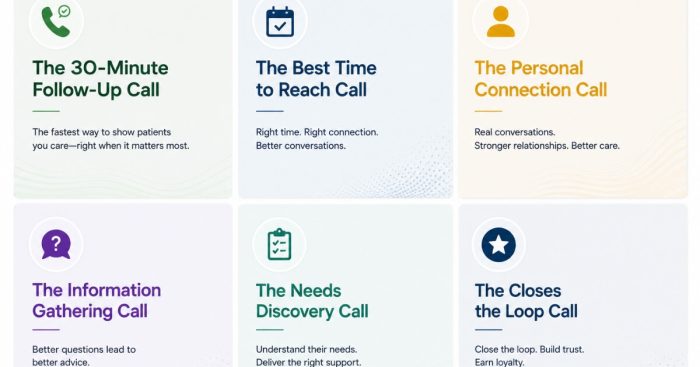
Treat the quiz result as the start of a conversation, not the finish line — follow every completion with a fast, personal call.
A completed quiz is:
- Warm
- Engaged
- Problem-Aware
- Self-identified
Speed-to-lead matters.
The clinic that calls while she’s still on the result page will consistently outperform the clinic that waits until tomorrow.
Use her answers:
- “You mentioned the 2 p.m. crash…”
- “You noted sleep issues…”
- “You mentioned weight gain despite healthy habits…”
Make the conversation feel personal.
Then route her toward:
- A paid baseline-labs consult
- A clinical evaluation
- A membership pathway
Not a casual free chat.
That is how a 60-second quiz becomes recurring membership revenue, the model behind an HRT clinic we grew from $1M to $4M a year with 250 active members, where the recurring hormone membership — not the first visit — is the real prize.
FAQ’s About Women’s Hormone Quiz Ads
Should the ad mention HRT or hormones at all?
Lead with the symptom and introduce hormones only as the reframe — “it might be your hormones, not your willpower.” Naming the treatment in the hook narrows your audience to the few women already shopping for it and skips the much larger group who only feel the symptoms.
How many scripts should I test at once?
Run three to five symptom angles in parallel. Identity and symptom hooks let you see which segment of women responds — moms, leaders, lifters, night-shift workers — before you put real budget behind a winner.
Is a quiz better than a lead form?
For Problem-Aware women, yes. A 60-second quiz gives her a reason to engage and gives you her actual symptoms, which makes the follow-up call far more personal and far higher-converting than a name-and-email form ever will.
What’s the biggest mistake clinics make with these ads?
Over-polished brand creative. A real, plain, testimonial-style or selfie video about a relatable woman outperforms studio production almost every time, because the woman watching needs to feel seen, not sold to.
What’s the next step?
If your women’s hormone program isn’t full, the problem usually isn’t your medicine — it’s that your ads are talking about hormones when your future patient is feeling exhaustion.
Lead with the symptom.
Offer the 60-second quiz.
Call fast.
On a free strategy call we’ll map:
- Your symptom hooks
- Your quiz funnel
- Your follow-up cadence
- Your conversion path from quiz completion to membership
for your specialty and your market.