
Why Did My Cash-Pay Lead Ghost After Saying “Yes”?
The Pre-Pitch Mistake That Kills 30% of Confirmed Appointments at the Front Desk
The most common reason cash-pay leads disappear after expressing interest in an appointment is not that they changed their mind — it is that the front desk pre-pitched the pricing before the patient had confirmed the date.
The pitch was right. The sequencing was wrong.
A $600 price reveal stripped of value context, sent in a chat message before the patient even gave permission to discuss money, is the single most common reason cash-pay leads go dark.
This is the FAQ on the pre-pitch mistake, the verbatim example, and the four-move sequencing that converts interested-but-not-yet-confirmed leads into booked patients.
Why Do Cash-Pay Leads Ghost After Saying They Want to Book an Appointment?
Because the team gave them the pricing pitch before they had confirmed the appointment, putting the lead on the clinic’s agenda instead of the patient’s.
The most common pattern looks like this:
Lead: “I’m interested in HRT.”
Team: “Great, our hormone therapy starts with $300 for labs and $300 for the consult. If you move forward we credit the $600 toward your program.”
Lead: Disappears.
The pitch was the right pitch — for a patient who is already booked.
However, for a patient who has not even confirmed a date yet, it is a price reveal stripped of value context, sent before the patient gave permission to discuss money.
The patient now has a number to react to without any of the discovery, value stack, or rapport that would make the number land as reasonable.
As a result, they ghost.
The fix is sequencing:
- Confirm the appointment first.
- Ask for permission to call and confirm details.
- Introduce pricing inside the call with the value stack around it.
What Does It Look Like When a Cash-Pay Clinic Pre-Pitches a Lead Too Early?
Verbatim Example From a Gaya Wellness HRT Lead Exchange
Lead: “I’m interested in hormone replacement therapy and weight loss.”
Clinic: “Great. I can help you. The only days that work for me will be Monday or Friday, except this Friday. Next Monday, Krista is already booked. So does 10:00 AM on next Friday, June 6th, work?”
Lead: “I’ll let you know.”
Clinic (without waiting): “Our hormone therapy starts with $300 to get extensive labs done. After your consultation, you have the option to just pay $300 for the consultation and protocol with Krista, or if you decide to move forward with the program, we’ll credit the $600 towards your program. More than happy to get you set up…”
Lead: Never responds again.
The error is the unprompted price reveal.
The lead had not confirmed the date yet.
Instead, the clinic jumped from “does this date work?” to a price quote without waiting for the patient to commit to the date.
The pitch was correct for a confirmed appointment. It was premature for an unconfirmed one.
What’s the Correct Sequencing for an Inbound Cash-Pay HRT Lead Asking About an Appointment?
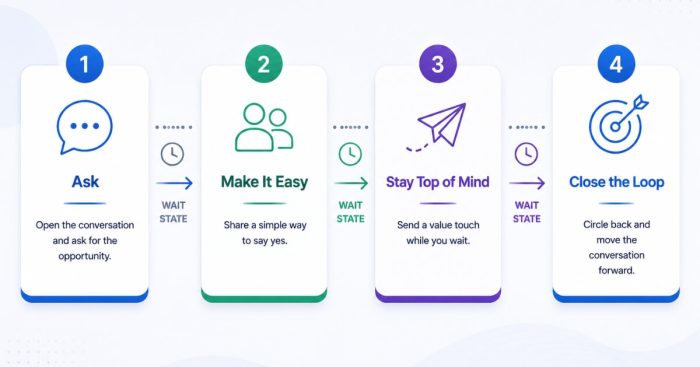
There are four moves, in order, with one wait state between each.
Move 1: Confirm Interest and Propose a Date
“Great, I can help you. Does 10:00 AM next Friday June 6th work?”
Then wait for the patient to say yes or counter with a different date.
Move 2: Pivot to a Confirmation Call
“Perfect. I’m going to give you a quick call just to confirm a little bit of information so we can get you scheduled. When’s the best time for me to call you?”
Then wait for a callback time.
Move 3: Run the Four-Question Discovery
The confirmation call itself runs the four-question discovery:
- What made you reach out today?
- What have you tried?
- What’s the symptom doing to your daily life?
- How long has it been going on?
Then wait for the answers.
Move 4: Introduce Pricing on the Phone
Only on the confirmation call, after discovery, with the patient on the phone, do you introduce pricing:
- Value stack first
- Then the $300 labs and $300 consult
- Then the credit-toward-program math
The patient hears the price inside the context the clinic has built, not stripped of context in a chat message they will read on a coffee break.
A regenerative medicine clinic we worked with hit a 79.4 percent conversion rate from lead to booked appointment running this exact sequencing across every inbound DM and form-fill.
Why Does Asking for a Phone Call Instead of Pitching by Text Close More Leads at a Cash-Pay Clinic?
Because pricing context is impossible to convey in a single text message.
Additionally, the patient who reads a $600 price quote in a chat window without hearing the team’s voice, the value stack, or the empathy behind it will reflexively decide it is too much.
The phone call gives the team three things the chat message cannot:
- Tone
- Sequencing
- The ability to listen back to what the patient says before quoting any number
The script:
“I’m going to give you a quick call to confirm a little bit of information — when’s the best time for me to call you?”
This is the highest-leverage sentence the front desk can write into the SMS or DM flow.
It moves the conversation from a chat window where the patient is in control of pacing to a phone call where the team controls the discovery, the value stack, and the price reveal.
Most cash-pay clinics that switch from chat-based pre-pitching to phone-call-based pricing see their confirmed-appointment-to-booked rate move 10–25 percentage points inside 30 days.
What’s the Script That Bridges From Text-Based Interest to a Confirmation Phone Call?
After the patient confirms the date in chat:
“Perfect, I have you down for 10 AM next Friday June 6th. I’m going to give you a quick call just to confirm a little bit of information so we can get you scheduled. When’s the best time for me to call you — today, tomorrow morning, or tomorrow afternoon?”
Three things happen in that sentence:
1. The Appointment Gets Confirmed in Writing
The patient feels committed.
2. The Call Is Framed as a Simple Administrative Step
The phone call request is framed as a quick logistical step (“a little bit of information”) rather than a sales call, which lowers the patient’s defenses.
3. The Patient Is Forced to Choose
The three time options force a choice rather than leaving the patient to schedule it themselves.
As a result, friction is removed and the likelihood of silence decreases.
Once the call happens, the team runs the four-question discovery, stacks the value, then reveals the price — in that order, on the phone, with the patient committed to the date.
How Does the Front Desk Know When It Has Pre-Pitched a Lead and Lost Them?
There are two signals.
Signal #1: The Lead’s Last Message Is a Hold Pattern
Examples include:
- “I’ll let you know.”
- “Let me think about it.”
- “Thanks, I’ll get back to you.”
There is no follow-up movement on the appointment slot.
Signal #2: The Team Sent Pricing Without Being Asked
The team’s most recent message was a multi-line block that included pricing without the lead having explicitly asked for it.
When both signals are present, the lead is ghosting because of the pre-pitch, not because they were never serious.
The Recovery Move
Do not double down on pricing.
Instead, send a single short message that resets to the agenda:
“Did the date I sent work for you, or would another time be easier?”
If the lead responds with a date, the appointment is back on.
If they do not respond inside 48 hours, move to the 8-touch chase sequence.
Most cash-pay clinics audit their dead chat threads weekly and find 20–40 percent of them traceable to a specific pre-pitch moment that can be coached out of the team going forward.
An HRT clinic we grew from $1M to $4M in 4 years built its 250-member book of business by drilling out exactly this pattern across the front desk.
What’s the Next Step?
If your cash-pay clinic has more than a handful of dead chat threads where a lead disappeared after asking about an appointment, the audit is the most useful sales-coaching exercise of the month.
Book a strategy call.
On the call, we audit five recent dead chat threads from your CRM, identify the exact message where the team pre-pitched and lost the lead, and rewrite the sequencing — chat for date confirmation, phone call for discovery and pricing.
Most cash-pay clinics are losing 20–40 percent of their booked-but-not-confirmed leads on a single pre-pitched chat message they sent inside the first hour of the conversation.
The fix is one sentence:
“When’s the best time for me to call you?”
Drilled into the team and inserted at the right moment in the chat flow, it becomes the cheapest sales fix in cash-pay with the largest single-week conversion lift available.