
How Does a Weight-Loss Clinic Retain Patients Who Aren’t Losing Weight? (The Weekly Plateau-Outreach System That Lifts LTV)
A weight-loss patient who stops losing weight doesn’t complain — she quietly stops showing up, and her $500-a-month membership goes with her. On a recent strategy call with a cash-pay weight-loss practice, the owner counted 93 active patients he was “concerned about” on weight loss, with practice LTV stuck around $1,200 — roughly two to three months of membership. This is the FAQ on the plateau-outreach system we mapped on that call: how to catch stalled patients weekly, what to text them, who should call them, and when to escalate the protocol.
Why do weight-loss patients really cancel their memberships?
Because the results stalled — churn at a weight-loss clinic is a results problem before it’s a billing, price, or marketing problem.
The practice on this call charges around $500 a month and was holding LTV near $1,200.
That’s:
- a two-to-three-month average patient life
- in a business where the clinical journey should run six months or longer
The owner’s own math made the case for retention over acquisition.
The same principle shapes effective weight loss clinic marketing, where increasing patient lifetime value often produces a bigger return than continually investing in new patient acquisition.
Keeping people just:
- one more month
- two more months
would move revenue more than any ad campaign.
And he had:
- 93 currently active patients
- flagged as not losing weight
- every one of them a cancellation in progress
The trap most clinics fall into is reviewing stalled patients on a slow cadence.
This practice held a chart review:
- every three weeks
- with the MAs
- and the nurse practitioner
By the time a plateaued patient came up for discussion, she’d often already decided the program wasn’t working.
Plateaus age fast.
The system below shrinks the loop from three weeks to one.
How do you catch plateaued patients before they cancel?
Pull a weekly report of everyone who isn’t losing weight, and reach out before their next visit — with a revised plan, not a survey.
The mechanics we mapped on the call are deliberately simple.
Weekly Plateau Workflow
- Pull the list of patients showing little or no loss in the last 30 days.
- Review each patient’s case.
- Draft a different plan for each patient.
- Send a CRM text before the next visit.
- Adjust the treatment plan at that visit.
The clinic already tracks weigh-ins through:
- its EMR
- a spreadsheet
So once a week — Thursday works well — the owner pulls the list and has the team prepare an updated plan.
The outreach message is simple:
Here’s what we want to change, and our price has dropped — we can also price match.
Speed matters.
Wait a few days and the patient’s willingness to engage drops.
The goal is to reach them before the next scheduled visit so the plan can change at that visit.
The automated version comes from one of the fastest-growing weight-loss practices in the country.
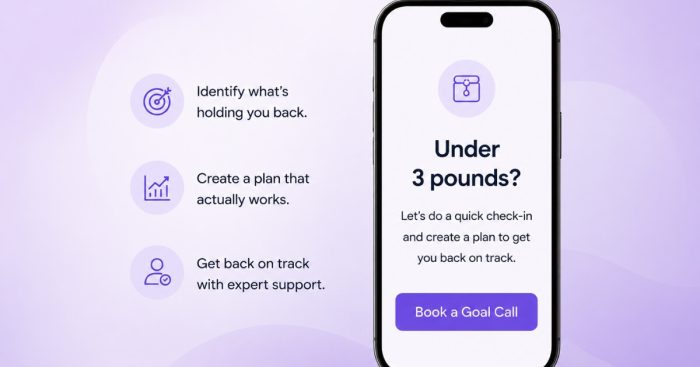
When a refill form reports less than three pounds lost in the last 30 days, an automatic text fires:
We noticed you’ve lost less than three pounds this month; are you satisfied with your progress, or would you like to jump on a call?
That single trigger routes stalled patients toward a conversation instead of a cancellation.
It’s part of the machinery behind NuLevel Wellness, a weight-loss and medspa practice that added $6.7M in revenue in one year across 3,727 new patients.
Who should make the retention calls — the provider, the front desk, or the owner?
The highest-trust person available.
At first, that’s usually the owner.
And the call is a goals conversation, not another medical consult.
At NuLevel, the under-three-pounds call goes to:
- a customer-service-based salesperson
- not the PA
The conversation focuses on:
- goals
- outcomes
- options
The owner on our call trusted only:
- himself
- one team member
to have these conversations.
That’s fine.
This is one of the highest-leverage uses of owner time in the practice because it converts directly into saved memberships.
There’s a second payoff.
Calling a dozen stalled or recent patients personally is how the owner workshops:
- the pitch
- new offers
- take-home medication options
straight from patient feedback.
Then when the team says:
I don’t think patients will like that.
the owner can respond:
I called them myself. They do.
Teams need proof.
Owner-led calls generate it.
Once the script is proven, the role can be handed to a coordinator.
What should change clinically when a patient plateaus?
Escalate on a defined menu — dose increase, semaglutide-to-tirzepatide switch, next-generation criteria, format changes — instead of repeating the same protocol harder.
The clinic’s review meetings kept producing notes like:
Patient isn’t trying; nothing we can do.
The reframe from the call was simple:
Patients paying $500 a month deserve every tool on the menu.
Most plateaus have an unplayed move.
Plateau Escalation Menu
- Dose increases
- Semaglutide-to-tirzepatide switches
- Retatrutide eligibility review
- Lozenges instead of injections
- Take-home medication options
Dose increases and semaglutide-to-tirzepatide switches were happening.
But they were happening slowly.
Partly because:
- providers seeing 60 patients a day don’t have time to think
- nobody owned the escalation decision
For tirzepatide non-responders, the practice worked with its medical director to define retatrutide criteria:
- highest tolerable dose
- maintained for three to four weeks
- no meaningful weight loss
with a consent form to match.
And for one patient who traveled constantly and kept missing injections, the solution wasn’t a new medication.
It was a format change:
- semaglutide lozenges
That last example reveals the real issue.
The clinic already had the option.
The patient simply never heard about it.
Plateau retention is:
- half clinical escalation
- half making sure patients actually hear the menu
That’s why the owner committed to sitting in on consults for patients who aren’t losing weight, the same way you’d QA a sales call.

Should you send weight-loss patients home with medication?
Yes, when compliance or capacity is the constraint.
Take-home preloaded syringes turn missed weekly visits into completed weeks of treatment.
The clinic currently requires most patients to come in weekly for injections.
That creates two problems:
Patient Problem
- Travel causes missed doses.
- Missed doses cause plateaus.
Operational Problem
- Providers see 60 patients a day.
- Nobody has time to think strategically about plateaued patients.
Take-home:
- preloaded syringes
- take-home vials
solve both.
Patients stay on schedule wherever they are.
Refill cycles complete faster.
Clinic schedules open up.
Provider attention shifts toward patients who actually need intervention.
The validation step matters.
Before rollout, call a dozen recent patients and ask:
Would take-home supply be useful, or is the weekly visit accountability you want?
Some patients genuinely prefer the weekly visit.
The principle underneath the entire discussion was:
Optimize for patient results.
Even if it means they spend more.
Patients are happy to spend more money when the results improve.
Results are what retain them.
Should a weight-loss clinic panic when November numbers dip?
No.
November and December are structurally the worst months for weight loss.
The winter play is retention and channel discipline, not panic spending.
On this call the clinic had paused:
- Facebook
- 20 leads
- 2 booked appointments
- TikTok
- 10 leads
- 1 booked appointment
and shifted budget toward:
- Google Search
- Local Services Ads
while spending about $40 per day.
Why?
Because during holiday season:
- people know they’re going to eat more
- interruption advertising weakens
- high-intent search traffic performs better
The clinic also generated:
- 281 inbound calls that month
through higher-intent channels.
Seasonality is real.
People postpone weight-loss decisions during the holidays.
Then:
New year, new me.
arrives in January.
Which is exactly why plateau outreach is the right winter project.
The patients you already have are the revenue you control.
A practice that spends November improving:
- escalation protocols
- take-home medication
- weekly outreach
enters January with:
- a stronger retention machine
- a stronger referral base
That’s the recurring-revenue discipline behind an HRT clinic that grew from $1M to $4M a year on the strength of 250 members paying monthly.
Memberships compound when the delivery system keeps members.
FAQ’s About Retaining Weight-Loss Patients Who Plateau
How often should a clinic review patients who aren’t losing weight?
Weekly.
A three-week chart-review cadence lets plateaus age into cancellations.
The weekly process is:
- Pull the list.
- Draft a revised plan.
- Contact the patient.
- Adjust the plan before the next visit.
What should the outreach message say?
Lead with the plan, not a survey.
Example:
We reviewed your progress, and here’s what we’d like to change.
Include pricing flexibility when appropriate:
- price drops
- price matching
The automated version triggers when weight loss falls below three pounds in 30 days.
Who should handle plateau calls?
The highest-trust person available.
Usually that’s:
- the owner first
- a coordinator later
The call is a goals conversation, not a medical consult.
What clinical escalations should be on the plateau menu?
- Dose increases
- Semaglutide-to-tirzepatide switches
- Retatrutide criteria review
- Lozenges
- Take-home medication
The point is to exhaust the menu before accepting a plateau.
Is take-home medication worth the operational hassle?
Usually yes.
Benefits include:
- improved compliance
- faster refill cycles
- reduced clinic congestion
- fewer missed treatments
Validate it first by asking patients what they actually want.
What’s the next step?
If your weight-loss clinic’s LTV is stuck at two or three months, the leak isn’t your ads.
It’s the patients on your books right now who aren’t losing weight and haven’t heard a new plan.
Build the weekly loop:
- Flag stalled patients.
- Text a revised plan.
- Call from the highest-trust seat.
- Escalate from a defined menu.
- Offer take-home supply where compliance is the constraint.
If you want the full retention system mapped for your practice — the triggers, the scripts, the escalation criteria, and the channel mix to carry you through the slow season — book a strategy call.
We’ll find your stalled-patient revenue on the call and wire the fix into your medical practice marketing and med spa marketing systems.