
What Should My Regenerative Clinic’s Front Desk Say When a Joint-Pain Patient Calls? (The Verbatim Inbound Script)
A joint-pain patient who calls your regenerative clinic is in pain, a little skeptical, and deciding in the first 30 seconds whether you’re a place that gets it.
Most front desks blow it by jumping straight to “what insurance do you have?”
The clinics that convert do something different: they slow down, get curious, and earn the booking.
Here’s the FAQ — with the verbatim inbound script — for turning a joint-pain caller into a booked consult.
What should my front desk say when a joint-pain patient calls?
Open warm and curious, run a short discovery, affirm that they came to the right place, then offer the consult as the next step.
The whole call follows one flow:
- Greet
- Discover
- Transition
- Book
Start every call with:
- A smile in your voice
- A genuinely empathetic tone
You are here to help someone who’s hurting.
The opening line is simple:
“Hello, this is ___ with [Clinic], how can I help you today?”
Let them explain why they’re calling.
If it’s an existing patient who needs scheduling help, help them.
If it’s a new patient looking for information, your job is to:
- Learn about their pain
- Guide them toward a solution
Not to rattle off prices and policies.
When they describe their problem, respond like a human:
“Oh no, that’s awful, I’m sorry to hear that — tell me more, what’s going on?”
That single empathetic line does more for conversion than any clever pitch.
People in pain don’t book with the cheapest clinic.
They book with the clinic that clearly cares.
The rest of the call is simply a structured way of caring on purpose.
What questions should the front desk ask a joint-pain patient?
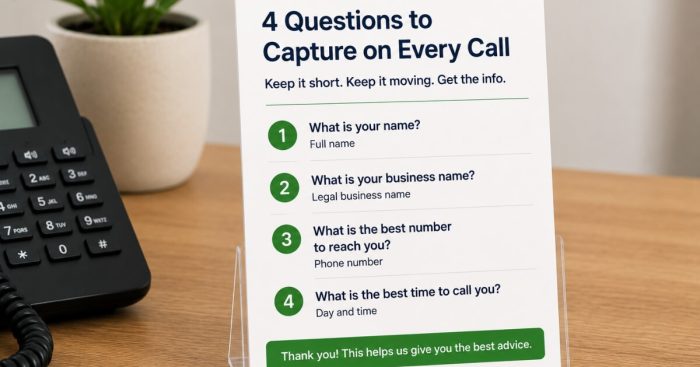
Four discovery questions, in order:
- How long have you been in pain?
- What have you tried for relief?
- Has anything helped so far?
- How did you hear about us?
These four questions do real work.
How long have you been in pain?
Surfaces:
- Severity
- Urgency
What have you tried for relief?
Tells you what has already failed.
That allows you to position your solution as the next logical step rather than one more thing on the pile.
Has anything helped so far?
Reveals:
- What they value
- Language you can use later
How did you hear about us?
Tracks marketing performance.
And when the answer is a referral, it reinforces that you’re trusted.
Ask these conversationally.
Not like an intake form.
You’re not interrogating.
You’re understanding.
Take quick notes because the patient’s own words about their pain and goals are exactly what you’ll mirror back when you transition to the offer.
Discovery isn’t a formality before the “real” pitch.
It is the pitch.
Because it’s where the patient feels heard.
How do I transition from listening to booking — what’s the “blast”?
After discovery:
- Affirm they came to the right place.
- Frame the outcome they want.
- Present the consult as the next step.
The transition — the “blast” — sounds like this:
“Well, you definitely came to the right place. We offer solutions for patients to get real, lasting relief from their [their exact problem] without medications, drugs, or surgery.”
Clinics looking to standardize these conversations across every team member often start by implementing the joint-pain inbound call script, ensuring that every new inquiry follows the same empathy-first discovery process before being guided toward a consultation.
Use their exact words for the problem.
Then bridge directly to the next step:
“Maybe we can help. The next step from here is to get you scheduled with our doctor for a personalized consultation. They’ll review your medical history and symptoms, do any further examination they think is needed, make recommendations for immediate relief, and create a treatment plan for lasting relief. Does that sound like what you were looking for?”
That final question matters.
It’s a soft, assumptive check that invites a yes.
At that point you’ve:
- Listened
- Affirmed
- Painted the outcome
- Made the consult feel like the obvious next move
Not a sales pitch.
Elite Pain Doctors, where we added over $2 million in revenue in 10 months, is what this kind of disciplined, outcome-framed inbound handling produces at scale.
How should I price and present the initial consultation?
Lead with a low-friction initial consult — for example, $49 — and present it as the next step that delivers value.
Never as a hurdle.
When they ask:
“How much is it?”
Answer cleanly and move on:
“The initial consultation is $49 and includes [exam, review, recommendations, and a treatment plan].”
A low, specific entry price removes the money objection at the door.
Because you’ve already framed the consult as where they get:
- Real answers
- Immediate-relief recommendations
- A lasting-relief plan
The patient sees it as buying clarity, not buying a sales pitch.
The point of a low-cost first step is volume of qualified at-bats.
You’re not making your margin on the $49.
You’re making it on the patients who move forward with treatment after a great consultation.
The formula is simple:
- Price the door low.
- Deliver enormous value inside.
- Let the clinical experience sell the program.
How do I get the patient to commit to a time on the call?
Don’t ask:
“Do you want to schedule?”
Assume the booking.
Instead ask:
“Does today or tomorrow work better?”
Once they’ve agreed the consult sounds right, go straight into scheduling.
Use an assumptive, two-option close:
“Great, let’s see what we have available — does today or tomorrow work better?”
When they answer, narrow it:
“Okay, we can do this time or this time on that day.”
Offering two options converts far better than:
“When works for you?”
Because that question invites:
“Let me check and call you back.”
Which is where bookings go to die.
Then move directly into information collection:
“Okay great, I just need to collect some basic information from you to schedule that appointment.”
Gather:
- Name
- Phone
- Date of birth
- Credit card to hold the slot
Keep the momentum moving.
The booking isn’t real until:
- The information is captured
- The appointment is confirmed
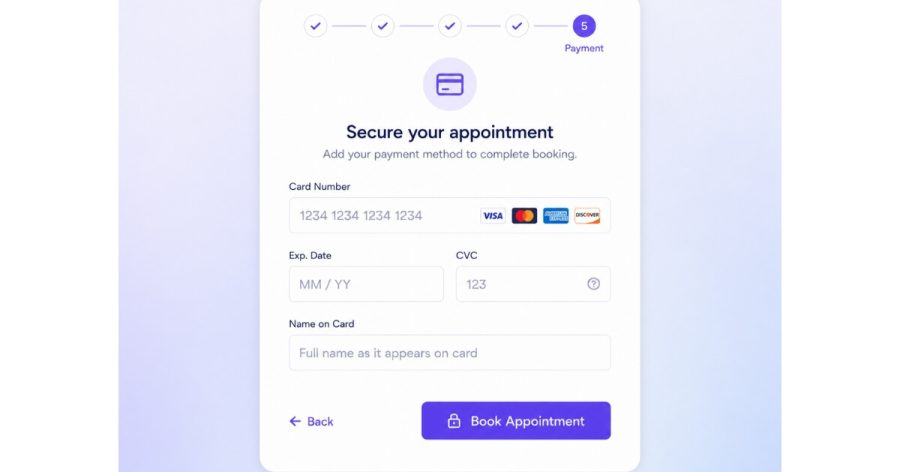
Why should I collect a credit card to book the consult?
Because a card on file filters for genuinely committed patients and sharply cuts no-shows — the silent killer of a pain clinic’s schedule.
A consult slot is inventory.
Every no-show means:
- Lost appointment capacity
- Staff time wasted preparing
- Lost revenue opportunity
Asking for a credit card isn’t about charging people.
It’s a commitment device.
It separates:
- Patients who intend to show up
- Patients who are casually shopping around
The patients who hesitate to place a card on file for a $49 consultation are often the same patients who weren’t going to show up anyway.
Present it as routine.
Not optional.
It’s simply part of scheduling.
The card-hold step may cost a few easy bookings.
But it saves you from a calendar full of empty chairs.
And a full schedule is what allows providers to do their best work and clinics to grow.
FAQ’s About a Joint-Pain Inbound Call Script
How should my front desk open a call with a pain patient?
Open with a warm, smiling, empathetic tone:
“Hello, this is ___ with [Clinic], how can I help you today?”
Let them explain.
Then respond like a human:
“I’m so sorry to hear that, tell me more.”
People in pain book with the clinic that clearly cares.
Empathy in the first 30 seconds matters more than any pitch.
What questions should I ask a joint-pain caller?
Ask four questions conversationally:
- How long they’ve been in pain
- What they’ve tried for relief
- Whether anything has helped
- How they heard about you
These reveal:
- Urgency
- Failed solutions
- What they value
- Marketing source
And they make the patient feel heard before you ever mention a consult.
How do I transition from the conversation to booking?
Affirm:
“You came to the right place.”
Frame the outcome:
“Lasting relief without medications, drugs, or surgery.”
Use their exact words.
Then present the consultation and ask:
“Does that sound like what you were looking for?”
It’s a soft, assumptive close that invites a yes.
What should I charge for the initial consult?
Lead with a low-friction price like $49.
Include:
- Exam
- Recommendations
- Treatment plan
Present it as where they get real answers.
You don’t make your margin on the consultation.
You make it on the patients who move into treatment afterward.
Price the door low.
Deliver huge value inside.
How do I lock in the appointment on the call?
Use a two-option close:
“Does today or tomorrow work better?”
Then narrow to two specific appointment times.
Immediately collect:
- Name
- Phone
- Date of birth
- Credit card to hold the slot
A card on file filters for committed patients and cuts no-shows.
What’s the next step?
If your regenerative clinic’s phone is ringing with joint-pain patients but too few are booking, the fix is almost always the script.
The framework is simple:
- Greet with genuine empathy.
- Run the four discovery questions.
- Transition with the “blast.”
- Present a low-friction consult.
- Close assumptively with a card on file.
Train it.
Role-play it.
And the same call volume starts producing far more booked consults.
On a strategy call we’ll review your actual inbound calls, hand you the full script tuned to your treatments, and show you where bookings are leaking.
We’ve built these conversion systems for regenerative and pain practices that scaled fast — including a regenerative clinic that reached a 79.4% conversion rate from lead to booked appointment.