
Should a Primary Care Clinic Offer Cash-Pay Visits or Just Take Insurance? (How to Sell Speed Without Sounding Slimy)
Most primary care practices that are booked out six weeks on insurance are sitting on a cash-pay opportunity they’re afraid to touch — because it feels like selling line-skipping to sick people. It doesn’t have to. Done right, a cash-pay lane is a speed upgrade you offer, not a spot you withhold, and the difference is almost entirely in how you sequence the conversation. Here’s how to add cash-pay to an insurance practice without sounding slimy.
Should I offer cash-pay visits or just accept insurance at my primary care clinic?
Offer both — but lead with cash-pay as a speed upgrade rather than treating it as an either/or choice.
The opportunity shows up when demand outruns your insurance schedule.
If new insurance patients are waiting six weeks (and local competitors are four to six months out, with the big hospital systems closer to a year), then “I can see you next week if you pay cash” is a genuine benefit, not a trick.
You set a simple front end — a flat cash price for an initial visit and a lower one for follow-ups — and you present it to people who’d otherwise sit in the backlog.
Crucially, patients who prefer to wait and use insurance still book.
That’s not a lost patient; it’s a different lane.
The model only works when both lanes stay open, which is also what keeps it honest.
This is one of the highest-leverage moves in a predictable patient acquisition system for a practice with more demand than insurance slots.
How do I offer faster cash-pay access without sounding like I’m withholding care?
Always present the opportunity first and the wait second: “I can get you in next week for $200, or you can wait about six weeks and use your insurance.”
The order is the entire ethics of it.
Lead with the fast option and the patient hears an upgrade.
Reverse it — open with “you’ll have to wait six weeks unless you pay” — and the exact same facts feel like extortion.
Frame the cash lane as a direct primary care membership benefit:
- priority access to booking
- direct access to the provider
- faster lab turnaround
You’re describing what they get, not what you’re holding back.
The honesty guardrail is non-negotiable.
You never refuse to help someone who chooses insurance, and you never imply you don’t take insurance when you do.
The pitch is simply “we can offer you more, sooner” — and then the patient chooses.
Think DoorDash Priority or Amazon Prime:
- people happily pay for speed
- people happily pay for convenience
when it’s offered as an option, not extracted under pressure.
How much should I charge for cash-pay primary care visits?
Keep it simple to start: a flat fee for the initial visit and a lower flat fee for follow-ups, with everything else a la carte — for example $200 for the initial and $100 for follow-ups.
Don’t make your front desk learn a complicated menu on day one.
Two prices is enough to launch.
From there, you can layer a recurring membership designed so that any patient who sees a provider monthly plus any add-on service ends up spending more than roughly $275 a month — which makes the flat membership the cheaper, stickier choice and nudges your best patients onto recurring billing, the way true concierge medicine works.
The membership is the long game; the two flat prices are how you start collecting cash this week.
Build the simple version first, prove the team can sell it, then introduce tiers once it’s running.
What’s a realistic conversion rate when offering cash-pay to insurance leads?
Expect roughly one in seven to one in ten people to take the cash option — and treat that as a win, not a disappointment.
Set the benchmark with your staff up front so nobody gets discouraged when most patients still choose insurance.
With around 20 new-patient bookings a day, a realistic target is:
- about two cash conversions per day
- five to six a week
That’s a few thousand dollars a week of new cash collected from demand you were already turning away into a six-week queue.
The number matters because it reframes “most people said no” as a healthy, expected outcome.
You’re not trying to convert everyone.
You’re skimming the patients who value speed and would rather pay than wait.
Should cash-pay patients use insurance for labs and imaging?
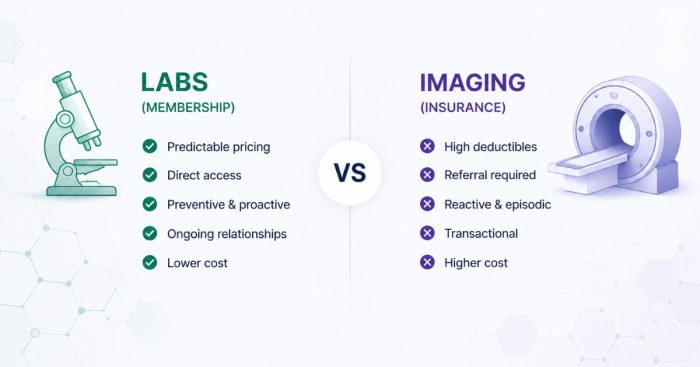
Split them: include a lab panel in the cash membership, but always route imaging through the patient’s insurance.
You can control lab pricing through your lab contract, so a broad panel (routine work, hormones, and so on) folds neatly into a cash membership and adds real perceived value.
Imaging is different — you can’t control what an MRI or CT costs, so don’t try to absorb it.
Tell patients plainly to use insurance for imaging.
The cleanest way to position the whole thing is as a supplement, not a replacement.
A cash membership helps the patient with a high deductible or thin coverage get:
- faster access
- included labs
while their insurance still does the heavy, expensive lifting like imaging.
That framing keeps the offer credible instead of overpromising.
How do I keep my front desk consistent when selling a new cash-pay model?
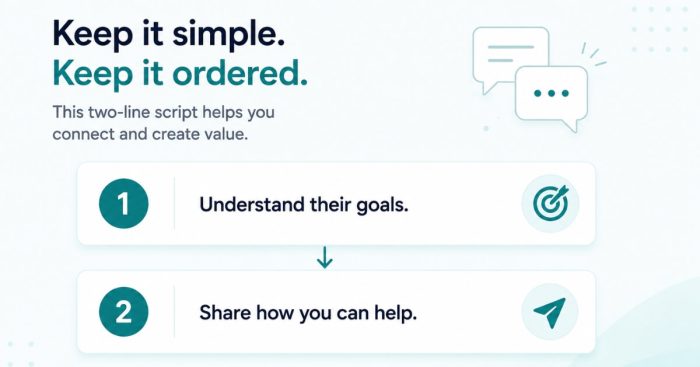
Write one script, have every receptionist rehearse it until it flows, and make sure each of them actually understands the offerings — because inconsistency is where this model falls apart.
If one receptionist pitches it confidently and the next stumbles, patients sense the seams and trust drops.
Worse, if staff don’t truly understand the a la carte and membership options, they’ll sound unsure trying to sell something they don’t know — and a hesitant pitch kills a cash conversion every time.
Record your inbound calls so you can review real attempts and refine the script against what patients actually say and object to.
Treat the launch as a trial run, and tell the team that explicitly.
It’s not for every patient.
Missed conversions aren’t failures.
The goal is:
- a handful of cash patients a week
- not a wholesale conversion of the practice
That lowers the pressure and lets the team get reps in.
FAQ’s About Adding Cash-Pay to an Insurance Primary Care Practice
Can a primary care clinic take both insurance and cash-pay?
Yes — the most practical model keeps both lanes open.
You offer cash-pay as a faster-access option for patients who’d otherwise sit in your insurance backlog, while still serving anyone who chooses to use insurance.
Keeping both open is also what keeps the offer honest.
How do I price cash-pay primary care visits?
Start with two flat prices — for example $200 for an initial visit and $100 for follow-ups — and keep everything else a la carte.
Once the team is comfortable, add a recurring membership structured so monthly users exceed roughly $275 in a la carte spend, making the membership the better deal.
What conversion rate should I expect offering cash-pay to insurance leads?
Roughly one in seven to one in ten patients will take the cash option.
With about 20 new bookings a day, that’s around:
- two conversions a day
- five to six a week
Set this expectation with staff so they aren’t discouraged when most patients still choose insurance.
Should cash-pay patients use insurance for labs and imaging?
Include labs in the cash membership since you can control lab pricing, but route imaging through insurance because you can’t control what it costs.
Position the membership as a supplement to insurance, not a full replacement.
How do I offer faster cash access without sounding like I’m withholding care?
Present the fast cash option first and the insurance wait second.
Frame it as a membership benefit:
- priority access
- direct provider access
- faster labs
and never refuse to help a patient who chooses insurance.
Lead with the upgrade, not the wait.
What’s the next step?
If your primary care practice is booked out for weeks on insurance and you’re turning that demand into a waiting list, you’re leaving cash on the table — and you can capture it without compromising care or honesty.
The whole thing comes down to:
- sequencing the offer
- keeping both lanes open
- pricing it simply
- training the front desk to deliver it the same way every time
If you want help building the script, the pricing, and the membership ladder for your practice — and the insurance-to-cash transition that follows — that’s the conversation to book.
It’s the same playbook behind clients like Dr. Groysman, who grew monthly revenue by $40K+ and cut insurance dependence in half.
We’ll map your cash-pay lane on the call.