
How Do I Market Regenerative Treatment to Patients Whose Insurance Won’t Cover It?
Almost all regenerative and stem cell treatment is cash-pay, because insurance won’t cover it — and most clinics treat that as a problem to apologize for.
It isn’t.
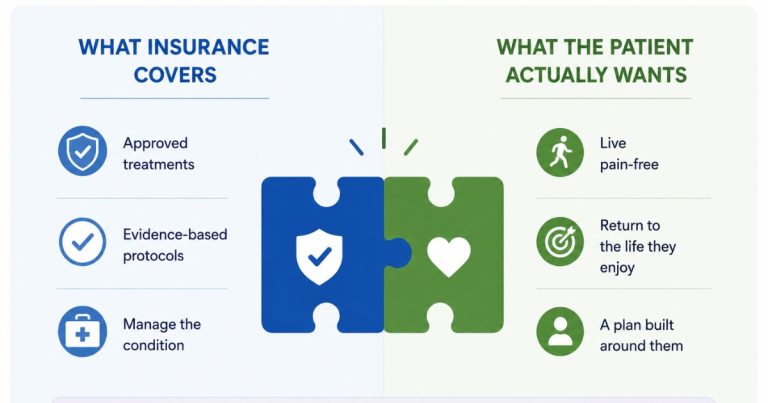
The patient sitting in front of you has often already been failed by the insurance system: denied, sent to surgery, or told to live with the pain.
‘Insurance won’t cover it’ is not your weakness; framed correctly, it’s your positioning.
This is the FAQ on marketing regenerative treatment to patients whose insurance won’t pay for it.
How do I overcome the ‘insurance doesn’t cover it’ objection for regenerative treatment?
Stop treating it as an objection to overcome.
Instead, start treating it as the frame.
The patient’s real comparison isn’t covered-versus-not-covered.
Rather, it’s the regenerative option versus the alternative insurance does cover.
In most cases, that alternative is:
- Surgery
- More medication
- Living with the pain
When a clinic apologizes for being cash-pay, it signals that the price is the problem.
However, when a clinic confidently frames the choice, the conversation changes.
The patient begins comparing a regenerative option they control against an invasive surgery, a long recovery, or years of symptom management.
As a result, the price becomes context rather than the focus.
Insurance covering surgery isn’t a benefit if the patient doesn’t want surgery.
That’s why reframing the comparison is the entire game.
It’s also the core of effective pain management marketing in a cash-pay model.
What do patients denied by insurance actually want to hear?
They want to hear that there’s a real option they haven’t been offered.
They also want to know that you understand how frustrating the system has been.
Most importantly, they want to know they’re a candidate worth evaluating.
They’re not looking for an apology about the price.
Many regenerative patients arrive after being failed by the system.
For example:
- An insurer denied treatment.
- A surgeon offered only an operation they fear.
- A physician recommended nothing beyond pain medication.
As a result, these patients aren’t searching for the cheapest option.
Instead, they’re searching for hope.
They’re searching for a path forward that fits their life.
Marketing that acknowledges their experience connects far more deeply.
For example:
“You’ve been told your only option is surgery or living with it. There may be another path.”
That message resonates far more than a price-focused or feature-focused pitch ever will.
Should I mention insurance at all in my regenerative marketing?
Yes.
In fact, you should address it proactively and confidently.
The patient is already thinking about insurance.
Therefore, it’s better to address the issue on your terms before it becomes a silent objection.
Pretending insurance doesn’t exist creates uncertainty.
Eventually, the patient raises the issue at the worst possible moment.
That often happens right when they’re deciding whether to move forward.
Instead, name the issue first.
Explain clearly why regenerative care is typically cash-pay.
Then explain what that buys the patient.
Benefits may include:
- Faster access to treatment
- More treatment options
- Greater control over care decisions
- Freedom from insurance restrictions
As a result, insurance becomes part of the value story rather than an objection.
Transparency builds trust.
Likewise, trust is what high-ticket cash-pay decisions require.
How do I justify a cash price for something insurance won’t cover?
Anchor the investment against the real alternative.
Don’t anchor it against zero.
A regenerative treatment should be compared to:
- Surgery
- Recovery time
- Lost work
- Rehabilitation
- Ongoing pain management
When viewed through that lens, the investment becomes much easier to understand.
A regenerative treatment doesn’t look expensive next to a surgery with co-pays, deductibles, lost income, rehab, and risk.
Instead, it looks like a considered choice.
The consult’s job is to help patients see the full picture.
Specifically, they need to understand the true cost and toll of their alternatives.
As a result, the regenerative investment is measured against what it replaces rather than an imaginary free option.
This is the same value-framing that allows practices to command premium pricing.
It’s also the approach behind helping Dr. Groysman grow monthly revenue by $40K+ while cutting insurance dependence in half.
Does being cash-pay limit who I can market regenerative treatment to?
Not really.
Instead, it focuses your marketing on patients who can and will invest in their health.
That’s a feature, not a limitation.
Those are exactly the patients a high-ticket regenerative practice wants.
Cash-pay naturally attracts patients who value the outcome enough to invest in it.
Likewise, it attracts people who don’t want treatment decisions controlled by insurance companies.
Rather than appealing to everyone, effective regenerative marketing speaks directly to motivated patients.
These are people who are:
- Frustrated with the system
- Looking for alternatives
- Ready to take control of their care
As a result, the message becomes stronger.
Narrowing the audience improves relevance rather than reducing opportunity.
How do I turn insurance denial into a marketing advantage?
Position your clinic as the place patients go after the system has failed them.
That means becoming:
- The alternative to surgery
- The second opinion
- The path insurance wouldn’t pay for but the patient actually wants
Messages like:
- “Denied by insurance?”
- “Told you need surgery?”
- “Tired of just managing the pain?”
aren’t problems to avoid.
Instead, they’re the exact moments your ideal patient starts searching for another option.
Content that meets patients at that frustration performs differently.
First, it validates the experience.
Then, it offers a real candidacy evaluation.
As a result, the insurance gap becomes a powerful marketing hook.
Patients who feel understood are far more likely to convert.
In addition, they often become loyal patients who refer others.
This is the same compounding effect created by a strong patient acquisition system.
Over time, those relationships become one of the strongest drivers of growth.
FAQ’s About Marketing Cash-Pay Regenerative Treatment
How do I handle the ‘insurance won’t cover it’ objection for regenerative treatment?
Reframe the comparison.
The patient’s real choice isn’t covered-versus-not-covered.
Instead, it’s the regenerative option they control versus the alternative insurance does cover.
That alternative is usually surgery, more medication, or living with the pain.
When the comparison is framed confidently, the cash cost becomes context for a decision the patient genuinely wants to make.
Should I mention insurance in my regenerative marketing?
Yes, proactively.
Patients are already thinking about insurance.
Therefore, address it before it becomes an objection.
Explain why regenerative care is typically cash-pay and what that buys the patient in access, flexibility, and quality.
As a result, insurance becomes part of your value story rather than a barrier.
How do I justify a cash price for regenerative treatment?
Anchor the investment against the real alternative rather than zero.
When compared to surgery, rehabilitation, downtime, lost income, and ongoing pain management, regenerative treatment becomes a considered choice rather than an expense.
The consult should help patients understand the true cost of their alternatives.
Does cash-pay limit who I can market regenerative treatment to?
No.
Instead, it focuses your marketing on motivated patients who value the outcome enough to invest in it.
Those are exactly the patients a high-ticket regenerative practice wants.
As a result, narrowing the message often strengthens it.
Can insurance denial actually be a marketing advantage?
Yes.
Patients who have been denied by insurance or told surgery is their only option are often actively searching for alternatives.
Messaging that validates that frustration and offers another path can become one of the strongest hooks in regenerative marketing.
What’s the next step?
‘Insurance won’t cover it’ is not the weakness most regenerative clinics treat it as.
Instead, it’s often your strongest positioning advantage.
The patient’s real choice is your treatment versus the surgery, medication, or resignation that insurance does cover.
Meanwhile, many of those patients have already been failed by that system.
Frame the comparison confidently.
Meet patients at their frustration.
Then position regenerative care as the alternative they’re actively searching for.
As a result, the cash-pay model becomes your positioning instead of your apology.
On a strategy call we’ll build the messaging that turns insurance denial into your strongest hook.
That’s the same value-framing behind helping Dr. Groysman grow monthly revenue by $40K+ while cutting insurance dependence in half.