
How Should a Longevity Clinic Simplify Its Programs So Prospects Actually Enroll? (Two Programs, Two Tiers, and the First-Date Consult)
A longevity and functional medicine clinic presented a prospect with its flagship program — roughly $8,000 — and watched her decline it, then hand-pick $5,800 worth of à-la-carte testing on her own. Revenue, yes. Commitment, no: no visits, no follow-up cadence, no six-month arc. On the strategy call that followed, the whole menu got rebuilt. This is the FAQ on that rebuild: why too many programs kill enrollment, how the tier math has to cohere, why the consult is a first date, and the exact scripts for “do you take insurance?” and “how much is it?”
What happens when a clinic offers too many programs and tiers?
Prospects assemble their own — the clinic’s $8K program lost to a patient-built $5,800 testing bundle with zero ongoing commitment.
The patient saw the program, then said:
“I’ll do à la carte.”
She picked most of the testing the package contained and skipped the part the clinic actually wanted her in:
- The six-month commitment
- The visits
- The follow-ups
- The supplement support
The team’s own diagnosis was honest:
“We do have too many programs.”
And the team member who said:
“If it was presented to me, I would be confused too”
named the real problem.
Multiple legacy programs plus:
- Three membership tiers
- À-la-carte everything
equals decision fatigue.
And confused buyers typically do one of two things:
- Default to the smallest commitment
- Build their own solution
The rebuild
The clinic simplified everything into:
Program 1
High-ticket longevity program
- Around $9,999
- All testing included
- Roughly $3,700 margin
Program 2
Lower-ticket longevity program
- Focused testing
- DEXA
- VO2 Max
- More accessible entry point
Then:
- Membership tiers became the downsell
- Membership tiers became the post-program path
Every patient conversation now follows one story:
- Program first
- Tier later
How many membership tiers should you keep — and how do you check the math?
Two.
The clinic killed its $99 tier and kept:
| Tier | Price |
|---|---|
| Tier 1 | $199 |
| Tier 2 | $499 |
The audit that forced the decision was simple:
Check the savings math
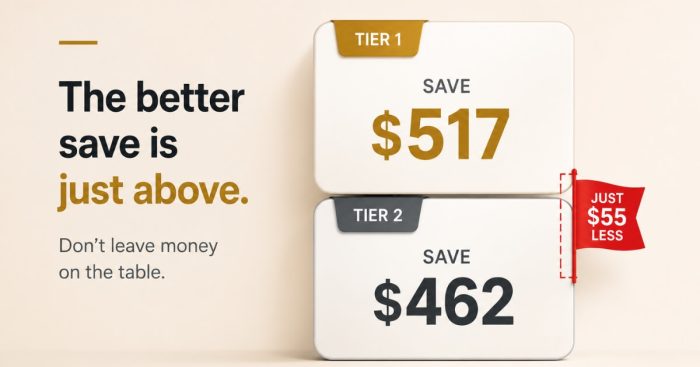
The clinic’s own handout showed:
| Tier | Savings |
| Top Tier | $517 |
| Middle Tier | $462 |
The gap was too small.
Patients might not articulate it, but they feel it.
If the price difference is significant, the value difference must also be significant.
Otherwise the menu feels arbitrary.
The $99 tier problem
The lowest tier had the opposite issue:
- Labs twice a year
- Provider consults
- Functional medicine oversight
- Longevity guidance
In reality it functioned like:
A functional, longevity-focused direct primary care program.
It should have been priced much higher.
Instead, it was cannibalizing the more profitable tiers.
The pricing logic that survived
Patients pay for perceived speed to results.
The final structure became:
Lower Tier
- Supplements
- Monitoring
- Slower pace
Higher Tier
- Full protocol
- More intervention
- Faster perceived results
Because:
“The perceived likelihood of the result is what people will pay more money for.”
Patients are not buying inclusions.
They’re buying confidence and speed.
How should the initial consult be priced and positioned?
Structure
- $300 labs
- $300 consult
Paid over the phone before booking.
If the patient enrolls afterward:
- The consult fee credits into the program
Why this works
1. It qualifies callers
Only serious prospects book.
2. It removes the wasted-money objection
The consult fee becomes part of the program.
3. It keeps the sales conversation out of the phone call
The framing from the call was simple:
Take us on a first date.
Come in.
Experience the practice.
Then decide whether you want a relationship.
Trying to explain:
- Programs
- Memberships
- Pricing
- Options
during the initial phone call overwhelms prospects and turns the front desk into a pricing hotline.
The value script
The team’s own wording:
Patients are paying for time and expertise.
The clinic only takes a limited number of patients.
Providers who have invested hundreds of thousands of dollars into their education should not apologize for charging $300 for a consult.
Confidence in the framing is half the close.
Should pricing go on the website?
No.
Put this on the website
- What’s included
- Program details
- Membership benefits
- FAQ content
Leave this off the website
- Pricing
The goal is:
Request a Consultation
instead of price shopping.
Why?
The front desk was repeatedly answering the same questions:
- Do you take insurance?
- How much is it?
- What’s included?
The solution:
Build an FAQ page once and stop improvising the answers on every call.
This creates consistency across:
- Website
- Phone script
- Consult
- Enrollment conversation
The patient never encounters a surprise.
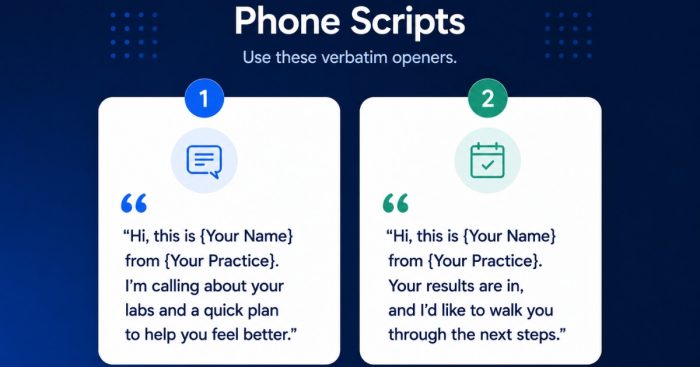
How do you answer “do you take insurance?” and “how much is it?” on the phone?
With scripts.
Not deflection.
Not price dumping.
Insurance Script
“It’s not that we don’t want to work with insurance — it’s that insurance companies don’t want to work with functional medicine and preventative care. And oftentimes, when we do try to work together with insurance, your co-pay ends up being more than what it would cost to work with us directly.”
Then immediately pivot:
“What was it that you were looking for help with?”
The conversation goes back to the patient’s problem.
Price Script
“We have affordable options for everybody — are you currently taking hormones or peptides, or would this be your first time?”
Then build the gap:
- What are you taking?
- What are you paying?
- What’s included?
If somebody is only shopping for the cheapest vial:
“That may not really be our patient.”
Who should run these calls?
A non-medical coordinator.
Why?
Medical staff tend to:
- Give away advice
- Answer clinical questions
- Conduct free consults
A coordinator can:
- Answer honestly
- Build value
- Defer medical questions
- Book appointments
That’s the conversion discipline that produces results like a regenerative practice that converted 79.4% of its leads into booked appointments with zero ad spend.
How do you move existing patients onto the new pricing?
In person.
At the next visit.
Never by email decree.
Never as an obstacle.
The script direction
“All the things you were normally paying for, we’re actually going to include in this new monthly membership — here’s what it looks like. You can continue à la carte, or you can save money annually by enrolling.”
The patient keeps the choice.
The math does the persuading.
Why not email?
Email announcements feel like:
- Policy changes
- Price increases
- Administrative notices
In-person conversations feel like:
- Upgrades
- Benefits
- Better options
One additional rule
Patients who disappear for six months or more:
- Pay the full initial fee when they return
No discounted follow-up visit.
This protects the value of continuity.
It also reinforces what membership actually buys:
- Ongoing care
- Ongoing access
- Ongoing oversight
Simplified menus, coherent math, and a clean migration path are how a longevity practice builds the recurring base that compounds — the same growth mechanics behind a longevity and functional medicine clinic that grew website leads 900% and added 100+ inbound calls a month in four months.
FAQ’s About Simplifying Longevity Clinic Programs and Tiers
How many programs and tiers should a longevity clinic offer?
Two six-month programs:
- High-ticket with full testing
- Lower-ticket with a focused testing panel
And two membership tiers:
- Downsell path
- Post-program path
More than that creates decision fatigue and encourages prospects to build their own à-la-carte bundles.
How do you know if your tier math is broken?
Compare the annual savings.
Example:
- Top Tier = $517 saved
- Middle Tier = $462 saved
If the savings difference is tiny while the price difference is large, patients sense the mismatch.
Every step up should buy obviously more value.
What should the initial consult cost?
- $300 labs
- $300 consult
Paid at booking.
If the patient enrolls, the consult fee credits into the program.
This:
- Qualifies callers
- Removes sunk-cost objections
- Keeps pricing discussions out of the phone call
Should a clinic put pricing on its website?
No.
List:
- Inclusions
- Benefits
- Program details
Drive prospects toward a consultation request.
Add an FAQ page built around the questions callers already ask.
Who should answer pricing and insurance questions on the phone?
A non-medical coordinator using scripts.
Example:
“We have affordable options for everybody — are you currently taking this, or would it be your first time?”
Medical staff often give away the consult for free.
What’s the next step?
If your longevity or functional medicine clinic has prospects cherry-picking tests instead of enrolling in programs, your menu is doing the damage.
Fix it by:
- Cutting to two programs
- Keeping two membership tiers
- Auditing the savings math
- Pricing the consult as a credited first date
- Scripting the two questions every caller asks
If you want the full menu rebuild — program design, tier math, consult structure, phone scripts, and the website to match — book a strategy call.
We’ll redesign your pricing architecture on the call and wire it into your patient acquisition and medical practice marketing systems.