
What Should a Cash-Pay HRT Clinic Hire a Medical Director? (Why One Visible MD Beats Three Invisible Doctors)
Most cash-pay clinics treat the medical director as a compliance checkbox — a name on a license that nobody, including the patients, ever sees. Then they wonder why members cancel after the founding physician steps back. One HRT membership clinic we work with was paying $4,500 a month across three different doctors doing partial jobs while its member count fell to the lowest it had ever been. The fix wasn’t more marketing. It was one medical director with a face. Here’s the FAQ on how to hire one.
Why does my cash-pay clinic need a medical director with a public face?
Because patients judge the legitimacy of your clinic by who is visibly behind the protocols.
If everybody knows your mid-levels are getting their protocols and direction from a real medical director, patients are far less concerned about being treated by an NP or PA.
If the supervising physician is invisible — a name on paper that nobody knows — that reassurance never happens.
One HRT membership clinic learned this the hard way:
- Its founding physician left
- Members realized they were paying premium prices to see providers in their 30s
- Cancellations stacked up
- The clinic hit the lowest member count in its history
Its core patient is in their 50s and 60s.
As one member put it on a cancellation call:
You’re going to talk to me about menopause when you’re in your 30s?
The avatar has to find the face credible.
That doesn’t mean a specific demographic — it means age-appropriate authority for the patients you actually serve.
A medical director the patients can see, whose name the providers invoke, changes how every consult and every renewal conversation lands.
Eternity Health Partners grew from $1M a year to $4M a year on the strength of a membership model patients trust enough to stay in for years — and trust in the clinical leadership is what that retention is built on.
How much should a cash-pay clinic pay a medical director?
Around $5,000 a month buys a real one — if you define the duties first.
The trap is paying less to more people.
The clinic above was spending $4,500 a month split three ways:
- $2,000 to a supervising physician nobody knew
- $2,000 to a doctor who could barely deliver one hour per month for a Zoom check-in with the providers
- $500 to a third doctor who wasn’t even on the website
Three retainers.
Three partial jobs.
Zero visible medical leadership.
The advice we gave on that call was blunt:
Consolidate. You can pay somebody five a month and get what you really want.

The order of operations matters more than the number.
First:
- Write the dream scenario
- Define exactly what you would have an MD or DO do for the practice
Second:
- Decide what that’s worth to you
Third:
- Go find the person
Clinics that start with:
What can I get for $1,500 a month?
end up with three invisible doctors and a retention problem.
What should a medical director actually do at a cash-pay hormone clinic?
Five duties:
- Oversee protocols
- Own patient outcomes
- Meet with providers monthly
- Spend one in-office day a month leading the team meeting
- Film one hour of content a month
The first four are the clinical spine of the role.
The medical director is the keeper of “what good looks like” so your NPs and PAs are never improvising.
What matters most is that they’re a good doctor who is focused on getting patients real results.
Because outcomes are the only durable competitive advantage in cash-pay medicine.
The fifth duty is what most clinics never think to ask for.
And it’s the one that pays for the whole retainer.
One hour of filming a month — your team edits the footage and posts it — turns the medical director from a compliance cost into a marketing asset.
We watched a comparable clinic where the medical director is the visible face of the brand enroll:
- 15 to 20 net new members every single month
with:
- New consults booked out until January
- A $300 lab panel
- A $300 consult
- A $350–$500 per month membership
That’s what a face does to a patient acquisition system.
Every channel converts better when a credible physician fronts the message.
That’s why marketing your men’s hormone clinic should begin with building physician credibility before worrying about ad budgets, creative, or lead volume.
Where do I find a medical director for a cash-pay clinic?
Network referrals, not job boards.
The doctors who make great cash-pay medical directors are rarely browsing listings.
They’re already busy.
Which is exactly why they’re credible.
Work your own network.
Ask your:
- Advisors
- Vendors
- Industry contacts
Look specifically for MDs and DOs who are:
- Already serving as a medical director somewhere else
- Already making content
Both are pre-vetting signals.
The first proves they understand the role.
The second proves they’ll show up on camera without being dragged.
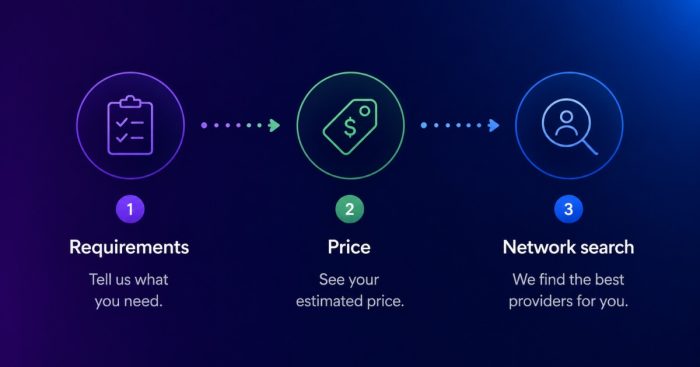
And remember the sequence from the compensation section:
- Requirements first
- Price second
- Search third
A written role definition is what turns:
Do you want to be our medical director?
from a vague favor into a job a serious physician can say yes to.
Your role definition should include:
- Protocol oversight
- Outcomes ownership
- Monthly provider meetings
- One in-office day
- One filming hour
What are the red flags when hiring a medical director?
Flakiness and divided loyalty — and they show up before the contract is signed.
The most expensive medical director is the one who takes the retainer and disappears.
The clinic paying $2,000 a month to a doctor who couldn’t deliver a single hour for the monthly provider Zoom had been told the truth months earlier:
Don’t trust someone who treats your retainer as the easiest $2,000 they’ll ever make.
If a physician is hard to pin down during the courtship phase, it does not improve after they’re hired.
Warning signs include:
- Rescheduling intro calls
- Going quiet for weeks
- Failing to commit to recurring meetings
The deeper rule:
Don’t make anyone the public face of your clinic until they’ve proven they show up.
Roll the relationship out in stages:
- Supervision and protocols
- The in-office day
- The camera
A flaky doctor on your website is worse than no doctor on your website.
Because every patient who bonded with that face churns when it vanishes.
How does a visible medical director help my clinic compete without cutting prices?
It anchors the value story that lets you charge more than the discount clinic down the street.
The clinic in this story competes against a 15-location chain whose hormone offer is:
- Free labs
- A free pellet trial
You cannot win that price war.
And you shouldn’t try.
The only option is to compete on value:
- Better medical presence
- Better patient results
- More features bundled into the membership
A visible medical director is the cornerstone of all three.
It’s the difference between:
An NP clinic with a supervising physician somewhere
and:
A physician-led practice
The supporting moves are unglamorous but compound.
Examples:
- Surface benefits patients don’t know they’re paying for
- Add couples pricing because hormone care is a household decision
- Price the base membership for perceived value instead of matching the cheapest pellet offer in town
This clinic had concierge-style primary care worth roughly $200 a month buried in a membership form nobody reads.
That’s value that should be visible.
This is the same playbook behind Dr. Joy Kong’s clinic, which built the #1 stem cell presence on YouTube, hired four more doctors, and now runs without her in the daily schedule.
Physician visibility is the asset that makes premium pricing defensible.
And it works in medical practice marketing across every cash-pay vertical.
FAQ’s About Hiring a Medical Director for a Cash-Pay Clinic
Is a supervising physician the same as a medical director?
On paper they can be the same person.
In practice they do different jobs.
A supervising physician satisfies a regulatory requirement and can be completely invisible to patients.
A medical director — the kind worth $5,000 a month — owns:
- Protocols
- Outcomes
- Provider development
- Public credibility
A clinic can be fully compliant and still have zero visible medical leadership.
That’s exactly the gap that drives membership cancellations.
Can an NP or PA be the face of the clinic instead of an MD?
They can carry the day-to-day care.
But a clinic serving patients in their 50s and 60s saw members cancel specifically because the visible providers were young mid-levels with no physician behind them.
The face needs age-appropriate authority for your actual buyer.
Keep the NPs and PAs front-line.
Put a credible MD or DO visibly above the protocols.
How much content does a medical director need to film?
One hour a month is enough.
Your marketing team splits that hour into edited clips and posts them.
The medical director never touches an editing tool.
A clinic whose physician fronts its content was enrolling:
- 15 to 20 net new members a month
and was booked out for consults months in advance.
What happens to retention if my clinic has no visible physician?
It erodes quietly.
The clinic in this article hit its lowest-ever member count after its founding physician left, even though the actual care hadn’t changed.
Patients were canceling on perception, not outcomes.
Retention recovered focus only once leadership committed to one visible medical director instead of three invisible retainers.
Should I cut the old supervision retainers once I hire a real medical director?
Yes.
That’s the point of consolidating.
Three partial retainers totaling $4,500 a month bought the clinic in this story almost nothing visible.
One ~$5,000 MD or DO who owns the full role:
- Replaces all three
- Costs roughly the same
- Adds a marketing asset the partial arrangements never produced
What’s the next step?
If your cash-pay practice is leaning on an invisible supervising physician — or paying multiple doctors partial retainers while members quietly cancel — the fix starts with a piece of paper, not a job post.
Write the dream-scenario role:
- Protocols
- Outcomes
- The monthly provider meeting
- The in-office day
- The filming hour
Decide what that’s worth.
Then recruit from networks, not job boards.
If you want help pressure-testing the role definition, the compensation math, and where to find the right MD or DO for your specialty, book a strategy call.
In 60 minutes we’ll map the medical director role your clinic actually needs and what it should cost in your market.