
How Do You Get GLP-1 Patients to Spend 7X More at a Cash-Pay Medical Practice? (The Bloodwork-First Retention Model)
Most cash-pay clinics treating GLP-1 patients are leaving 80% of the revenue on the table. They sell a 3-to-6-month semaglutide script, the patient hits goal weight or runs out of motivation, and the relationship ends. The 8-figure GLP-1 practices we work with do something fundamentally different on day one — they reframe weight loss as the entry point to a 12-to-16-month relationship anchored by bloodwork, and that single change multiplies patient lifetime value by 7x. Here’s the playbook.
Why do most cash-pay clinics make so little money from GLP-1 patients?
Because they sell GLP-1 as a single product — a 3-to-6-month weight-loss script — instead of as the entry point to a 12-to-16-month health relationship.
The patient comes in for semaglutide, gets the prescription, loses weight, and leaves.
The clinic never ran bloodwork beyond the basics required for the prescription, never identified the testosterone deficit or thyroid issue or hormone imbalance the patient was also walking around with, and never opened the door to ongoing treatment after the weight-loss phase wraps.
The clinic just competed on price with the big-box online telehealth platforms, lost the comparison, and watched the patient churn off the program at month four.
The economics of that approach are brutal.
A patient at $300/month for 4 months is $1,200 of revenue.
The same patient enrolled in a bloodwork-first model that includes weight loss plus the downstream treatments their labs reveal — hormone optimization, sleep, libido, nutrition coaching, peptide therapy — runs $300-$700/month for 12-16 months.
That’s $4,000-$11,000 of revenue from the same person.
The patient is happier because they’re getting better care.
The clinic is more profitable because retention does the heavy lifting that paid acquisition can’t.
What is the bloodwork-first retention model for GLP-1 patients?
The bloodwork-first model treats the initial consultation as a comprehensive health assessment — not just a weight-loss intake — and uses lab results to surface treatment opportunities the patient didn’t know they needed.
It runs in three phases.
The pre-patient phase reframes the relationship before the patient even pays.
The free consultation collects payment for initial labs and consultation, orders the bloodwork, and uses an intake form that pre-frames the bigger conversation — nutrition, sleep, libido, stress, energy levels, hormones — not just weight loss.
The retention phase runs bloodwork at month one, three, six, nine, and twelve, and uses each lab review as both a clinical touchpoint and an upsell opportunity.
When a patient can visually see their testosterone is low or their thyroid is suboptimal, the conversation is not a sales pitch.
It’s, “Want us to help you with that?”
Nobody likes to be sold. Everyone likes to buy.
The labs do the selling.
That approach also strengthens GLP-1 clinic marketing because patients who understand their underlying health data are far more likely to continue care than those who only receive a prescription.
Three details make or break this model.
First, the intake form has to pre-frame the conversation before the patient pays — otherwise upsells later feel like bait-and-switch.
Second, bloodwork has to be tied to the patient’s payment so they’re financially committed to the assessment.
Third, the lab review meetings have to be scheduled at the documented fall-off points (30 days, 90 days, 6 months, 12 months) so the relationship has a built-in reason to continue.
What does the GLP-1 retention timeline look like at a cash-pay medical practice?
Five touchpoints across 12 months: bloodwork scheduling at week 1, the initial consultation, a client concierge call at month 2, a three-month re-consultation with fresh labs, and a 6-to-12-month long-term cadence.
Week 1 is the welcome email plus the lab requisition, the EHR welcome, and the intake form.
An automated reminder confirms the patient has scheduled their blood draw.
The initial consultation reviews their labs, walks through the intake form, orders prescriptions (GLP-1 plus anything the labs surface), completes dosing and administration calls so the patient is comfortable, and notifies them the client concierge will reach out next week.
Month 2 is a client concierge call to check on progress and surface questions.
Month 3 is the high-leverage touchpoint:
- week 8 the lab work gets re-ordered,
- week 12 a follow-up consultation reviews the new labs,
- compares subjective feelings before and after,
- and re-sells the patient on their goals.
This is where the upsells land — the conversation transitions from “your weight is dropping” to “your testosterone is still low, your sleep is still poor, want us to address those next?”
Most patients say yes.
Months 4-6 are an exact clone of months 1-3 — new labs, fresh consultation, ongoing prescriptions.
Months 6-12 are the same playbook, spaced out at 2x the interval.
By month 12, the patient has had four full lab cycles, has visible proof of improvement, and views your clinic as their primary health partner — not a weight-loss vendor.
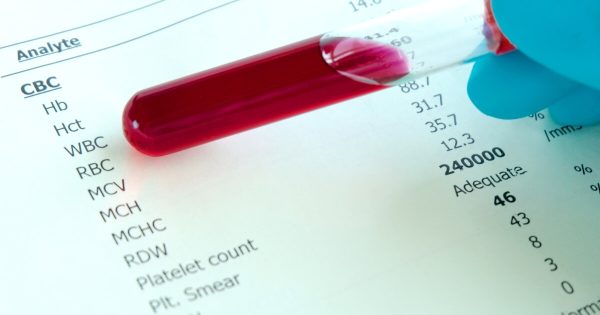
How does bloodwork actually drive upsell opportunities in a GLP-1 practice?
Three ways:
- it surfaces treatment opportunities the patient didn’t know about,
- it creates patient commitment through visible before/after data,
- and it positions the clinic as the last provider the patient needs to see.
The treatment opportunities are the obvious one.
A 45-year-old man comes in for GLP-1 for 30 pounds of weight loss.
The labs show his total testosterone is 320 ng/dL.
He didn’t come in for TRT.
He didn’t know testosterone was a problem.
But he can see the number, he understands the implications when you explain them, and now he’s interested.
The same dynamic plays for women’s hormones, thyroid optimization, gut health, peptide therapy, sleep, and anti-aging.
The labs surface the opportunity.
The patient self-selects into care.
Commitment is the second layer.
Once a patient has paid for bloodwork and seen the results, they’re invested in their own progress.
They want to see the next round of labs.
They want the second test to be better than the first.
That commitment is what kept them engaged through month 9 when otherwise they would have churned.
The third effect is positioning.
Most cash-pay GLP-1 patients are seeing four or five different specialists for unrelated symptoms — primary care for one thing, a gyno or urologist for another, an endocrinologist for thyroid, a sleep specialist for fatigue.
When one clinic runs comprehensive labs and addresses all of those issues under one roof, the patient stops seeing other providers.
How do cash-pay clinics turn GLP-1 patients into long-term TRT or HRT patients?
By using the 6-to-9-month lab review to surface hormone markers and inviting the patient into the next phase of care — not by trying to upsell at the initial consult.
The timing matters.
At the initial consult the patient is focused on weight loss.
Try to sell TRT in the first conversation and you sound like a vendor stacking adders.
But at month six, the patient has lost the weight, the bloodwork has shown elevated testosterone on the male side or estrogen fluctuation on the female side, and the natural conversation is, “Now that you’ve hit your weight goal, here’s what we’re seeing in your labs that’s worth optimizing.”
The clinic isn’t selling.
The labs are telling.
Conversion economics on this transition are striking.
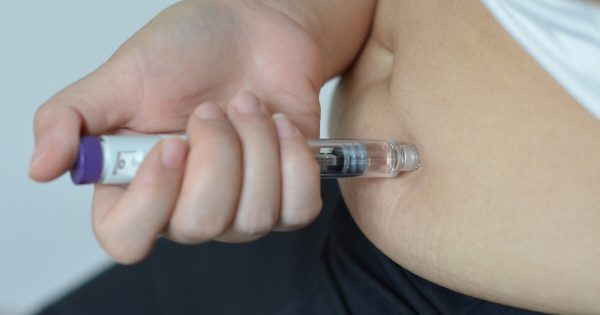
Cash-pay clinics running the bloodwork-first model typically see 40-60% of GLP-1 patients convert into a long-term TRT or HRT membership — patients that run $200-$400/month for 12 months and beyond.
This transition is the clearest example of how GLP-1 patients spend 7x more over their lifetime. The weight-loss program creates the initial relationship, but the long-term revenue comes from the additional health opportunities uncovered through bloodwork, ongoing monitoring, and recurring memberships that keep the patient engaged long after their target weight is reached.
That’s where the 7x LTV multiplier actually comes from.
The GLP-1 program is the front door.
The HRT or TRT membership is the recurring revenue.
What systems and automations does a cash-pay clinic need to run this model?
Three:
- automated patient workflows that nurture leads from inquiry to consult without front-desk overwhelm,
- hands-free credit card collection that secures payment for the appointment in exchange for booking,
- and a scripted free consultation that converts at 2x the rate of unscripted calls.
Without automation, the front desk burns out by day 90 manually following up on every new lead, re-confirming appointments, and chasing no-shows.
Automated workflows nurture, educate, and convert patients on the daily task list so the team executes a known script instead of inventing one per lead.
Hands-free credit card collection eliminates the no-show problem.
A special new patient form secures the card in exchange for reserving the appointment — the patient is financially committed before they show up.
NuLevel Wellness Medspa scaled to $6.7M in revenue and 3,727 new patients in 12 months by combining this exact model with a multi-channel paid acquisition engine — the automation infrastructure underneath is what made the volume scalable.
The scripted free consultation is the third leg.
Using a proven script doubles the conversion rate from inquiry to paying patient.
The script also collects payment for the initial consultation and labs during the call itself, so the patient is financially committed before they ever sit down with the provider.
One of our clinics ran 194 telehealth consults in 30 days using this model, all prepaid at $60 each.
The math compounds fast.
What’s the next step?
If your cash-pay clinic is running GLP-1 and the average patient sticks around for four months and spends $1,200 total, you’re at the front end of a curve that could be earning you 7x that number.
The fix is structural, not promotional.
Book a strategy call with Real ADvice.
In 60 minutes we’ll map your current GLP-1 funnel, identify which labs to add at intake, walk through the retention timeline, and show you the exact intake forms and scripts we’ve used with 8-figure GLP-1 practices.
If it’s a fit, we’ll build it with your team over 90 days.