
How Should a Cash-Pay Clinic Present Pricing So Patients Stay Loyal? (The Investment Ladder + Checkpoint Cadence)
Most cash-pay clinics design pricing to win the sale, then wonder why patients drift away after the first protocol. The clinics that keep patients for years design pricing to be lived in — a ladder of investment levels the patient chooses from, wrapped in a checkpoint cadence that keeps proving the program is working. This is the FAQ on that structure, drawn from the pricing approach we teach cash-pay practices: the natural-to-combination investment ladder, consults at months 1, 2, 3, 6, and 12, intake forms at every step, and labs as often as the patient will allow.
Why does the way you present pricing affect loyalty, not just conversion?
Because a patient who chooses her own level of investment owns the decision — and patients defend decisions they own.
The presentation rule is simple:
Lay out your offers “in alignment with the different levels of investment” —
- the natural-only approach as the least investment
- the combination program as the most
- with the medical protocol in between
The patient isn’t told a price; she’s shown a spectrum and asked where she wants to start.
That single framing shift moves the conversation from:
“can I afford this?”
to:
“how committed am I to this outcome?”
— and the patient who answers the second question stays longer, upgrades more willingly, and doesn’t treat the program as a purchase to second-guess.
Pricing presented as a single number creates a yes/no decision with the clinic on one side and the patient’s wallet on the other.
Pricing presented as an investment ladder puts the clinic and the patient on the same side, choosing a starting rung together.
What does the investment ladder look like in practice?
Three rungs:
- a natural/lifestyle tier as the entry point
- a medical protocol tier in the middle
- a combination tier — both together — at the top
The order matters because it mirrors how patients think about their own health journey.
Some want to start conservatively:
- supplements
- lifestyle
- nutrition
- the natural tier
Some want the clinical protocol.
The best outcomes and the highest investment sit in the combination tier where both run together.
Presenting all three — least investment to most — does two jobs at once:
- it gives the price-sensitive patient a legitimate way in
- it makes the top tier the obvious choice for the patient who wants the full result
Every rung has a built-in upgrade path.
The natural-tier patient who plateaus at month three doesn’t churn — she moves up a rung, because the ladder was in front of her from day one.
That’s the structural difference between tiered pricing that segments patients and an investment ladder that escalates them.
What consult cadence keeps patients bought in?
Consults at:
- month one
- month two
- month three
- month six
- month twelve
— front-loaded when motivation is fragile, spaced out once the habit is set.
The cadence is deliberately uneven.
Three consults in the first 90 days catch every early wobble:
- side effects
- unrealistic expectations
- protocol confusion
— the things that quietly kill cash-pay programs in the first quarter.
Then the rhythm relaxes to month six and month twelve, where the conversation shifts from:
“is this working?”
to:
“look how far you’ve come — here’s what’s next.”
Each checkpoint is also a natural moment to revisit the ladder.
The month-three consult is where a natural-tier patient who wants faster results hears about the combination tier; the month-twelve consult is where the year’s results set up the renewal and the next phase.
Loyalty isn’t a feeling — it’s a calendar.
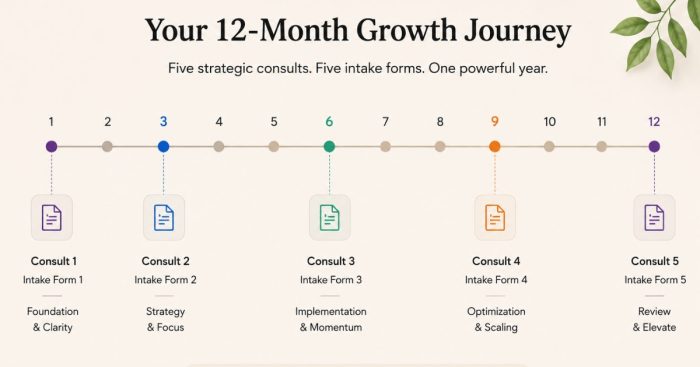
Why should an intake form precede every single checkpoint?
Because the patient’s own written answers are the best sales copy the clinic will ever have — feedback gets patients to sell themselves on continuing.
The rule from the source material:
intake forms at every step of the way, because “the more intake forms and feedback you can get from the patient, you can sell them — or get them to sell themselves — on why they want to continue being a patient.”
A patient who writes down that:
- her sleep improved
- her energy is up
- her pain is down
has just articulated the case for staying — in her own words, before the provider says anything.
The forms also arm the consult.
A provider who walks in knowing exactly what improved and what didn’t runs a progress review instead of a status interview, and the patient experiences a team that’s paying attention.
Skipped intake forms don’t just lose data; they waste the checkpoint.
How often should a cash-pay clinic run labs?
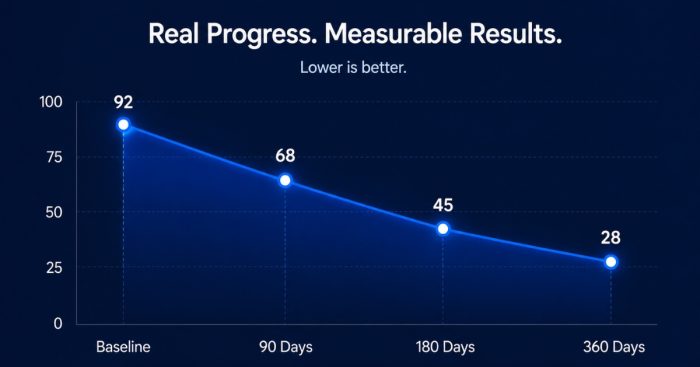
As often as the patient will allow — because diagnostic testing is how you show measurable results, and measurable results are what patients pay to keep seeing.
Subjective progress fades from memory; a biomarker trending the right direction across three draws doesn’t.
Labs at the major checkpoints turn the program’s value into a chart the patient can see — “measurable results in each of these different areas” — which both justifies the investment already made and builds the case for the next phase or the next rung on the ladder.
This is the same results-first retention logic that compounds across every high-LTV cash-pay vertical, and it’s why the fastest-growing practices put diagnostics at the center of the patient experience — like VYVE Wellness, a longevity and functional medicine clinic that grew website leads 900% and added 100+ inbound calls a month in four months on the strength of a results-driven program patients could see working.
How does this structure compound into LTV and referrals?
The ladder keeps patients in the practice as they escalate; the checkpoints keep proving value; and patients with documented results become the referral engine.
Run the math on the structure:
A patient who:
- enters on the natural tier
- upgrades at month three
- renews at month twelve
has tripled her lifetime value without a single new-patient acquisition cost — and the consult cadence made each step feel like her idea.
Meanwhile, every checkpoint that produces a documented win:
- an intake form full of improvements
- a lab panel trending right
produces a patient who talks about the program — the warm referrals every cash-pay clinic says it wants but few engineer.
That’s the model behind the recurring-revenue practices that dominate this space: an HRT clinic that grew from $1M to $4M a year with 250 members paying $1,000 a month didn’t get there on acquisition alone — it got there because the delivery system kept proving the membership was worth keeping.
FAQ’s About Pricing That Builds Patient Loyalty
How should a cash-pay clinic present its pricing tiers?
As levels of investment the patient chooses from — natural/lifestyle as the least investment, the medical protocol in the middle, and the combination of both as the most.
The patient picks her starting rung, which makes the decision hers to defend.
What’s the right consult cadence for a 12-month program?
Months one, two, three, six, and twelve.
Front-load the first 90 days where programs usually die, then space out to progress-review consults at six and twelve months.
Do patients really need an intake form before every consult?
Yes.
The patient’s written feedback documents progress in her own words — which gets her to sell herself on continuing — and lets the provider run a progress review instead of a status interview.
How often should labs be run?
As often as the patient will allow.
Diagnostics turn subjective progress into measurable results, which justify the current investment and build the case for the next tier.
How does tiered pricing increase lifetime value?
Every tier has a built-in upgrade path revisited at each checkpoint.
Patients escalate instead of churning, renew on documented results, and refer from proof — tripling LTV without new acquisition cost.
What’s the next step?
If your cash-pay clinic’s pricing is a single number and your patient journey is “come back when you run out,” you’re winning sales and leaking loyalty.
Build the ladder — natural, medical, combination — and wrap it in the checkpoint cadence:
- consults at months 1, 2, 3, 6, and 12
- an intake form before every one
- labs as often as the patient will allow
If you want the pricing architecture and checkpoint system designed for your practice — the tiers, the consult scripts, the intake forms, and the diagnostics story — book a strategy call.
We’ll build your ladder on the call and connect it to your medical practice marketing and patient acquisition systems.