
How Should a Clinic Add a New Service Line Like Wound Care? (Separate the Brand, Validate the Keywords, Rank in 30 Cities)
A chiropractic and neuropathy clinic owner we work with is adding mobile wound care — medical director hired, nurse practitioner on staff, a plan to serve assisted living facilities across a two-hour radius. The strategy call covered every question an owner faces when bolting a medical service line onto an existing practice: same brand or separate? What happens to the founder’s bio? Which keywords actually have demand? And how fast can SEO realistically deliver? Here’s the playbook from that call.
Should I run a new service line like wound care under my existing clinic brand?
No — position it as a separate business. Every chiropractor we’ve ever worked with who added wound care ran it as a distinct brand, and for good reason.
The owner’s instinct was right before we confirmed it: he’ll be walking into assisted living facilities and home health agencies selling a medical wound-care service, and “a chiropractor promoting a wound care company” doesn’t survive that room. The buyers in that channel — administrators, medical directors, families — need to see a wound-care operation led by an MD and staffed by an NP, not a side tab on a chiropractic site.
The existing practice keeps what it owns:
- the chiropractic, neuropathy, and joint-pain patients
- the five-star reviews
- the local reputation
The wound-care line gets its own positioning, its own proof, and eventually its own reviews. Shared ownership behind the scenes is fine; shared patient-facing identity muddies both businesses.
How do I reposition myself when the new service doesn’t match my credentials?
Retitle yourself from clinician to CEO and founder, put the medical team’s faces forward, and clean up the social feed the new buyers will check.
The specific moves from this call:
- take the owner’s DC avatar off the marketing
- retitle him as CEO and founder — “dedicated and passionate about helping people”
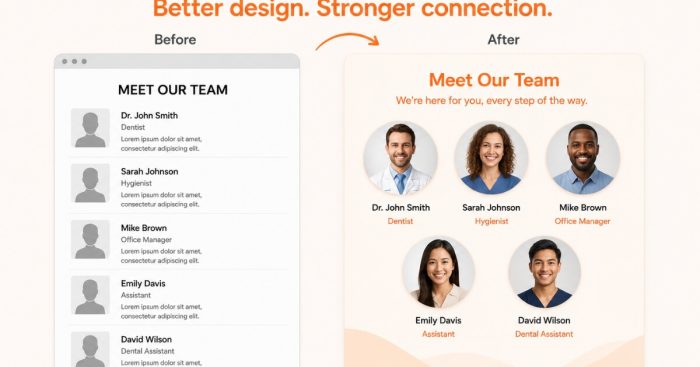
- integrate the medical director’s bio and photo plus the NP’s bio onto the team page, with roles clearly labeled
The clinic’s Meet Our Team page showed two chiropractors; a wound-care prospect needs to see the MD before anything else.
The same audit applies to social. The owner said it himself: he can’t pitch an assisted-living CEO on clinical wound care while his last post is a back-cracking video. You don’t have to delete the past — you have to make sure the first three things a B2B referral source finds match the business you’re now selling them.
How do I know the new service line is worth adding?
Follow the payer. This pivot works because wound care is Medicare-covered, while the existing cash service was capped by what patients could afford.
The owner’s frustration with cash-pay neuropathy was arithmetic: you can put the best salespeople in front of a patient who can’t afford care and you can only do so much. Wound care flips the constraint — treatment is covered, reimbursement scales with wound size, and the operators he’d studied were generating roughly $100,000 to $200,000 a month. Add a B2B acquisition channel (assisted living facilities full of patients with untreated pressure ulcers) and a mobile NP who can cover a 90-minute radius, and the unit economics stop depending on the patient’s wallet.
That’s the test for any service-line expansion:
- who pays
- how does the payment scale
- does a repeatable acquisition channel exist that your current business can’t reach?
It’s the same diligence we apply across pain management marketing engagements — the service menu is a portfolio, and every line needs its own economics.
How does a mobile service rank in 30 cities at once?
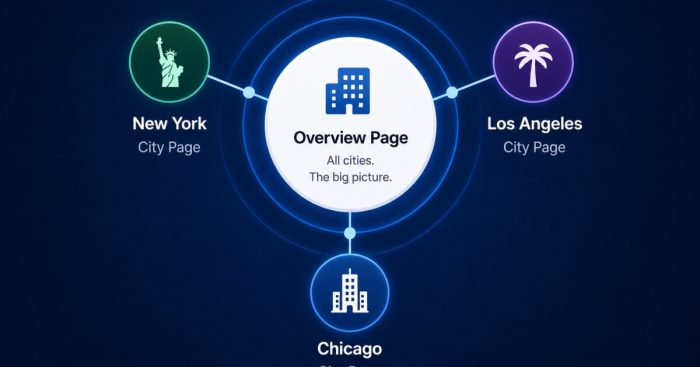
The directory model: one overview page for the home metro, plus localized service pages for every city in the driving radius — chosen by demographics, not convenience.
The build we mapped:
- a “wound care treatment Dallas, Texas” anchor page
- roughly 30 city pages within the NP’s real travel radius
- prioritized by concentration of residents over 65 and density of assisted living facilities
Each page runs the same keyword-packed structure:
- what is wound care treatment
- benefits
- who it’s right for
- what conditions it treats
- what to try first
- our process
Localized per city.
Add weekly blog posts and consistent Google Business Profile posting, and the organic footprint compounds while paid spend stays optional.
This is the same model that built $309,590 in cash-pay revenue in 10 months for a regenerative medicine clinic — without paid ads: rank where the patients are, in the language they search, across every city the team can actually serve.
What keywords actually matter — and how do I avoid guessing?
Research before building: in this case “bedsore treatment” had far more search volume than “wound care treatment.”
Nobody on the call knew offhand what a wound patient types into Google — and that’s normal; the honest answer beats a confident wrong one. Live keyword research surfaced the surprise: “bedsore treatment” massively out-searches the industry’s own term, and the second-biggest related query was “who pays for bedsore treatment in a nursing home” — a buyer-intent question that practically writes the landing page. Patients search symptoms and situations (“my wound won’t heal,” “foot ulcer treatment near me”), not service-menu vocabulary.
The lesson generalizes to every specialty: build the pages around the terms the market actually uses, not the terms on your invoice. A morning of keyword research before a two-week page build is the difference between ranking for demand and ranking for an empty phrase.
How fast should SEO produce results for a new service line?
Visible progress in 30 days, real service-line leads organically in about 90 — starting from zero.
The honest timeline we set: the site had essentially no organic traffic, so any competent work shows movement in the first month — traffic, then leads through the site. Wound-care leads specifically take closer to 90 days, with about two weeks to research keywords, build templates, and launch the city pages. Work runs in six-week keyword clusters, one priority at a time — wound care first, personal injury next when the second clinic opens — because splitting focus splits results.
Two infrastructure fixes ship alongside:
- the mobile site layout (it looked rough, and most of this audience searches on phones)
- the booking flow — appointment requests were routing to a ZocDoc account tied to abandoned software, so patients were literally showing up unannounced
The fix is a plain appointment-request form wired into the CRM the team actually uses. The pattern at full scale looks like the pain practice we helped add $2,095,039 in revenue in 10 months — owned infrastructure, honest timelines, one cluster at a time.
FAQ’s About Adding a Wound Care Service Line
Can a clinic run Google ads for a Medicare-covered service?
Generally yes — that’s one of the hidden advantages of a covered service line. Google restricts ads for FDA-questionable categories like stem cell treatment and hormone therapy, but a Medicare-covered service like wound care doesn’t carry that policy burden. Coverage also widens who you can profitably advertise to, because qualification no longer depends on the patient’s wallet.
How many city pages does a mobile service need?
Around 30, chosen deliberately:
- cities within the team’s real driving radius (60–90 minutes in the case behind this article)
- with the highest concentration of the target demographic
- for wound care, residents over 65 and clusters of assisted living facilities
One overview page anchors the metro; each city page carries the same FAQ-rich structure localized to that market.
How fast should a new service line rank organically?
Starting from zero organic traffic: visible progress in the first 30 days, and roughly 90 days before expecting actual service-line leads organically. The city-page build itself takes about two weeks once keyword research is done. Anyone promising page-one rankings in week two is selling something other than SEO.
What should the website’s booking link do?
Land in your CRM — never in a dead integration. The clinic in this story had its appointment requests routed to a ZocDoc account linked to software it no longer used, so patients were showing up unannounced. The fix: a simple appointment-request form wired into the CRM the team actually works, so every lead gets logged, routed, and followed up.
What does low-touch SEO management cost compared to full-service?
In the engagement behind this article:
- $2,500 a month for the low-touch version — onboarding call, a few check-ins, reports, and the work running in the background
- versus $4,500 a month for a full wellness-clinic engagement with weekly strategy calls and CRM buildout
Match the service level to how much of the operator’s time the business actually needs.
What’s the next step?
If you’re adding a service line this year, run this call’s checklist:
- decide the brand question first (medical service lines usually deserve separate positioning)
- retitle and re-bio the team for the new buyer
- validate the actual search terms before building a single page
- pick the 30 cities by demographics
- set honest 30/90-day expectations for the organic engine
- fix the mobile site and the booking flow the new leads will land on
If you want the keyword research, the city-page build, and the positioning mapped for your expansion, book a strategy call. In 60 minutes we’ll pressure-test the new line’s economics and lay out the launch plan.