
What Should a Discovery Call Sound Like at a Cash-Pay Clinic?
A discovery call at a cash-pay clinic is not a sales pitch and it is not an intake form. It is a structured 30-minute conversation that moves a high-ticket prospect from curious to committed. The clinics that close $2,500-a-month programs and $20K treatment plans on the phone are not better talkers. They are running a tighter sequence. Open with an agenda so nobody feels trapped. Spend the first third in discovery, asking questions that surface the goal, the gap, and the past failure. Present a specific plan built from what the prospect just told you. Then ask for the sale by laying out the options and going quiet. This is the call structure, pulled directly from the script our highest-converting cash-pay clients use. It’s the same one that powers the kind of inbound-call volume you see at clinics fielding 60 booked calls a month.
How Long Should a Cash-Pay Discovery Call Be, and How Do You Open It?
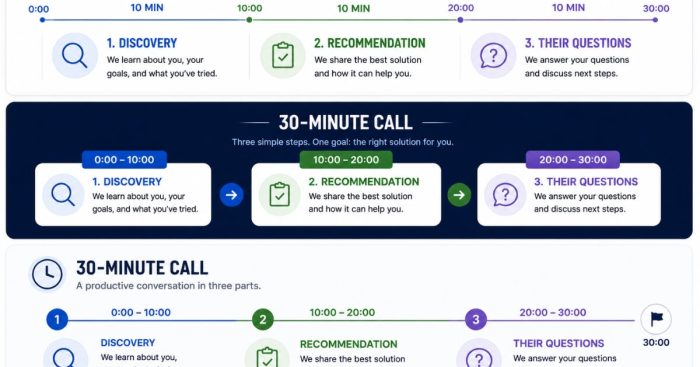
Plan for about 30 minutes, and open by telling the prospect exactly how those 30 minutes will be spent. The proven structure is three roughly equal blocks: 10 minutes of discovery, 10 minutes of recommendation, and 10 minutes reserved entirely for their questions.
The open does more work than people give it credit for. Try something like: “My goal over the next 30 minutes is to give you some direction for your business. We’ll spend about 10 minutes on where your practice is now and where you want it to be a year from now. Then I’ll make some recommendations and give you a little homework. The last 10 minutes are completely yours to ask anything.” You have just removed the prospect’s single biggest fear.
They came in braced for an open-ended pitch. You have told them there is a clock, a structure, and a block of time that belongs to them. That lowers their guard, and a prospect with their guard down answers your discovery questions honestly.
The agenda also buys you permission. Because you announced that the first 10 minutes are for understanding their business, you can now ask direct, even pointed questions without it feeling intrusive. They agreed to it.
This call is also only as good as the lead flow feeding it. If you want to learn how it fits into the larger system that fills your calendar in the first place, our patient acquisition framework covers how the ad, the offer, and the call work together.
What Discovery Questions Actually Move a Cash-Pay Prospect Toward the Sale?
The questions that surface three things: the goal, the gap between where they are and that goal, and the past failure that is keeping them stuck. Information does not close high-ticket cash-pay care. Urgency does, and these questions create it.
Start soft to get them talking: “Tell me a little about your business.” Then ask, “How did you hear about us — did you see an ad or were you referred?”
Follow with, “What made you want to book this call?” If they name something specific in the ad or referral, start there.
From there, move into the goal block. Every recommendation you make later needs to hook back to something the prospect said out loud. Ask, “What is your overall goal for the practice?”
Then go concrete: “Do you have an annual profit goal?” “Do you eventually want to sell the business?” “Open another location?” These answers become the anchor for the entire close.
Now surface the past failure, gently. “Have you worked with agencies or marketers in the past?” Almost always the answer is yes, and it did not go well — which is precisely why they are talking to you. A light, knowing line like, “I’m willing to bet it hasn’t gone great, or you probably wouldn’t be on this call,” builds instant rapport. Follow with, “Is there anything that has worked for you?” so you are not purely negative.
Then ask the single most important question in the whole script: “Why is solving this important to you now?” That question converts a casual shopper into someone who has just told you, in their own words, why they cannot wait.
Write down their phrasing. You will quote it back when you present the plan.
How Do You Ask Expert Questions That Prove You Actually Know Cash-Pay Medicine?
You ask treatment-specific, operations-level questions that no generic marketer would know to ask. Think protocols, membership conversion, and retention. This is what separates a discovery call from a telemarketing script: the prospect should hang up thinking, “This person actually understands my business.”
Tailor the questions to their vertical. For a regenerative or stem-cell practice, try this: “Have you changed your injection or treatment protocols in the last two years? A lot of practices have moved to IV treatments instead of joint injections.”
For a weight-loss clinic running semaglutide, ask: “After your patients finish their GLP-1 injections, do you get them onto any other type of membership?”
For a hormone clinic, try: “How long do your hormone patients stay with you on average before they switch their prescription to a cheaper provider?” Each of these does two jobs at once. It demonstrates expertise, and it exposes a leak in their business that your plan will later plug.
These questions are also discovery in disguise. The hormone-retention question tells you whether they have a retention problem worth thousands a month. The GLP-1 membership question tells you whether they are leaving recurring revenue on the table. By the time you present, you are not guessing where the money is. They handed you the map. That is the difference between a clinic that closes one in three calls and one that closes one in ten.
How Do You Present the Plan Without Sounding Like a Hard Pitch?
You make a specific, short recommendation built from what they just told you. Then you hand them a choice and ask which part they are most excited about. The moment the prospect starts choosing, they stop being sold to and start selling themselves.
Transition with a line that signals the discovery is over and the value is starting: “Based on where your business is right now, here is where I would start.” Then name two or three concrete starting points. For example, a mindset shift, a lead-generation move, and a lead-nurture fix — each tied directly to a goal or gap they named earlier.
Do not list everything you offer. Three options is enough to feel chosen-for-them without overwhelming. Then ask the question that flips the whole dynamic: “Which of those are you most excited to start with?”
Follow with “How come?” Now the prospect is articulating, in their own voice, why your plan matters to them.
The framing should feel like a doctor reading a chart, not a closer reading a script. That is fitting, because that is exactly the credibility you are borrowing.
This is also the moment to demonstrate the upside with proof. Clinics that run this call structure on top of strong lead flow see real volume, like Eternity Health Partners, which built to 60 inbound calls a month and 250 members. You are not promising a miracle. You are showing them what the system produces when the call and the lead flow are both dialed in. Close the presentation by clearing the path: “Do you have any burning questions before I go over the next steps?”
When and How Do You Ask for the Sale on a Discovery Call?
You ask after you have presented the plan, confirmed their excitement, and cleared their burning questions. You ask by laying the options out plainly, tying each to the level of support they want, and then going silent. The silence is the close.
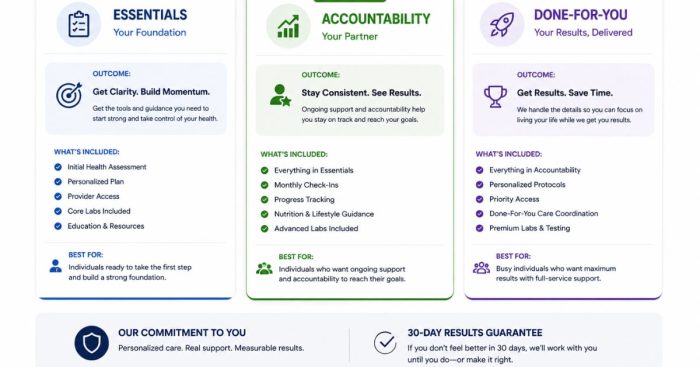
Structure the offer as tiers, so the prospect self-selects instead of being pushed. There’s an entry tier for the self-starter who just wants the tools, funnels, and templates. There’s a middle tier for the owner who wants weekly and monthly accountability. And there’s a top tier for the practice that wants you to run patient acquisition and retention end to end.
Anchor each one on the outcome, not the dollar figure. For example, frame every program as a fixed commitment that graduates the practice into a lower-cost tier over time. That way, they become less dependent on you and more dependent on what has been built inside their own business. This framing makes the spend feel like an investment with an exit, not a subscription with no end.
Then name the next step and stop talking. For a self-starter, that next step might genuinely be a few more free resources and a warm send-off. Generosity here builds the kind of referral and reputation that compounds. For an engaged buyer, the next step is choosing a tier or booking the follow-up.
The reason this works is everything that came before it. By the time you ask, the prospect has already told you their goal, their urgency, and which part of the plan excites them most. The ask is not a leap. It is just naming the obvious next move.
This is the same structured-call discipline behind outcomes like NuLevel Wellness Medspa, which brought in 3,727 new patients: a repeatable conversation, run the same way every time, instead of a sales personality you cannot scale.
FAQ’s About Cash-Pay Clinic Discovery Calls
How long should a cash-pay discovery call be?
Plan for about 30 minutes and tell the prospect that up front. The proven split is roughly 10 minutes of discovery, 10 minutes presenting your recommendation, and 10 minutes reserved for their questions.
Stating the agenda at the open removes the patient’s biggest fear: that they are about to be trapped in an open-ended sales pitch. It also gives you permission to ask direct questions, because you have already told them that is what the first 10 minutes are for.
If the conversation is going well and they are engaged, the back third often turns into the close. If they are a self-starter who clearly does not need you, you can wrap early, point them to a few free resources, and end on a generous note. The time box is a framework, not a cage.
What discovery questions actually move a cash-pay prospect toward the sale?
The questions that surface the goal, the gap, and the past failure. Start with “Tell me a little about your business” and “What made you book this call?” to get them talking. Then move to the goal questions: “What is your overall goal for the practice?”, “Do you have an annual profit goal?”, “Do you eventually want to sell or open another location?”
Those tie every later recommendation to something they already said they want.
Then surface the past failure: “Have you worked with agencies or marketers before?” Most of the time it has not gone well, which is exactly why they are on the call.
The most powerful question in the set is “Why is solving this important to you now?” Urgency, not information, is what closes high-ticket cash-pay care. Write the answers down and quote them back when you present the plan.
How do you present the plan without sounding like a hard pitch?
You make a specific recommendation grounded in what they just told you. Then you give them a choice and ask which part they are most excited about. Instead of dumping everything you offer, say “Based on where your business is right now, here is where I would start” and name two or three concrete starting points.
Then ask “Which of those are you most excited about?” and “How come?” That single question flips the dynamic. The prospect is now selling themselves on the plan instead of being sold to.
Tie each recommendation back to a goal they named earlier in discovery, so the plan feels custom rather than canned. The presentation should feel like a doctor reading a chart, not a closer reading a script.
When and how do you ask for the sale on a discovery call?
You ask after you have presented the plan, confirmed their excitement, and cleared their burning questions. You ask by laying out the options plainly and letting them self-select.
Frame the programs as tiers tied to how much support they want. There’s a lower-investment essentials option for self-starters who just want the tools. There’s a mid-tier option for people who want accountability. And there’s a done-for-you option for owners who want you to run everything.
Anchor on the outcome, not the price. For example, design all programs as fixed commitments with graduation into a lower-cost tier, so the patient becomes less dependent on you over time. Then go quiet and let them choose.
The mistake most clinics make is asking for the sale before the prospect has stated their own urgency. If you do discovery right, the ask is just naming the next logical step.
Should the front desk or a closer run the discovery call?
Whoever runs it needs a script, a goal sheet, and the authority to present the plan and ask for the sale on the same call. At lower volume the owner or provider often runs it, which converts well because the expertise is obvious.
As volume grows, you need a dedicated person whose only job is discovery calls. They should work from the same structured script every time, so the conversion rate is repeatable instead of personality-dependent.
The worst setup is a front desk that books and qualifies but cannot present a plan or quote a price. Every interested prospect gets handed off and cools down. Build the call so one trained person can take it from hello to next step without a warm-transfer that loses momentum.
What is the biggest mistake clinics make on discovery calls?
Talking instead of asking. Clinics that struggle treat the call as a chance to explain everything they do, and the prospect tunes out because nothing is tied to their situation.
The call should be roughly two-thirds the prospect talking in the discovery phase. The provider should be asking sharp, expert questions — about treatment protocols, membership conversion, patient retention — that prove competence without lecturing.
The second biggest mistake is skipping the goal questions, which leaves the recommendation generic and the ask unanchored. Discovery first, plan second, ask third — in that order, every time.