
What Marketing Budget Does a Regenerative Medicine Clinic Need to Grow in 2026?
There is no magic percentage that tells a regenerative medicine clinic what to spend on marketing. The clinics that scale do not start with an industry benchmark — they start with the price of their program. Because regenerative and stem cell programs are high-ticket, the budget math is different from a medspa selling $300 filler or a telehealth shop selling $99 visits. When you can profitably spend $1,000 or $2,000 to acquire a patient who will pay $7,500, the question stops being “what percent of revenue” and becomes “how many patients do I want, and what does it cost to get them.” This is the concrete budget answer for a regenerative or stem cell clinic in 2026 — by percent of revenue, by growth stage, and build-vs-buy — grounded in the high-ticket offer economics that make the whole thing work.
How much should a regenerative medicine or stem cell clinic spend on marketing in 2026?
A regenerative medicine or stem cell clinic should budget 10–20% of revenue for marketing in 2026 — closer to 20% while you are still building demand, closer to 10% once SEO, reviews, and referrals are compounding.
However, the percentage is the wrong place to start.
The right way to budget a regenerative clinic is from the offer economics, not from an industry average.
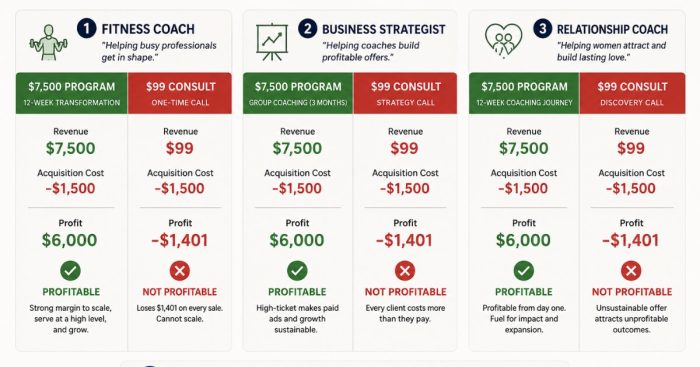
Because regenerative and stem cell programs are high-ticket — typically $5,000 to $10,000 or more — you can spend $1,000 or even $2,000 to acquire your first patient from a campaign and still be profitable.
A clinic selling a $300 injection or a $99 consult has to convert almost everyone just to break even.
By contrast, a clinic selling a $7,500 regenerative program has room to:
- Pay for leads
- Pay a salesperson to convert them
- Still make money
So the real budget question is not “what percent of revenue.”
Instead, ask:
- What is my target cost per acquisition?
- How many patients do I want?
- What does it cost to generate that many qualified consults?
Multiply your target patient count by your allowable cost per acquisition and you have your paid budget.
Then layer SEO and reviews on top as the always-on engine.
If you want the channel-by-channel detail behind the spend, our guide to stem cell clinic marketing breaks down where regenerative budgets actually convert.
Why does high-ticket offer economics decide a regenerative clinic’s marketing budget?
Because the price of your program sets the ceiling on what you can afford to spend to win a patient — and regenerative medicine is one of the highest-ticket categories in cash-pay care.
When you sell something that costs $5,000 to $10,000, you can spend $1,000 or even $2,000 to acquire that first customer when you are starting out and still be profitable.
And the economics get better from there.
The second customer from the same campaign usually costs less than the first.
The third often costs less than the second.
As the platform learns and your creative compounds, acquisition costs typically decline.
That declining cost curve is the engine that makes an aggressive growth budget safe to fund.
The opposite is true for low-ticket offers.
If you sell a $300 to $500 treatment, or worse, you try to sell a $99 initial consult, then with a $20 cost per lead you have to convert almost everyone just to make any money.
Once you pay a front-desk person or salesperson to close those leads, the economics stop working.
This is why regenerative clinics that scale build a real program.
Examples include:
- A neuropathy program
- A knee-pain program
- A regenerative-joint program
They do not rely on one-off injections.
Building the program now is better than losing money on low-ticket ads.
The high ticket is what makes the marketing budget affordable in the first place.
What marketing budget should a regenerative clinic set by growth stage?
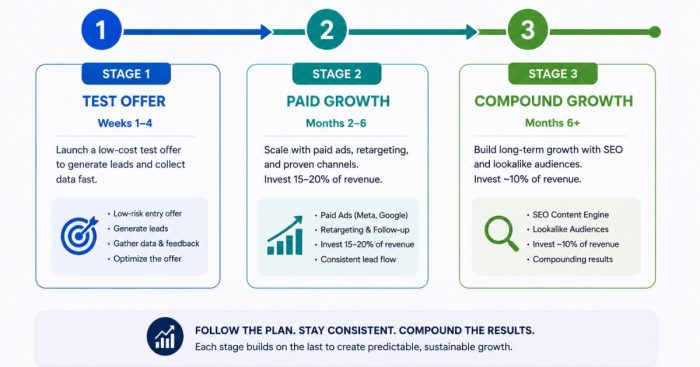
Budget by stage: build the offer and test for nearly free at the start, fund paid acquisition aggressively in the growth stage, then shift spend toward compounding channels at maturity.
Stage One: Offer and Proof
Before you spend on ads, test your headline, copy, and offer in an email to your existing patient list.
If people who already bought from you will not respond to the offer, cold traffic never will.
This stage costs almost nothing.
More importantly, it saves you from burning a budget on a broken offer.
Stage Two: Paid Growth
Now you fund Facebook and other paid channels to a target cost per acquisition.
At this stage, you accept a higher cost for the first patients in a campaign because you know the cost drops as the campaign matures.
Keep your local audience between 150,000 and 225,000 people.
Start simple with targeting.
For example:
- Older patients for osteoarthritis
- Athletes ages 25–50 for sports-injury regenerative work
Only widen the radius once you have customers.
This is where the 15–20% of revenue figure lives.
Stage Three: Compounding
Once you have 2,000 to 3,000 customers, upload that list as a lookalike audience.
Doing so often makes paid acquisition cheaper.
At the same time, lean into:
- SEO
- Google reviews
- Referrals
These channels create the always-on layer that produces the most ready-to-buy regenerative patients.
As a result, you can often reduce paid spend closer to 10% of revenue without losing volume.
The clearest proof of that compounding layer is Orthobiologics Associates, which generated $309,590 in cash-pay revenue in 10 months from SEO alone — zero ad spend, at a 79.4% conversion rate.
Should a regenerative clinic build marketing in-house or buy an agency?
Buy the offer-and-channel expertise when speed and proven playbooks matter; build in-house only once your offer is validated and your volume justifies a dedicated team.
The deciding factor is the same high-ticket math.
Because a regenerative program carries a $5,000 to $10,000 ticket, the cost of getting the offer, the ad creative, the audience, and the follow-up wrong is enormous.
Every week of a broken funnel is thousands of dollars in lost programs, not lost $300 injections.
Building from scratch means assembling the parts most clinics do not already have:
- A high-ticket program
- A lead magnet
- Winning ad creative
- Localized ad copy
- A fast follow-up operation
Lead magnets may include:
- A low-hormone checklist
- A low-T quiz
- An ebook
- A treatment-roadmap PDF
A clinic that has none of that and tries to run Facebook, Google, SEO, and reviews simultaneously usually burns cash and burns out its team.
Buying expertise short-circuits that process.
You can see what dialed-in paid acquisition looks like in this category at Elite Pain Doctors, a pain-management and regenerative clinic that produced $2,095,039 in 10 months.
The build decision makes sense later.
Once the offer is proven and your volume makes an in-house marketer cheaper than a percentage of spend, bring the always-on layer in-house and keep paid acquisition with specialists.
How do you set a marketing budget from cost per acquisition instead of a percentage?
Work backwards from the patient: decide how many regenerative patients you want this month, set the most you will pay to acquire one, multiply, and that is your paid budget.
Start with your allowable cost per acquisition.
On a $7,500 program you can comfortably pay $1,000 to $2,000 to acquire a patient and stay profitable.
This is especially true early in a campaign before costs drop.
For example:
- Goal: 10 new regenerative patients
- Allowable acquisition cost: $1,500
- Paid budget: $15,000
Then check the funnel math behind it.
If your consults convert at a known rate and your cost per lead on Facebook is $30 to $60, the budget tells you how many leads and consults you need to hit ten patients.
If the numbers do not pencil out, the fix is usually:
- The offer
- The close rate
- The conversion process
It is rarely the budget itself.
This bottoms-up method is far more accurate than a flat percentage of revenue because it is tied to real patient targets and real unit economics.
The percentage of revenue is only a sanity check.
If your cost-per-acquisition budget lands wildly above 20% of revenue, your offer or conversion needs work before you scale spend.
What’s the biggest budget mistake regenerative clinics make in 2026?
The biggest mistake is treating regenerative medicine like a low-ticket offer — discounting injections to match the clinic down the street and then wondering why the ad budget never produces profit.
It does not matter what the clinic down the street charges for knee injections.
Competing on price starts a race to the bottom.
Eventually, that race destroys the margin that makes a marketing budget affordable.
The fix is to compete on value, not price.
For example:
- Package what the patient is already going to buy
- Build a program or membership
- Improve the experience
- Add service that makes patients feel cared for
- Price for the outcome
The second mistake is skipping the offer test and lead magnet.
Then clinics spend the whole budget driving cold traffic straight to a paid consultation.
Giving value first works better.
Examples include:
- A free checklist
- A quiz
- An ebook
- A roadmap
- A complimentary consultation
These assets build trust and authority before the patient ever arrives.
The third mistake is spreading a small budget across every channel at once.
Instead, fund one channel to a profitable cost per acquisition before adding the next.
Depth before width is what protects the budget.
FAQ’s About Regenerative Medicine Marketing Budgets
How much should a regenerative or stem cell clinic spend on marketing as a percent of revenue?
Plan for 10–20% of revenue.
Stay nearer 20% while building demand.
Move closer to 10% once SEO, reviews, and referrals begin compounding.
However, treat the percentage as a sanity check, not a starting point.
Build the real budget from your target patient count and allowable cost per acquisition.
What is a reasonable cost per acquisition for a regenerative medicine patient?
On a $5,000 to $10,000 program you can profitably spend $1,000 or even $2,000 to acquire a patient.
This is especially true for the first patients in a new campaign.
Those costs typically decline as the campaign matures.
How much does it cost to start running ads for a regenerative clinic?
Less than most clinics expect, if you test first.
Before funding ads, email your existing patient list with your offer, headline, and copy.
That costs almost nothing and helps validate the offer.
After that, many clinics begin meaningful Facebook growth in the $5,000 to $15,000-per-month range.
Should a regenerative clinic spend on SEO or paid ads first?
Run paid ads when you need patients quickly and have a proven high-ticket offer.
Build SEO and reviews as the always-on layer that lowers acquisition costs over time.
The strongest budgets use both.
Paid ads create speed.
SEO creates compounding growth.
Should I build a marketing team or hire an agency for my regenerative clinic?
Buy proven expertise while your offer and channels are still being validated.
The cost of a broken high-ticket funnel is too high.
Move the always-on layer in-house only once the offer is proven and your volume makes a salaried marketer more economical than an agency relationship.