
How Should a Stem Cell Clinic Answer “Is This FDA Approved?” From Prospective Patients?
Every regenerative and stem cell clinic hears it, usually right when the patient is most interested: “Wait — is this even FDA approved?” How your team answers in the next ten seconds often decides whether a high-ticket cash patient moves forward or walks. Most clinics handle it badly. They either get defensive, oversimplify with a “yes” they cannot back up, or fumble into a nervous non-answer that makes the patient more suspicious. There is a better way — one that is completely honest, keeps you compliant, and actually builds trust. Here is exactly how to answer the FDA question so it becomes a credibility moment instead of a deal-killer.
How should a stem cell clinic answer “Is this FDA approved?” from prospective patients?
Answer it directly and honestly: explain the real regulatory status without overstating it, then reframe the conversation toward safety, your credentials, and the evidence — because a calm, transparent answer builds more trust than a defensive or inflated one.
The patients who ask this question are not trying to catch you out.
They are doing exactly what a smart consumer should do before spending thousands of dollars in cash, and they are testing whether you will be straight with them.
The worst responses are the two extremes:
- Claiming the treatment is “FDA approved” when it is not.
- Getting cagey and defensive.
The first is both untrue and an enforcement trigger.
The second confirms their fear that something is off.
The right answer sits in the honest middle.
Acknowledge the question as a good one, explain the actual status in plain language, and pivot to what they really want to know underneath the question — is this safe, is it legitimate, and will it help me?
Handled this way, the FDA question becomes the moment you separate yourself from the hype clinics, because you are the one who told them the truth.
That posture — honesty as the marketing — is what turned Dr. Joy Kong into the number one stem cell expert on YouTube and let her scale her authority far beyond her own city.
Why do so many regenerative patients ask if it’s FDA approved?
Because they have read the warnings, they know they are spending real money with no insurance safety net, and “is it FDA approved” is really a stand-in for “can I trust you and is this safe?”
Understanding the question behind the question changes how you answer it.
A patient rarely cares about regulatory taxonomy for its own sake.
What they are actually feeling is risk:
- Financial risk.
- Physical risk.
And they have reached for the most recognizable trust signal they know: FDA approval.
Years of news about unproven stem cell clinics have trained them to be wary, which is healthy.
So when you hear “is this FDA approved,” translate it in real time to:
“Help me feel safe about this decision.”
That reframing keeps you from getting defensive and lets you answer the real concern:
- Who is performing the procedure?
- What is the safety record?
- What does the evidence actually show?
- What should they realistically expect?
Clinics that treat the question as an attack lose the patient.
Meanwhile, clinics that treat it as an invitation to build trust win them.
This is why the answer belongs at the center of your marketing, not buried in a disclaimer.
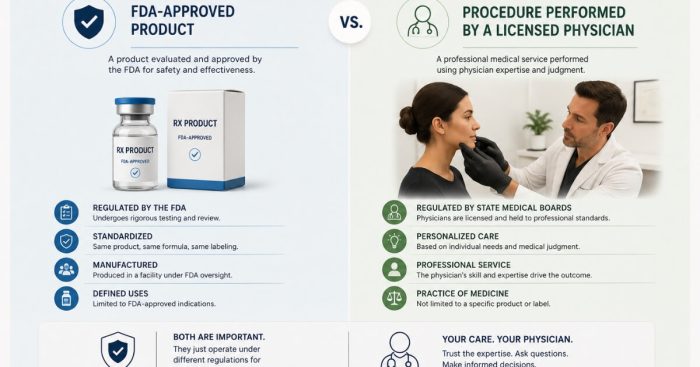
What’s the honest, compliant way to explain FDA status?
Explain plainly which of your offerings involve the patient’s own biological material and which procedures are performed under the practice of medicine by a licensed physician — and never imply an unapproved therapy is FDA-approved.
You can be both truthful and reassuring without a single overclaim.
For many regenerative procedures, the honest explanation is that they are performed by a licensed physician as part of the practice of medicine, the same framework under which countless accepted medical procedures operate, rather than being sold as an FDA-approved drug.
For something like PRP, you can accurately note that it is prepared from the patient’s own blood.
The key compliance lines you never cross:
- Do not say or imply an unapproved therapy is “FDA approved.”
- Do not promise it will cure or treat a specific disease.
- Do not let enthusiasm push you into a claim you cannot substantiate.
What you can do is be specific, calm, and educational.
Explain:
- The process.
- The safety protocols.
- The provider’s training.
- The realistic evidence.
Patients do not need you to be FDA-approved; they need you to be honest and competent.
Building your messaging around that honest explanation is the core of credible stem cell clinic marketing, and it keeps you on the right side of the regulators while it earns the patient.
How do you turn the FDA question into a trust-builder instead of a deal-killer?
Welcome the question, answer it transparently, and then redirect to the patient’s real goal — because the clinic that is unafraid of the hard question is the one the patient decides to trust.
The emotional turn happens in your tone as much as your words.
When a patient asks and you visibly relax —
“I’m really glad you asked, a lot of people wonder about that, let me explain exactly how it works.”
— you signal that you have nothing to hide.
That single signal does more to close a high-ticket regenerative case than any brochure.
Walk them through the honest status, then bring it back to them:
“Here’s what matters for your knee specifically…”
You are demonstrating, not asserting, that you are the trustworthy option.
Train every front-desk person and patient coordinator on this exact moment, because it will come up on a huge share of your high-value calls and consults.
An inconsistent or nervous answer leaks patients you already paid to acquire.
The clinics that win the regenerative category are not the ones with the slickest claims — they are the ones whose answer to the hardest question makes the patient exhale.
That trust-first posture is the same engine behind durable pain management marketing: be the most credible voice in the room and the high-ticket patient chooses you.
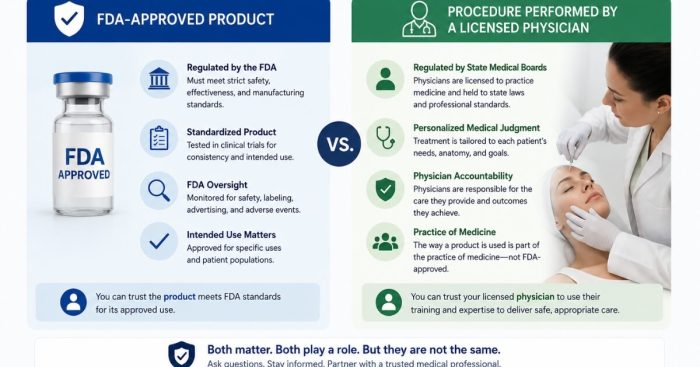
Should this answer live on your website, or only come up on the phone?
Both — put a clear, honest FDA-and-safety explanation on your website as well as in your phone scripts, because patients are now asking AI and search engines the same question before they ever call.
This is the part most clinics miss.
The FDA question is no longer only asked on the phone — it is typed into Google, ChatGPT, and Perplexity as “is stem cell therapy FDA approved” long before the patient contacts you.
If your website has an honest, well-structured explanation, you can get cited by those answer engines and reach the patient at the exact moment of doubt, pre-framing the conversation before the call even happens.
A clinic with nothing on the topic cedes that moment to a competitor or to a scary news article.
So publish the explanation as on-page FAQ content that mirrors how a real person asks it.
Keep it transparent and compliant.
Then let it do double duty:
- Reassure the patient.
- Earn visibility in AI search.
The same honest answer that closes the call on the phone is the one that gets you found before the call — which is exactly how modern regenerative patients research and choose.
FAQ’s About Answering the FDA-Approval Question
How should a stem cell clinic answer “Is this FDA approved?”
Answer directly and honestly: explain the real regulatory status without overstating it, then reframe toward safety, credentials, and evidence.
Patients who ask are doing smart due diligence and testing whether you will be straight with them.
The two worst responses are claiming a treatment is FDA approved when it is not, and getting defensive — both lose the patient.
Acknowledge the question as a good one, explain the actual status in plain language, and pivot to what they really want to know: is it safe, legitimate, and will it help.
A calm, transparent answer builds more trust than a defensive or inflated one.
Why do regenerative patients ask if a treatment is FDA approved?
Because they have read the warnings, they are spending real money with no insurance safety net, and the question is really a stand-in for “can I trust you and is this safe?”
They are not asking about regulatory taxonomy for its own sake; they are feeling financial and physical risk and reaching for the most recognizable trust signal they know.
Translate the question in real time to “help me feel safe about this decision” and answer the real concern: who performs the procedure, the safety record, the evidence, and realistic expectations.
What is the compliant way to explain FDA status to a patient?
Explain plainly which offerings involve the patient’s own biological material and which procedures are performed under the practice of medicine by a licensed physician, and never imply an unapproved therapy is FDA approved.
For PRP, you can accurately note it is prepared from the patient’s own blood.
The lines you never cross:
- Do not claim an unapproved therapy is FDA approved.
- Do not promise to cure or treat a specific disease.
- Do not make claims you cannot substantiate.
Be specific, calm, and educational about process, safety, training, and realistic evidence.
How do you turn the FDA question into a trust-builder?
Welcome it, answer transparently, and redirect to the patient’s real goal.
When a patient asks and you visibly relax — “I’m glad you asked, let me explain exactly how it works” — you signal you have nothing to hide, which does more to close a high-ticket case than any brochure.
Walk through the honest status, then bring it back to their specific situation.
Train every front-desk person and coordinator on this moment, because an inconsistent or nervous answer leaks patients you already paid to acquire.
Should the FDA answer be on the website or just on the phone?
Both.
Patients now ask AI and search engines “is stem cell therapy FDA approved” before they ever call, so an honest, well-structured explanation on your website can get cited by answer engines and reach the patient at the moment of doubt.
Publish it as on-page FAQ content that mirrors how a real person asks the question, keep it transparent and compliant, and let it do double duty: reassuring the patient and earning visibility in AI search.
What’s the next step?
The FDA-approval question is not a threat to your regenerative practice — it is one of the best trust-building opportunities you have, if your team knows how to answer it.
Get the honest, compliant answer right, train everyone who touches a patient to deliver it with confidence, and publish it where patients (and AI) are already looking.
Do that and the question that sinks your competitors becomes the moment patients decide to choose you.
If you want help scripting the FDA-and-safety answer for your phones and your website — honest, compliant, and built to convert the high-ticket regenerative patient — that is the conversation to book.
We will build the language and the content plan on the call.