
Why Is My Regenerative Medicine Clinic Getting Leads but Not Booking Consultations?
This is the most common, most expensive, and most misdiagnosed problem in a regenerative or pain practice. The ads are working. The phone is buzzing. The web form is filling up. And almost none of it turns into a booked consultation — so the owner concludes the leads are junk, blames the marketing, and either cuts spend or fires the agency. Nine times out of ten that diagnosis is wrong. The leads are fine. What is broken is the few minutes and few days after the lead comes in. Here is how to tell the difference, and how to fix the booking gap that is quietly costing you the most valuable patients you will ever get.
Why is my regenerative medicine clinic getting leads but not booking consultations?
Because the leads are not being contacted fast enough or followed up persistently enough — it is a speed-and-follow-up problem at the front desk far more often than it is a lead-quality problem.
When a regenerative clinic has leads that do not convert, the owner’s instinct is to question the source.
However, the math almost always points back inside the building.
A high-ticket regenerative lead is a person in pain who just raised their hand — and that intent has a shelf life measured in minutes.
If your team takes hours to call back, the lead has already moved on to the next clinic, gone cold, or talked themselves out of it.
Layer on a front desk that calls once, leaves no voicemail, and never follows up, and you have a funnel that leaks 70-80% of perfectly good leads between “inquiry” and “booked consult.”
The clinics that convert at a high rate are not buying better leads — they are contacting them in minutes and chasing them for two weeks.
We have watched this gap close dramatically: one regenerative practice booked 79.4% of its leads into appointments not because the leads were special, but because the lead-handling was.
The leak is operational, and operational problems are fixable this week.
How fast do you have to call a regenerative medicine lead?
In minutes, not hours — speed-to-lead is the single biggest lever on whether a regenerative inquiry ever becomes a booked consult.
The data on this is brutal and consistent across every high-ticket service business: the odds of connecting with and converting a lead fall off a cliff after the first five minutes.
A lead called back in five minutes versus thirty minutes is not a little better — it is several times more likely to book.
For a regenerative or pain patient, the reason is human:
- They are in pain.
- They are anxious.
- They filled out three clinics’ forms.
- They will move forward with whoever calls first and sounds competent and calm.
If your front desk is busy with patients in the building and gets to the web leads “when there is a gap,” you are handing your best prospects to the competitor who answered first.
The fix is to make speed-to-lead a non-negotiable system:
- Automated instant text-back the second a lead comes in.
- A live call within five minutes.
- A team member whose job in that moment is the phone, not the front counter.
This one change routinely doubles booked consults with zero additional ad spend, which is the foundation of any reliable patient acquisition system.
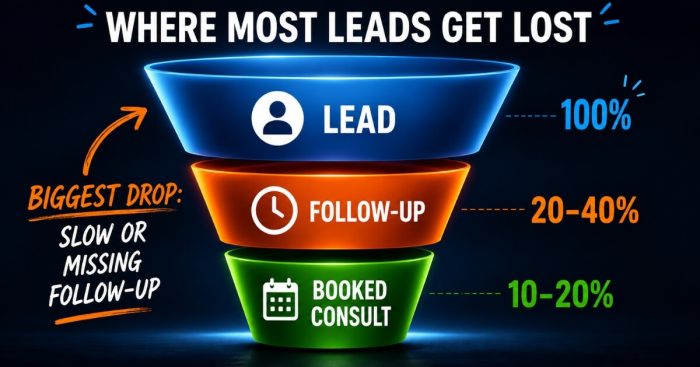
Is it a lead-quality problem or a follow-up problem?
It is a follow-up problem until you have proven otherwise — and most clinics never actually check, they just assume the leads are bad.
Before you blame the leads, run the simple audit that most owners skip.
Pull your last 50 leads and answer three questions:
- How many were contacted within five minutes?
- How many got more than two follow-up attempts?
- How many got a voicemail and a text, not just a single missed call?
If the honest answers are “very few,” you do not have a lead-quality problem — you have a process problem wearing a lead-quality costume.
Real lead-quality issues exist (a broken ad targeting the wrong audience, a lead magnet that attracts freebie-seekers), but they are the exception.
More importantly, you can only see them clearly once the follow-up is airtight.
The tell is simple:
If leads that finally do get reached book at a normal rate, your leads are fine and your follow-up is the bottleneck.
We have seen pain practices generating strong organic lead flow — like the clinic where consistent inbound produced a steady stream of website leads every month — only to leave most of it on the table because no one owned the follow-up.
Fix the process first; judge the leads second.
What should the first call with a regenerative pain lead actually sound like?
Warm, fast, and focused on booking the consult — not on selling the treatment or quoting a price on the phone.
The first call is not a sales pitch and it is not an interrogation.
Its only job is to make the patient feel heard and to book the consultation.
Open by referencing what they inquired about (“you reached out about your knee — tell me what’s going on”), let them talk, and reflect back that you help people exactly like them.
Do not get pulled into pricing the program or diagnosing over the phone; both move the patient toward a no.
Instead, frame the consult as the logical next step where the doctor can actually evaluate whether they are a candidate.
Then offer two specific appointment times to make saying yes easy.
The patient should hang up feeling like they finally found a place that gets it, with a consult on the calendar.
If your front desk is winging this call differently every time, that inconsistency is costing you bookings.
A tight, repeatable script for the first call is one of the highest-ROI assets a regenerative clinic can build, and it is central to effective pain management marketing because the best ad in the world dies on a bad phone call.
How many follow-up attempts does it take to book a high-ticket regenerative consult?
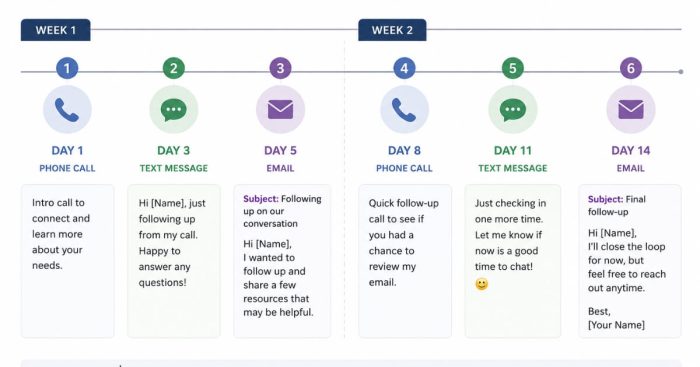
Far more than most clinics make — plan on six to eight touches across call, text, and email over about two weeks, because high-ticket cash decisions rarely happen on the first contact.
Most front desks quit after one or two attempts, which is exactly why most leads never book.
A regenerative patient weighing a multi-thousand-dollar cash decision is not ignoring you because they are not interested.
Instead, they are:
- Busy.
- Anxious.
- Comparing options.
- Waiting for a reason to act.
Persistence is not pestering; it is service.
Build a structured chase sequence:
- Instant text plus a call on day one.
- Another call and text on day two.
- An email with a patient story on day three.
- Continued touches spaced out across two weeks.
Each touch should add value rather than just “checking in.”
Also, vary the channel, because some patients answer texts who never pick up the phone.
The clinics that win do not have more leads than you — they simply refuse to let a lead go cold after two rings.
When you compare a one-touch front desk to a disciplined eight-touch sequence on the same lead flow, the booked-consult number often doubles or triples.
That is pure margin, because you already paid for those leads.
FAQ’s About Regenerative Clinic Leads That Don’t Book
Why are my regenerative medicine leads not booking consultations?
Almost always because they are not contacted fast enough or followed up persistently enough — it is a speed-and-follow-up problem at the front desk, not a lead-quality problem.
A high-ticket regenerative lead is a person in pain whose intent fades within minutes.
A front desk that takes hours to respond, calls once, leaves no voicemail, and never follows up will leak the majority of good leads between inquiry and booked consult.
Clinics that convert at a high rate are not buying better leads; they are contacting them in minutes and chasing them for two weeks.
How fast should you call a new regenerative or pain lead?
Within five minutes, not hours.
The odds of connecting with and converting a lead fall off sharply after the first five minutes, and a regenerative patient in pain will move forward with whichever clinic calls first and sounds calm and competent.
The fix is to make speed-to-lead a non-negotiable system: automated instant text-back, a live call within five minutes, and a team member whose job in that moment is the phone.
This one change routinely doubles booked consults with no additional ad spend.
Is it a lead-quality problem or a follow-up problem?
It is a follow-up problem until you prove otherwise.
Pull your last 50 leads and check how many were contacted within five minutes, got more than two follow-up attempts, and received a voicemail and a text rather than a single missed call.
If the answers are “very few,” you have a process problem, not a lead problem.
The tell is simple: if the leads that do get reached book at a normal rate, your leads are fine and your follow-up is the bottleneck.
What should the first call with a regenerative lead sound like?
Warm, fast, and focused only on booking the consult — not on selling the treatment or quoting a price.
Reference what they inquired about, let them talk, and reflect that you help people exactly like them.
Avoid pricing the program or diagnosing over the phone, because both push the patient toward a no.
Frame the consult as the next step where the doctor can evaluate candidacy, and offer two specific times to make saying yes easy.
A tight, repeatable first-call script is one of the highest-ROI assets a regenerative clinic can build.
How many times should you follow up with a regenerative lead?
Six to eight touches across call, text, and email over about two weeks.
Most front desks quit after one or two attempts, which is why most leads never book.
A patient weighing a multi-thousand-dollar cash decision is busy and comparing options, not uninterested.
Build a structured chase sequence that varies channels and adds value each time.
Comparing a one-touch front desk to a disciplined eight-touch sequence on the same lead flow, booked consults often double or triple — pure margin on leads you already paid for.
What’s the next step?
If your regenerative or pain clinic is generating leads that do not turn into booked consults, resist the urge to blame the marketing or cut your spend.
Instead, run the 50-lead audit, time your speed-to-lead, count your follow-up touches, and listen to a few first calls.
In the overwhelming majority of practices, the leak is operational — and that is good news, because it means you can recover a large share of the patients you are currently losing without spending another dollar on ads.
If you want help diagnosing exactly where your leads are leaking — speed, script, sequence, or source — and building the system that plugs it, that is the conversation to book.
We will pull apart your lead-to-consult funnel on the call.