
How Do You Market Regenerative Medicine to Athletes and Active Adults?
Most regenerative clinics market to the older, bone-on-bone patient avoiding a joint replacement — and they should. But there is a second, often-overlooked market that pays cash just as readily and comes back for years: athletes and active adults who refuse to stop moving. The masters competitor, the CrossFit coach, the marathoner, the lifelong tennis player. Being sidelined is unacceptable to them, and they will invest to get back to what they love. This is how a regenerative clinic reaches that patient, earns their trust, and turns one sports injury into a decade-long relationship.
[Insert HERO IMAGE here]
Why are athletes and active adults an ideal market for a regenerative medicine clinic?
Because their motivation is identity-level, their willingness to invest in their bodies is already established, and a single injury often opens a long relationship across many active years.
For an active adult, staying in their sport is not a hobby they can take or leave — it is central to who they are, how they manage stress, and how they socialize. When an injury threatens that, the urgency to fix it is enormous and the price sensitivity is low, because they are not buying a medical procedure; they are buying back the activity that organizes their life.
These are also people who already spend on coaching, equipment, supplements, recovery tools, races, memberships, and performance services, so paying cash to protect their training fits a mindset they already have.
The economics are attractive because this patient does not disappear after one treatment. Active adults accumulate wear-and-tear over years, refer their training partners freely, and value a clinic that helps them stay active long-term. That makes them a high-lifetime-value patient, and reaching them effectively is a core piece of modern pain management marketing.
The same patient-acquisition principles helped Orthobiologics Associates generate $309,590 in cash-pay revenue in 10 months while converting leads to booked appointments at a 79.4% rate. High-intent, trust-driven audiences convert when the messaging aligns with what they actually care about.
What does an athlete or active adult actually want from regenerative treatment?
They want to get back to training, avoid surgery and long layoffs, and continue doing the activities they love for as many years as possible — not a technical explanation of regenerative medicine.
The athlete’s entire frame is performance and continuity.
They’re terrified of hearing:
- “You need to stop training.”
- “You should sit out the season.”
- “Surgery is your only option.”
- “You may never get back to the same level.”
Those statements threaten far more than physical activity. They threaten identity, routine, community, and goals.
What they want from your clinic is a path forward.
They want to know:
- Can I keep doing what I love?
- Can I avoid a long recovery?
- Can I protect my performance long-term?
- What are my options before surgery?
Your marketing works when it speaks to those outcomes instead of focusing exclusively on procedures.
This audience also rewards honesty.
Athletes research extensively. They read forums, listen to podcasts, watch videos, and compare options. They are skeptical of exaggerated claims because they’ve seen too many miracle-cure products in the fitness world.
The clinics that win communicate clearly, educate honestly, and explain who may or may not be a candidate without hype or guarantees.
Where do you reach athletes and active adults — which channels and partnerships?
You reach them through social media, local search, and strategic partnerships with the communities they already trust.
Athletes naturally congregate in a few places:
- YouTube
- Running clubs
- CrossFit gyms
- Tennis and pickleball communities
- Golf clubs
- Cycling groups
- Sports performance facilities
- Local competitions and events
Short-form video works especially well because active adults consume educational content around injuries, recovery, and performance improvements regularly.
Content such as:
- Tennis elbow explainers
- Rotator cuff injury education
- Recovery strategies
- Return-to-sport stories
- Training modifications
fits naturally into their feeds.
Local search is equally important.
When athletes get injured, they search for their specific problem:
- “Tennis elbow treatment near me”
- “Runner’s knee treatment”
- “Shoulder pain from lifting”
- “Achilles tendon pain treatment”
Condition-specific pages help your clinic appear precisely when they’re actively seeking solutions.
But the highest-leverage channel is often partnership marketing.
Athletic communities are trust-based ecosystems.
A recommendation from a respected coach, gym owner, or training partner carries significantly more weight than an advertisement.
Building relationships with:
- CrossFit boxes
- Running clubs
- Pickleball organizations
- Tennis clubs
- Golf communities
- Sports performance coaches
creates a referral network that’s difficult for competitors to replicate.
Stacking these community relationships on top of search and social creates the type of diversified stem cell clinic marketing strategy that compounds over time.
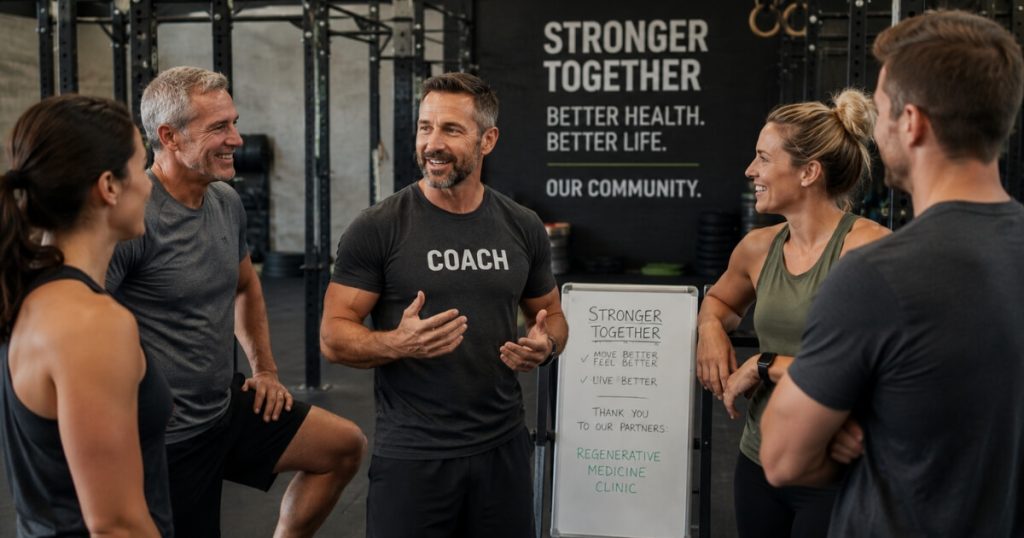
What message and content resonate with the athlete or weekend-warrior patient?
Content built around specific injuries, return-to-sport stories, and performance outcomes consistently outperforms generic regenerative medicine messaging.
Athletes identify with problems.
They don’t identify with treatment categories.
Someone doesn’t wake up thinking:
“I need regenerative medicine.”
They wake up thinking:
“My shoulder hurts every time I press overhead.”
or
“My knee is keeping me from running.”
The most effective content strategy therefore starts with injuries:
- Tennis elbow
- Golfer’s elbow
- Runner’s knee
- Meniscus injuries
- Rotator cuff problems
- Achilles tendon issues
- Hip pain
- Chronic shoulder pain
Each piece should focus on the frustration of not being able to train the way they want.
The emotional center of the content is the comeback story.
Athletes instantly connect with another athlete who:
- Faced the same injury
- Thought they might stop competing
- Found a path forward
- Returned to the activities they love
The language should sound like the athlete’s world:
- Stay in the game
- Protect your season
- Get back under the bar
- Return to the court
- Stay on the road
- Keep competing
Combine that performance language with honest education and repurpose the content across:
- YouTube
- Blog content
- Email marketing
- Retargeting campaigns
The clinics that consistently publish injury-specific, comeback-driven content become the obvious authority for active adults in their market.
It’s the same provider-led authority model that helped Dr. Joy Kong become the #1 stem cell expert on YouTube.
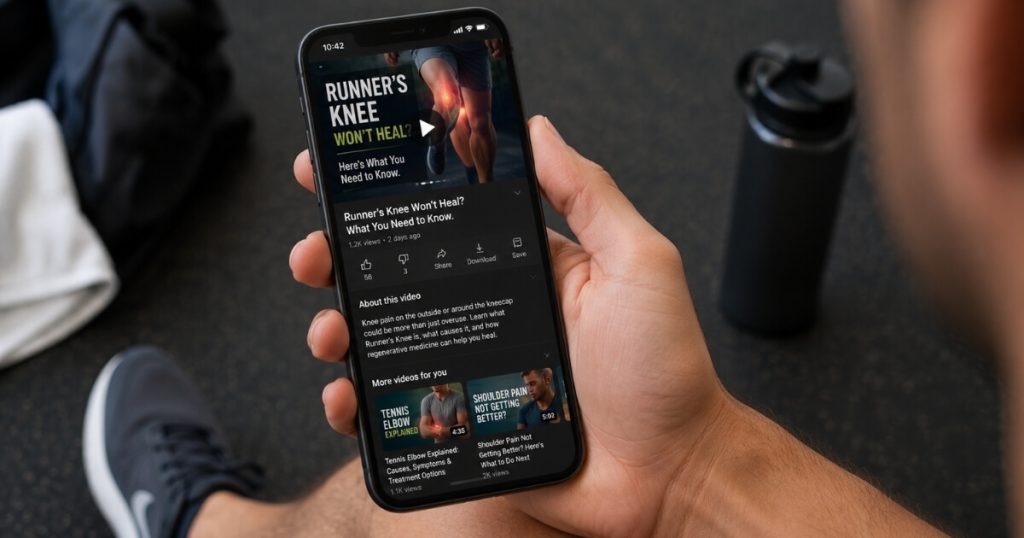
How do local partnerships with gyms, clubs, and teams drive these patients?
Local partnerships work because athletic communities run on trust and word of mouth.
The mechanism is straightforward.
A trusted coach or gym owner influences dozens or hundreds of athletes.
When that person trusts your clinic, you gain warm access to an entire community.
Partnership opportunities include:
- Sponsoring competitions
- Hosting injury-prevention workshops
- Offering educational seminars
- Creating recovery-focused events
- Providing injury screenings
- Supporting local races or tournaments
- Becoming the preferred referral resource for coaches
What makes these partnerships powerful is concentration.
Instead of marketing broadly to the public, you’re connecting directly with groups filled with ideal patients.
Everyone inside a CrossFit gym, tennis club, running group, or masters swim team already shares many of the same injuries, frustrations, and goals.
A handful of strong local partnerships can generate a consistent flow of highly qualified referrals at a fraction of traditional advertising costs.
And because athletes naturally talk to training partners, referrals compound over time.
This is grassroots patient acquisition at its most efficient.
How do you turn one sports injury into a long-term, high-LTV patient relationship?
You position your clinic as a long-term performance and longevity partner rather than a one-time injury solution.
Consider the typical active adult.
They might come in this year for:
- Tennis elbow
Next year:
- Shoulder pain
A few years later:
- Knee issues
Eventually:
- Hip pain
- Recovery optimization
- Performance maintenance
The relationship can span decades.
The mistake many clinics make is treating the injury and then disappearing.
The smarter approach is staying connected through:
- Follow-up communication
- Educational content
- Maintenance programs
- Periodic evaluations
- Wellness services
- Recovery services
- Longevity-focused offerings
If the first experience is positive, your clinic becomes their default resource whenever something hurts.
Even more valuable, it becomes the clinic they recommend to every training partner.
This is why athlete-focused marketing often produces exceptionally strong lifetime value.
One successful treatment can lead to:
- Multiple future treatments
- Ongoing maintenance
- Family referrals
- Training-partner referrals
- Community referrals
The relationship becomes far more valuable than the original procedure.
How do you measure whether your athlete-focused marketing is working?
Measure booked consults, referral generation, and lifetime value — not social media vanity metrics.
Start with:
- Cost per booked athlete consult
- Number of athlete consults booked monthly
- Conversion rate from consult to treatment
Then measure the metrics that reveal the true value of the segment:
- Referrals per athlete patient
- Gym partnership referrals
- Repeat treatments
- Maintenance participation
- Lifetime value
Athlete marketing is often under-attributed because word-of-mouth and community influence play a major role.
Track where patients actually originated:
- Search
- Specific gym partnerships
- Running clubs
- Coach referrals
- Existing patient referrals
The healthiest athlete-focused clinics generate a steady stream of referrals from existing active-adult patients.
If referral rates are low, the issue is usually patient experience, follow-up, or retention rather than marketing.
Over time, lifetime value becomes the most important number.
When measured properly, active adults frequently become one of the highest-value patient segments a regenerative clinic can serve because they return, refer, and stay engaged for years.
FAQ’s About Marketing Regenerative Medicine to Athletes
Do amateur and recreational athletes actually pay cash for regenerative treatments?
Yes.
Recreational and amateur athletes are often more willing to pay cash than the average patient because staying active is part of their identity. CrossFit athletes, marathon runners, tennis players, golfers, cyclists, and weekend warriors routinely invest in coaching, equipment, supplements, and recovery. Paying for a treatment that helps them continue training fits an existing mindset. You don’t need professional athletes. The larger opportunity is everyday active adults who refuse to slow down and view treatment as an investment in the activities they love.
Which sports injuries are most commonly marketed for regenerative medicine?
The most common opportunities involve chronic and overuse injuries such as tennis elbow, golfer’s elbow, rotator cuff pain, runner’s knee, meniscus problems, Achilles tendon issues, hip pain, and recurring joint discomfort. These are often conditions where patients have already tried rest, physical therapy, or anti-inflammatory approaches and are actively searching for alternatives. Building condition-specific content around these injuries aligns directly with how athletes search online.
Should I use a current or former athlete as a brand ambassador?
A respected local athlete, coach, or community leader can be highly effective if the relationship is authentic and compliant. The strongest advocates are often trusted figures inside local athletic communities who genuinely received treatment and are willing to share their real experiences. Authenticity matters more than fame. One respected coach with deep local credibility often influences more qualified patients than a celebrity endorsement.
How is marketing to athletes different from marketing to older arthritis patients?
Athletes are motivated by performance, longevity, and returning to activity. Older arthritis patients are often motivated by pain relief, independence, and avoiding surgery. Athletes respond to performance-focused messaging and spend time in athletic communities, gyms, and social platforms like Instagram. Arthritis patients often respond better to reassurance, lifestyle improvement, and condition-focused search content. The treatment may overlap, but the messaging, creative, and channels should be tailored to each audience separately.
What’s the next step?
If your regenerative clinic only markets to the older arthritis patient, you’re leaving a second high-value market largely untapped.
Athletes and active adults are highly motivated, willing to invest in staying active, and capable of becoming long-term patients who refer others for years.
Winning this audience requires:
- Injury-specific messaging
- Performance-oriented content
- Strategic local partnerships
- Strong referral systems
- Long-term patient retention
That’s exactly the type of audience-specific growth system we build for regenerative and pain practices — the same authority-driven approach that helped Orthobiologics Associates generate $309,590 in cash-pay revenue in 10 months while achieving a 79.4% lead-to-appointment conversion rate.
If you want to identify where active adults in your market are searching, training, and making treatment decisions, that’s the conversation to have.