
What Should a 6-Month Concierge HRT Patient Journey Look Like? (The Warm-Handoff Map That Turns Programs Into Memberships)
A concierge HRT program lives or dies on what happens after the patient says yes. The clinics that turn a 6-month program into a long-term membership don’t do it with a discount at the finish line — they design the relationship from day one. One dedicated person owns the patient. The handoff happens within 24 hours. Progress gets measured on a schedule, and the renewal conversation starts before the program ends. Here’s the map.
What should a 6-month concierge HRT patient journey actually look like?
Build it around a single owned relationship and two measurement checkpoints — a warm handoff within 24 hours of the initial consult, symptom-score reviews at 3 and 6 months, and a continuation conversation in months 5 and 6 that frames membership as the logical next step.
The skeleton is simple.
After the initial consult and treatment plan, the patient is personally handed to a dedicated patient success coordinator who owns them for the full six months.
That coordinator runs a fixed cadence of touchpoints, prepped with the patient’s own data.
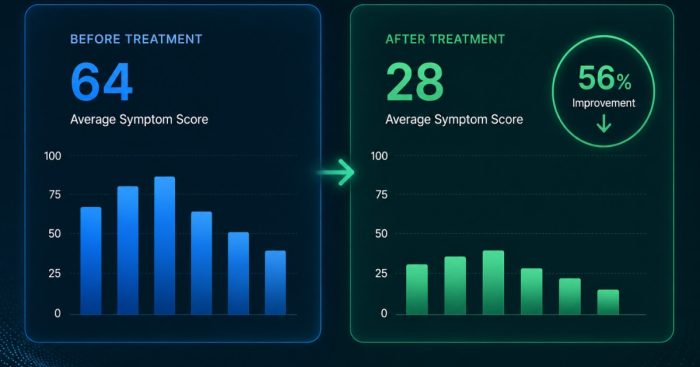
At three months and again at six, the provider runs a side-by-side symptom comparison that proves progress and surfaces the next problem to solve.
By months five and six, the renewal is already in motion — not a cold ask, but a natural continuation of work the patient has watched improve.
The reason this converts is that nothing about it feels like a sale.
The patient has:
- one person they trust
- a stream of data showing they’re getting better
- a clear sense of what’s still unresolved
Membership becomes the obvious way to keep going.
For the broader system this sits inside, see how we build a predictable patient acquisition system that doesn’t stop at the first sale.
How do I hand a new patient off from the founder to a care coordinator without losing trust?
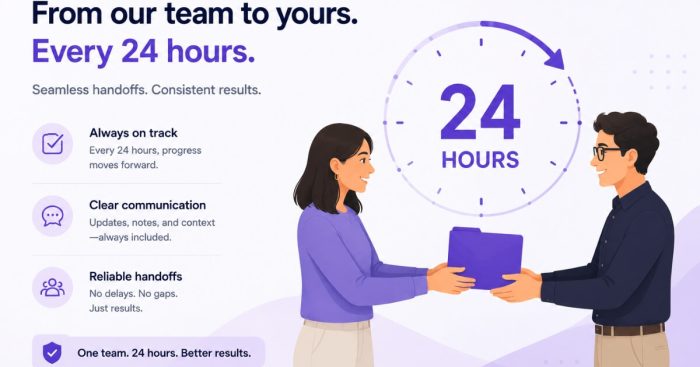
Do a scheduled warm handoff within about 24 hours of the initial consult, via a short video intro call where the founder personally introduces the coordinator and says, in effect, “She’s your person for the next six months.”
The mechanics matter.
It’s not an email that says “Dana will be reaching out.”
It’s a live, scheduled introduction where the founder transfers trust on camera, the coordinator is positioned as the patient’s dedicated guide, and then the founder steps off — and the coordinator immediately books the next touchpoint before the call ends.
That last move, booking the next meeting from the current meeting, is what keeps the relationship from going cold in week one.
Done right, the patient never feels demoted from the founder to “support staff.”
They feel upgraded to someone whose entire job is their outcome.
The relationship transfers cleanly on day one instead of leaking out through unreturned voicemails over the following month.
What should I charge for a concierge HRT membership versus a one-off peptide consult?
Use a low-friction front-end consult — around $149 that includes body composition, safety framing, and a dose-and-protocol recommendation — and attach buyers to an all-inclusive recurring membership in the $400 to $450 per month range covering HRT, hormones, peptides, and weight loss, with member discounts on peptides and add-on services.
The structure intentionally separates the entry point from the relationship.
The $149 consult is cheap enough that an interested patient says yes without much deliberation, and it’s substantive enough that they leave with a real plan.
The membership is where lifetime value lives, so everything on the front end is designed to deposit the patient into it rather than to profit on its own.
The discipline that protects this model is saying no to pure a-la-carte.
A concierge clinic that requires labs and provider involvement before any peptide or GLP-1 recommendation is comfortable letting price-shopping “off-the-rack” buyers go elsewhere — because those buyers don’t stay, don’t refer the right people, and drag the standard of care down.
How do I use lab and symptom data to upsell HRT patients without it feeling salesy?
Run side-by-side symptom assessments — tools like the MSQ and PROMIS-29 — at three and six months, and use them to both prove progress and surface the next unresolved problem in the patient’s own words.
When a score has improved, you show the patient measurable proof that the program is working, which is the single best retention argument there is.
When a score is still high — say the patient still rates their joint pain a 9 out of 10 — that becomes a clinically justified, patient-led entry point for a regenerative or peptide add-on.
The recommendation reads as coaching because it is coaching: you’re responding to a number the patient gave you, not pitching a package.
That’s the whole trick.
Data turns the upsell into a continuation of care.
The coordinator preps every call with the latest scores and the patient’s program-progress forms, so the conversation is always:
- “here’s where you’ve improved”
- “and here’s what’s still not where you want it”
never a generic check-in.
What KPIs should I track for my patient success or retention coordinator?
Measure the coordinator on the number and quality of real conversations they have — not just on outbound activity — because the goal is meaningful coaching contact, not call-log volume.
Pair that with a single hard rule: BAMFAM, or “book a meeting from a meeting.”
The next appointment gets scheduled before the current one ends, so the patient is never floating between touchpoints waiting to be chased.
And shift the coordinator’s internal one-on-ones away from pure task review and toward case strategy:
- “what’s the next best step for this patient?”
- “what new thing are we giving patients this month?”
so every interaction delivers fresh value instead of a hollow “just checking in.”
A coordinator measured this way behaves like a clinician of the relationship rather than an appointment-setter.
That’s what produces renewals: patients who feel coached, not processed.
How do I turn the end of a 6-month program into a renewal instead of a goodbye?
Start the renewal conversation in months five and six — led by the coordinator who has owned the patient the whole way — using documented symptom progress plus the problems that still aren’t fully resolved.
Framed correctly, renewal isn’t a new sale; it’s the obvious continuation of work already underway.
The patient has:
- six months of data showing they’re better
- a trusted coordinator who knows their case
- a short list of things still worth fixing
The all-inclusive membership is simply how they keep the momentum.
Clinics that engineer this transition — rather than hoping patients re-up on their own — convert programs into recurring revenue at a dramatically higher rate.
This is exactly how durable hormone practices are built.
Eternity Health Partners grew from $1M to $4M a year and now runs 250 active members at $1,000 a month on the back of a membership model where the relationship — not a one-time procedure — is the product.
FAQ’s About a 6-Month Concierge HRT Patient Journey
How long should a concierge HRT program be before converting to membership?
Six months is the common structure: a defined program with measurement checkpoints at three and six months, then a renewal into an all-inclusive membership.
The program length gives the patient time to feel and see real change, which is what makes the membership conversion feel earned rather than pushed.
When should the founder hand a concierge patient off to a coordinator?
Within about 24 hours of the initial consult, via a scheduled video intro call where the founder personally positions the coordinator as the patient’s dedicated guide for the next six months.
Handing off on day one keeps the relationship warm; waiting weeks lets it cool and leak.
What should a concierge HRT membership cost?
A common range is $400 to $450 per month for an all-inclusive membership covering HRT, hormones, peptides, and weight loss, with member discounts on add-on services, fronted by a low-friction consult around $149 that deposits the patient into the membership.
How do I upsell HRT patients without being pushy?
Use symptom-score data from 3- and 6-month assessments.
When a score stays high — like joint pain still rated 9 out of 10 — that’s a patient-led, clinically justified reason to add a regenerative or peptide service.
You’re responding to their data, not pitching a package.
Should my hormone clinic sell peptides and GLP-1s a-la-carte?
Position as a standard-of-care provider: require labs and provider involvement before any recommendation, and let price-shopping buyers go elsewhere.
Channel interested patients through a paid consult into the recurring membership instead of selling one-off vials, which protects both safety and lifetime value.
What’s the next step?
If you run a concierge or cash-pay hormone clinic and your patients complete the program but don’t renew, the gap is almost never the medicine — it’s the journey.
No dedicated owner, no warm handoff, no data checkpoints, and a renewal ask that arrives cold at month six.
Fix the map and the membership conversion follows.
If you want help designing the handoff, the cadence, and the renewal conversation for your specific program, that’s the conversation to book.
We’ll map your patient journey from consult to membership on the call — the same backbone behind every durable patient acquisition and retention system we build.