
How Do I Onboard My Cash-Pay Clinic’s First Salesperson? (The Week-One Checklist From a Women’s Hormone Clinic)
Hiring your clinic’s first dedicated salesperson is a milestone — and the first week decides whether they compound or deflate. This is the onboarding sequence from a live hire at a women’s hormone and wellness clinic we work with: what happened before she touched a single lead, how her phone was set up, who she met, and the one mindset note we gave her on her first team call. Plus the post-mortem on the hire that didn’t work out the time before.
What Should a New Clinic Salesperson Do Before They Ever Touch a Lead?
Complete HIPAA training and get a company email identity — before CRM access, before scripts, before anything.
The sequence at this clinic was deliberate:
- HIPAA training
- HIPAA-appropriate Google Workspace email setup
- Light CRM walkthrough
- Access to the clinic’s internal training-video library
Only after all four did lead work begin.
The order matters because it’s nearly impossible to retrofit.
A salesperson who starts taking leads on a personal email and a personal login becomes a compliance liability and a data mess within a month.
Pre-boarding is boring, which is exactly why most clinics skip it — and why the ones that don’t never have to untangle it later.
Should My Clinic Salesperson Call Leads From Their Personal Phone?
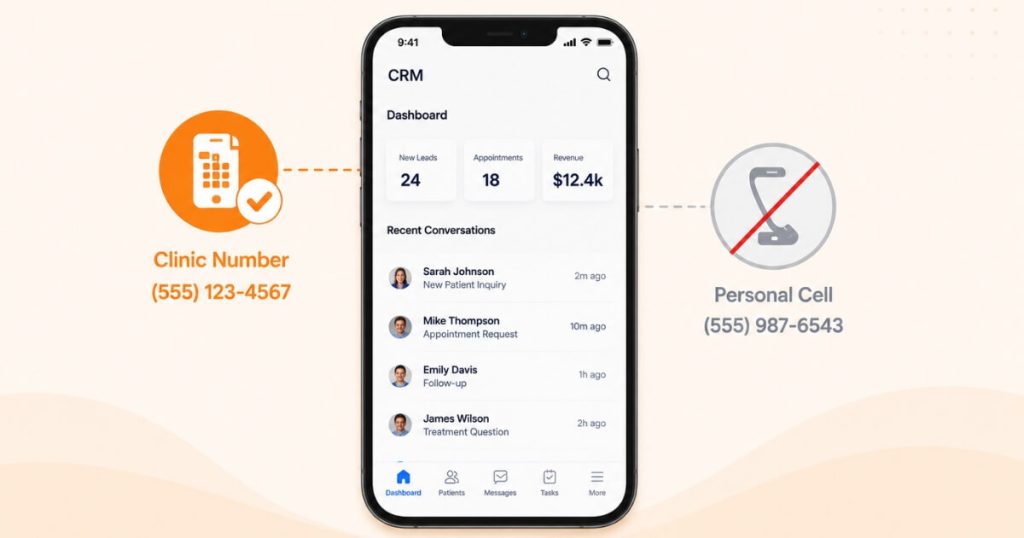
No — every call and text runs through the CRM, so everything comes from the clinic’s number and nobody ever gets a personal cell.
The setup we prescribed on this onboarding call:
- Outbound calls go through the CRM’s conversations view.
- The CRM mobile app gets installed on day one.
- Inbound texts round-robin to the team so whoever is closest responds first.
The line we use:
“It has helped me get back to people faster.”
Because it’s true.
A fast human reply that beats the automation is one of the most underrated conversion moves in cash-pay medicine.
The side benefits compound:
- Every conversation is logged against the lead record.
- Coverage doesn’t break when someone is out.
- If the salesperson ever leaves, the clinic keeps the number.
- The clinic keeps the text threads.
- The clinic keeps the relationships.
This is basic infrastructure for a patient acquisition operation the leads belong to the practice, not to anyone’s pocket.
Should I Introduce My New Salesperson to My Marketing Agency?
Yes — in week one, on the regular strategy call, even if they just listen.
This clinic’s owner brought the new hire onto the agency call purely for introductions:
- Here’s the team.
- Here’s who I mean when I say these names.
- Here’s who builds the funnels that feed you leads.
Her reasoning was a hard-won lesson.
In past hires:
“Everyone’s sort of an isolated island.”
And isolation was part of why the previous coordinator faded out.
The introduction also opens a second support line.
Our message to the new salesperson, verbatim:
If you get stuck on anything high-level and the owner isn’t available, we are absolutely a resource — email, text, whatever you need.
A first sales hire with two places to take questions sticks.
One who can only interrupt a busy provider learns to stop asking.
What Close Rate Should I Expect — and What Should I Coach Instead?
Not 100% — that’s a pipe dream, because no clinic can help everybody.
Coach the referral frame instead:
Treat every interaction as if that person might refer their entire family.
That was the one piece of coaching we gave the new hire on her first call, and it changes everything downstream.
Aiming at close rate produces pressure.
Pressure reads as salesy.
That’s fatal in women’s health, where patients arrive having been dismissed, gaslit, and told everything’s fine by conventional care.
Aiming at the referral frame produces:
- Patience
- Empathy
- Curious questions
- Better conversations
Even when you already know the answer.
The patient who feels genuinely heard books — and brings her sister.
The mechanical half of the rule:
- Soft nos go into nurturing campaigns.
- Schedule a later follow-up.
- Never throw them away.
Most nos in cash-pay medicine are not-yets.
The teams that run this patiently put up numbers like the regenerative clinic we work with that converts 79.4% of leads into booked appointments a rate built on process and posture, not pressure.
Why Didn’t My Last New Patient Coordinator Work Out?
Usually one of two hiring errors:
- Someone who needed income immediately for a long-game role.
- Someone who shared the owner’s own weaknesses.
This clinic’s previous coordinator had both problems working against her.
Problem #1: She Needed Results Too Fast
She needed money now.
A clinic sales seat is the long game.
Pipeline builds over months, and a hire who can’t financially survive the ramp often deflates waiting for results.
Problem #2: She Was Too Similar to the Owner
Owners tend to hire people they like.
People we like are often like us.
If the owner is brilliant clinically but disorganized operationally, hiring another disorganized empath means:
The practice has two people not at the wheel.
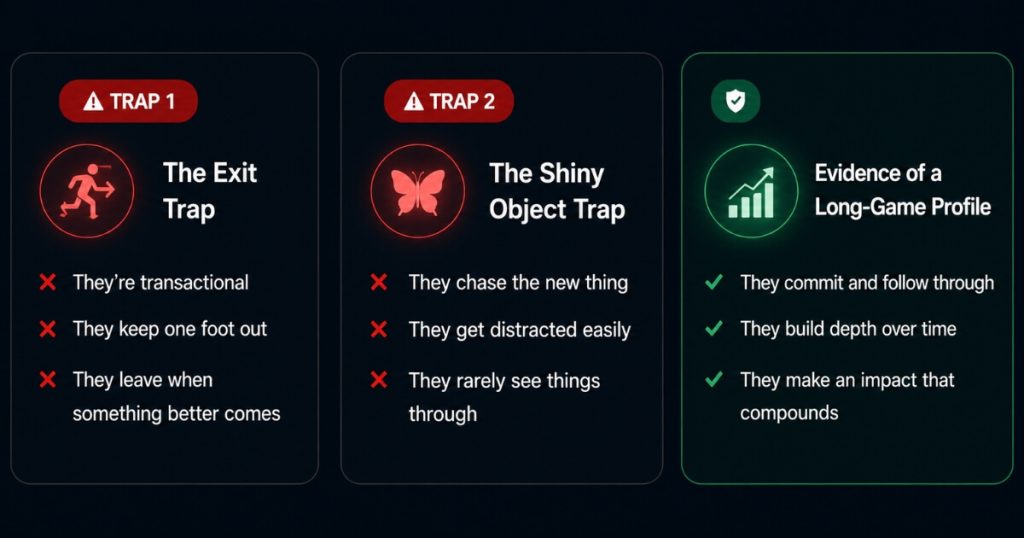
The replacement hire showed the opposite profile before day one:
- Roughly three years closing three-, six-, and twelve-month wellness packages.
- Prior experience in the exact CRM the clinic uses.
- Vetted through three independent mutual connections.
- Asked clarifying questions before she started.
Hire for evidence of the long game.
It’s visible in the first conversation.
What Should the New Salesperson Protect — and Never Change?
The booking paths that already convert.
Teach them to read the CRM audit trail before they improvise.
On this same call, the team traced a new patient who:
- Found the clinic on social media.
- Clicked through.
- Booked a visit.
- Paid for the visit.
Entirely on her own.
The click ID in the lead record proved the whole path.
Our verdict was one sentence:
Don’t change anything — she got there, I’d like more of them.
A new salesperson’s instinct is to improve everything they inherit.
The first lesson is the opposite:
- Learn which funnels already work.
- Defend them.
- Spend creative energy on the leads the funnel doesn’t close by itself.
That discipline — protect what converts, nurture what doesn’t, answer faster than the automation — is how a first sales hire turns marketing spend into a calendar.
We’ve watched it at scale:
A longevity and functional medicine clinic we grew to 100+ inbound calls a month only monetized that volume because the humans answering were set up exactly this way.
FAQs About Onboarding a Clinic’s First Salesperson
Should a Clinic Salesperson Get Clinical Training Too?
High-level, yes.
The onboarding in this article gave the new hire access to the clinic’s internal training-video library for a working understanding of the treatments.
Enough to:
- Speak credibly
- Answer basic questions
- Route clinical questions correctly
Not enough to play doctor.
A salesperson who can’t explain what the clinic actually does will stall on the first real conversation.
What CRM Setup Does a New Clinic Salesperson Need on Day One?
They need:
- A HIPAA-appropriate company email identity
- Their own CRM login under that identity
- The CRM phone app installed
So calls, texts, and lead records all run under the clinic’s name from the first touch.
No personal Gmail, shared logins and personal cell number in any patient-facing workflow.
What Should the Salesperson Do With Leads Who Say No?
Park soft nos in nurturing email campaigns and schedule a later follow-up rather than abandoning them.
Most “no”s in cash-pay medicine are really:
Not yet.
The nurture sequence keeps the clinic present until symptoms, timing, or budget make it:
Now.
How Do I Know Which Booking Paths My Salesperson Should Protect?
Read the CRM’s audit trail.
On the call behind this article, the team traced a patient who:
- Found the clinic on social media
- Booked a visit
- Paid for the visit
Entirely on her own.
The click ID in the lead record proved the path.
The verdict was instant:
Don’t change anything on that path. Just get more people onto it.
New salespeople should learn which funnels already convert before they start improvising.
When Should the New Salesperson Meet the Marketing Agency?
Week one.
Put them on the agency strategy call for introductions so:
- They know the people behind the leads.
- The agency knows them.
It also opens a second support line.
If they get stuck and the owner isn’t available, the agency can help unblock them directly.
What’s the Next Step?
If you’re about to make your clinic’s first sales hire, run the week-one sequence in order:
- HIPAA training
- Company email identity
- CRM login and phone app
- Clinical training videos
- Agency introduction
Then deliver the one coaching note that matters:
We’re not closing 100%. We’re earning whole families.
And before they touch the pipeline, walk them through the audit trail of your best recent bookings so they know what already works.
If you want help designing the role itself — compensation, accountability numbers, and how the hire fits your growth plan — book a strategy call.
In 60 minutes we’ll map the sales seat your clinic actually needs and the onboarding that makes it stick.