
What Job Title Should a Cash-Pay Clinic Post to Hire a Great Front Desk? (The Executive Administrative Assistant Hack)
Every cash-pay clinic runs the same hiring ads — patient care coordinator, front desk, receptionist, admin — and every clinic ends up interviewing the same applicants they’ve already fired fifteen times. The fix isn’t a better interview process. It’s a different job title. This is the front desk hiring hack we hand to clinic owners who are tired of re-hiring the same person: post the job as Executive Administrative Assistant. Here’s the FAQ on why it works and how to structure the offer.
What job title should a cash-pay clinic post to hire a great front desk person?
Executive Administrative Assistant — not patient care coordinator, not front desk, not receptionist.
The title is the filter.
Post an Executive Administrative Assistant ad and you attract somebody who is already:
- Organized
- Punctual
- Professional
- Concerned with their appearance
- Concerned with how your business is perceived by customers
Those are exactly the traits a cash-pay front desk lives or dies on — and they’re baked into the identity of people who apply to executive-assistant roles, because that’s the standard the title has always demanded of them.
The work doesn’t change.
The person answering your phones still:
- Confirms appointments
- Manages the calendar
- Works the CRM
What changes is who shows up to the interview.
Why do “patient care coordinator” ads keep attracting the wrong applicants?
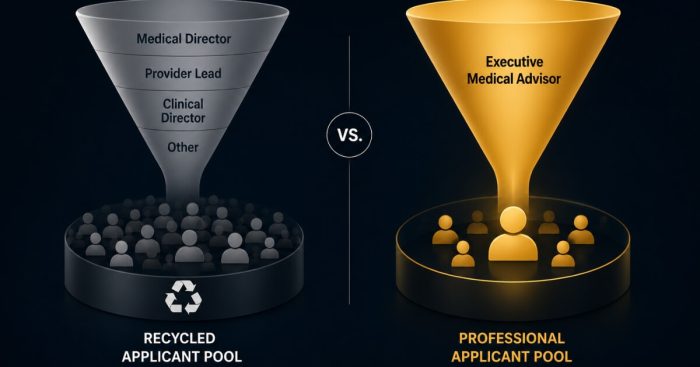
Because the title is bland, and bland titles pull from the same exhausted applicant pool every clinic in your market is already fishing in.
Patient care coordinator, new patient coordinator, front desk, receptionist, admin — run those ads and you’re going to get more of the same people you’ve already fired.
The applicant pool self-selects around the job title before you ever see a resume:
- Generic titles attract generic applicants
- Clinics hiring from that pool keep recycling each other’s turnover
The front desk is not a clerical afterthought in a cash-pay practice — it’s the first conversion point in your patient acquisition system.
Every marketing dollar you spend lands on the person who answers the phone.
Recruiting that person from the bottom of the title hierarchy is how clinics end up with six-figure leaks at the front desk while blaming their ads.
How should I pay an Executive Administrative Assistant at my clinic?
A flat rate of $20 to $25 an hour — depending on where you are in the country — plus a bonus for new patient appointments attended.
The flat rate buys you the professional-grade candidate; don’t try to discount your way into this hire.
The bonus is the alignment mechanism, and the wording matters:
Pay on appointments attended, not appointments booked.
Booked is a vanity number — anyone can fill a calendar with no-shows.
Attended means:
- The confirmation call happened
- The reminder went out
- The reschedule was chased
- A new patient physically showed up
That’s front desk work converting into revenue.
This is the same logic behind the highest-converting inside sales operations we’ve built — a regenerative medicine clinic whose team converts 79.4% of leads into booked appointments runs on roles whose incentives point at the same number the owner cares about.
When the front desk gets paid for attended appointments, follow-up stops being a favor and starts being their paycheck.
What will an Executive Administrative Assistant actually do differently?
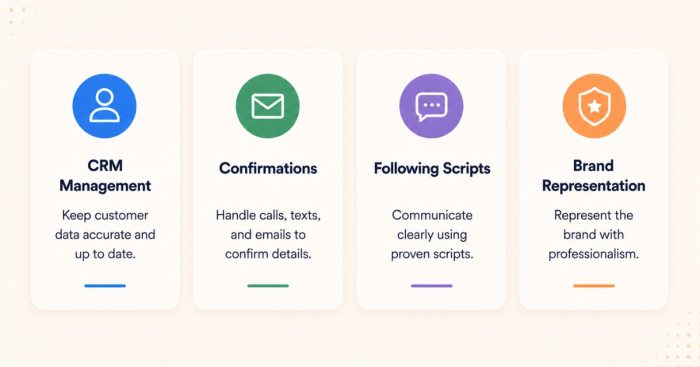
They’ll keep an organized CRM, execute everything you ask, and represent the practice like a premium brand — because that’s who the title recruited.
The profile is specific:
- Super organized
- Super punctual
- Super professional
They’re very good at taking orders — which in a clinic means:
- Your scripts get followed
- Your follow-up cadence actually runs
- Your lead records stay clean instead of scattered
The CRM discipline alone is worth the hire.
Most front desk turnover horror stories end with an owner discovering months of leads that were:
- Never logged
- Never called back
- Never confirmed
And there’s a compounding effect the job ad can’t show you:
This person tends to stay.
You’ll get a much better person, they’ll love working with you, and you’ll love working with them — the opposite of the fire-and-repost cycle.
We’ve seen what stability at the patient-facing layer does for a practice:
A pain management specialist we work with grew monthly revenue by $40K+ while cutting insurance dependence in half — and team retention went up, not down, as the operation professionalized.
How do I write the actual job ad?
Title it Executive Administrative Assistant, state the flat hourly rate, and name the bonus for new patient appointments attended — then describe the clinic work honestly.
Keep the description plain:
- Answering and confirming patient appointments
- Managing the schedule
- Keeping the CRM organized
- Supporting the providers and the owner
You’re not hiding that it’s a medical front desk role — you’re repositioning who it’s for.
The candidates who identify as executive administrative professionals will read:
- Organized
- Punctual
- Professional
- Owns the patient experience at first contact
and recognize themselves.
The candidates you’ve fired fifteen times won’t apply, because the title doesn’t sound like the job they keep getting.
One ad.
One title change.
One bonus line.
It’s the cheapest fix in clinic hiring, and it upgrades the exact seat where your marketing spend either becomes a patient or quietly dies on hold.
FAQ’s About Hiring a Front Desk as an Executive Administrative Assistant
What should a clinic pay an Executive Administrative Assistant?
A flat rate of $20 to $25 an hour depending on where you are in the country, plus a performance bonus.
The flat rate attracts the professional-grade applicant; the bonus ties their day-to-day work to the clinic’s growth.
What bonus structure works for the front desk?
A bonus for new patient appointments attended — not appointments booked.
Paying on attended appointments rewards:
- Confirmation calls
- Reminders
- Follow-up
that actually get a new patient through the door, instead of rewarding a full calendar that no-shows.
What traits does the Executive Administrative Assistant title pre-select for?
- Organization
- Punctuality
- Professionalism
- Care about appearance
- Care about how the business is perceived by customers
People who identify with the executive-assistant title have usually built those habits in demanding office environments.
They:
- Keep an organized CRM
- Execute instructions reliably
- Represent the practice the way you’d want a premium brand represented
Will an executive-assistant type handle patient-facing work well?
Yes.
The role is still your front desk; only the recruiting filter changes.
The job itself involves:
- Answering patients
- Managing the schedule
- Working the CRM
- Following your scripts and processes
An executive-grade administrator is typically better at all four than a generic receptionist applicant, because order-taking, follow-through, and polished communication are the core of their skill set.
Why do patient care coordinator ads keep producing bad hires?
Because the title is bland and pulls from the same shallow applicant pool every clinic in town is fishing in:
- Front desk
- Receptionist
- Admin
You end up interviewing more of the same people you’ve already fired.
Changing the title changes the pool.
An Executive Administrative Assistant posting reaches candidates who self-identify with professionalism and organization rather than with answering phones.
What’s the next step?
Before you repost that patient care coordinator ad for the sixteenth time, rewrite it:
- Executive Administrative Assistant
- $20–25 an hour for your market
- Bonus per new patient appointment attended
Run it side-by-side with your old ad if you want proof — the difference shows up in the first ten applications.
And if the front desk is just one of several seats leaking revenue in your practice, book a strategy call.
In 60 minutes we’ll map which roles to hire, what to pay them, and how to tie every patient-facing seat to the numbers that grow a cash-pay clinic.