
What Should a Functional Medicine Front Desk Say on an Inbound Call? (The Triage-and-Route Script That Qualifies Callers)
A functional medicine front desk handles two very different callers on the same line: the person with a simple hormone or weight-loss goal, and the person with a complex chronic condition who needs your specialist physician. Treat them the same and you’ll misroute, frustrate, and lose both. The clinics that convert inbound calls run a triage-and-route script — trust, problem, route, then the matching offer. Here’s the FAQ on exactly what your front desk should say.
What Should a Functional Medicine Front Desk Say on an Inbound Call?
Open by building trust and surfacing the caller’s problem, then triage by condition to the right provider before presenting the matching pathway and price.
The structure is simple and repeatable:
- Start with how they heard about you.
- Ask what’s going on that prompted the call.
- Listen for conditions that require your specialist physician.
- Route accordingly.
- Present the hormone pathway or the functional medicine pathway with its corresponding investment.
The front desk’s job on an inbound call is to qualify and route — not to pitch everyone the same program.
A caller who feels correctly understood and correctly routed converts far more often than one who got a generic script.
How Do I Build Trust in the First 20 Seconds of an Inbound Call?
Ask how they heard about you, then ask what’s going on — warmly, before anything else.
“How did you hear about us? Were you referred by a friend, or did you find us online?”
This does double duty:
- It captures your lead source.
- It quietly signals that you earn referrals because you’re good.
Follow immediately with:
“So tell me, what’s going on that has you looking for a functional medicine doctor?”
These two questions shift the call from a transaction into a conversation and make the caller feel heard before a single price or process is mentioned.
The volume of high-intent inbound calls this kind of warm handling can produce is real — it’s the engine behind a longevity and functional medicine clinic where we added 100+ inbound calls a month and grew website leads 900%.
How Do I Triage a Caller to the Right Provider or Program?
Listen for complex or chronic conditions that require your specialist physician, and route those callers to that provider while simpler goals follow the standard pathway.
Some conditions should always go to your dedicated functional medicine physician:
- Complex chronic illness
- Autoimmune presentations
- Long-haul cases
Surface them by asking:
- What they’ve tried
- What has and hasn’t given any relief
- Whether family or partners have recommended other solutions
Those questions tell you which doctor and which program fit, so you can route the caller correctly instead of forcing one offer onto everyone.
Good triage protects the patient experience and your providers’ time at the same time — and it’s the difference between a clinic that converts a high share of its inbound and one that doesn’t.
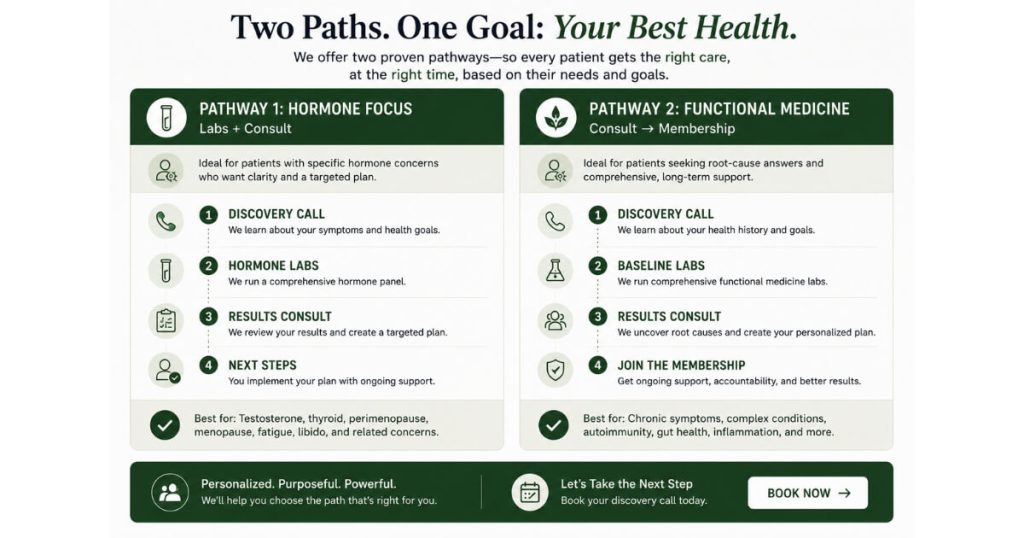
How Do I Present Two Pathways Without Confusing the Caller?
Present only the one pathway that fits the caller you just qualified — never both menus at once.
If they’re a hormone candidate:
“To get started, we do labs and an initial consultation to review your results. The labs are around $375 and the initial consultation is around $349 — and if it’s appropriate to move forward, your first month is free.”
If they’re a functional medicine candidate:
“To get started, we do a 60-minute one-on-one consultation with our functional medicine physician, who reviews your intake ahead of time and recommends comprehensive testing. The initial consultation is around $599, and if she accepts you as a member it credits toward your first month.”
Because you triaged first, the caller hears one clear path that matches their problem — not a confusing buffet of options that stalls the decision.
How Do I Quote Price and Handle Insurance on an Inbound Functional Medicine Call?
Quote the pathway’s specific investment plainly, then address insurance head-on.
Give the number for the pathway you presented:
- Labs plus consult for hormones
- The longer initial consult for functional medicine that credits toward the monthly membership
Then handle the insurance question directly:
“Functional medicine generally isn’t covered by insurance, but we’re happy to provide a superbill you can submit for potential reimbursement, and we accept HSA, FSA, and offer financing.”
Answering insurance plainly rather than dodging it is what keeps a cash-pay caller’s trust intact — and trust is the only thing that closes a high-ticket, recurring functional medicine member.
That conversion discipline is the same one behind a clinic that converts 79.4% of its leads into booked appointments.
How Do I Close the Inbound Call Into a Booked Appointment?
Use a soft assumptive close, then collect the information that secures the visit.
Once the caller is comfortable with the pathway and price, move to booking:
“I’d love to help you get scheduled — I just need to collect a little basic information.”
Take:
- Name
- Phone
- State
- Date of birth
- Who referred them
- Mobile provider for reminders
- The card to hold the appointment
The reason the close feels natural is everything that came before it:
- You built trust.
- You understood their problem.
- You routed them correctly.
- You presented one clear path.
By the time you ask to schedule, the caller isn’t being sold — they’re being helped, which is exactly how a functional medicine front desk should sound.
FAQs About Functional Medicine Inbound Calls
Should the Front Desk Give the Price on the First Call?
Yes — but only after trust, problem, and routing. Withholding the price feels evasive; quoting it before you understand the caller feels like a pitch. Quote it once you’ve matched them to the right pathway.
What Conditions Should Route to the Specialist Physician?
Complex, chronic, or autoimmune presentations and long-haul cases should go to your dedicated functional medicine doctor rather than the standard hormone track. Ask what they’ve tried and what’s given relief to surface these.
How Is This Different From an Outbound or Enrollment Script?
An inbound triage script’s first job is to qualify and route a caller you didn’t initiate contact with; an enrollment script’s job is to present a program and close. They share discovery DNA but the inbound version leads with routing.
Who Should Answer These Calls?
A trained patient coordinator who can hold a warm conversation, triage by condition, and present the right pathway — not a generalist receptionist reading a flat script. The quality of this role directly determines your inbound conversion rate.
What’s the Next Step?
If your inbound calls are converting unevenly, the culprit is usually a one-size-fits-all script that can’t tell a hormone caller from a complex functional case. A triage-and-route script fixes that and lifts conversion without a single new lead.
On a free strategy call we’ll build your inbound triage script, your routing rules, and your pathway presentations so your front desk converts more of the calls you’re already getting.