
The 10 Best (and Worst) Ways to Get New Stem Cell and Regenerative Medicine Patients in 2026 — When Trust Is the Whole Game
Regenerative medicine spent 2026 in the headlines for all the cautious reasons — fresh FDA consumer alerts, an appeals-court ruling affirming the agency’s authority over unapproved stem cell products, and continued enforcement against exosome sellers.
If you run a cash-pay regenerative practice, that backdrop is not a reason to go quiet.
It is a reason to go credible.
The patients are still out there, still in pain, still willing to pay cash for a real solution.
But they arrive more skeptical than ever, and they buy from whoever looks most trustworthy.
The clinics that win the next year are the ones whose marketing answers one question better than anyone else: can I believe you?
Here are the 10 best and the worst ways to get those patients.
What changed for stem cell and regenerative medicine patient acquisition in 2026?
Scrutiny went up, which widened the gap between clinics that look legitimate and clinics that look like hype — and patients are sorting on exactly that.
The FDA kept unapproved stem cell and exosome therapies as a top enforcement priority through 2026 and:
- Issued new consumer alerts about regenerative products in May.
- Benefited from an appeals-court decision affirming that unapproved stem cell therapy is subject to its regulation.
- Continued enforcement against exosome products, many of which do not meet the bar for minimal manipulation.
At the same time, the agency floated draft guidance on expedited review pathways for legitimate regenerative therapies.
So the environment is doing two things at once:
- Tightening on the hype.
- Maturing for the science.
What that means for your marketing is simple.
The patient reading these headlines shows up to your site pre-loaded with doubt.
Your competitors who market miracle cures are getting filtered out twice:
- By the skeptical patient.
- By the regulator.
That leaves a wide-open lane for the clinic that markets with credibility, education, and realistic expectations.
Trust is not a nice-to-have in this category anymore.
It is the channel.
Modern regenerative medicine marketing succeeds by building authority through education, transparent messaging, and consistent proof rather than relying on aggressive promotional claims.
What are the 10 best ways to get new regenerative medicine patients right now?
Win on credibility and education, not volume and hype.
These are the ten that compound in 2026, in rough order of leverage.
1. Lead with credentials and process.
Put your providers training, your protocol, and your standards front and center.
In a skeptical market, visible legitimacy is the offer.
2. Build an educational SEO engine.
Regenerative-pain patients research for weeks.
Blog content that honestly explains conditions, options, and realistic outcomes captures them at the exact moment they are deciding.
3. Use video and thought leadership to demonstrate expertise.
A provider explaining the science and the limits on YouTube earns trust that no ad can buy.
The provider becomes the educator patients already watched before they call.
4. Make Google reviews and Google Business Profile a priority.
Most regenerative clinics compete inside a 25-mile radius.
Frequent, specific reviews that mention your treatments are:
- Local-search rocket fuel.
- Social proof.
5. Set realistic expectations in the marketing itself.
Conservative, honest framing converts the modern patient better than dramatic promises.
It also keeps you clear of the claims enforcement targets.
6. Build referral relationships with PTs, chiropractors, trainers, and integrative providers.
Word-of-mouth from a trusted clinician is the highest-trust lead source in the category.
7. Run a nurture sequence for the long research cycle.
A high-ticket cash decision takes time.
Email and retargeting that educate over weeks keep you present until the patient is ready.
8. Capture and showcase real, compliant outcomes.
Functional, documented results — told carefully and without overclaiming — are more persuasive than any superlative.
9. Use a consultation-first funnel.
Route leads to a booked consult rather than a hard online sell.
The relationship and the in-person conversation are what close cash regenerative cases.
10. Layer paid search and social on top of the trust foundation.
Once the SEO, reviews, and content exist, Google and Facebook convert far better because the patient who clicks can immediately verify you.
The order matters:
- Trust assets first.
- Paid traffic second.
We proved how far the organic side alone can go with a regenerative clinic where we generated $309,590 in cash-pay revenue in 10 months from SEO alone — zero ad spend, and a 79.4% conversion rate from lead to booked appointment.
For high-trust, high-ticket care, authority beats volume.
What are the worst ways to get stem cell patients — the ones that get you ignored (or worse)?
Every one of them trades long-term credibility for a short-term click, in a category where credibility is the entire game.
The worst is marketing miracle cures and disease-treatment claims for unapproved products.
That language is:
- Exactly what FDA enforcement is built around.
- Exactly what the skeptical 2026 patient has learned to distrust.
So it fails twice.
Close behind is competing on price and discounts.
That approach:
- Attracts the least committed patients.
- Erodes the premium positioning regenerative care depends on.
Dramatic, too-good-to-be-true testimonials belong in the same bucket.
They raise the patient’s guard instead of lowering it.
Then come the structural mistakes:
- Relying on a single paid channel.
- Having no SEO.
- Having no reviews.
- Having no educational content.
- Expecting an online checkout to close a high-ticket regenerative case.
- Going silent because the regulatory headlines feel scary.
When a lead researches you before spending thousands in cash, there has to be something reassuring to find.
And if you stop educating, you simply hand patients to the competitor who kept showing up.
Why does authority decide who wins regenerative patients in 2026?
Because the regenerative patient is making a high-cost, high-uncertainty decision.
Authority is how humans resolve uncertainty.
They defer to the most credible expert they can find.
That is why the single best long-term investment in this category is becoming the recognized educator in your niche.
The clinic whose doctor patiently explains:
- The science
- The candidates
- The realistic outcomes
On YouTube, on the blog, and in every consult becomes the default trusted choice for an entire local market and often well beyond it.
In a trust-driven category:
- The educator wins.
- The position compounds.
- Authority earned this year keeps converting patients for years.
FAQ’s About Getting Regenerative Medicine Patients
Why does trust decide who wins regenerative medicine patients in 2026?
Because rising FDA scrutiny has made patients wary, and a wary patient buys from whoever looks most credible, not whoever shouts the loudest.
In 2026 the FDA:
- Kept unapproved stem cell and exosome therapies as a top enforcement priority.
- Issued fresh consumer alerts in May.
- Won an appeals-court ruling affirming its authority to regulate unapproved stem cell products.
Patients read those headlines.
They arrive at your website already asking whether you are legitimate.
The clinic that answers that question best wins.
That means:
- Credentials
- Real science
- Transparent expectations
- Verifiable outcomes
The clinic that leans on miracle language gets filtered out by the patient and flagged by the regulator.
What marketing claims should a regenerative clinic avoid right now?
Avoid cure-all and disease-treatment claims for unapproved products.
They are:
- The fastest way to lose patient trust.
- The exact language FDA enforcement is built around.
Do not:
- Promise to cure conditions.
- Imply an unapproved therapy is FDA-approved.
- Lean on dramatic miracle testimonials.
Market what you can stand behind:
- Your providers credentials.
- Your process.
- Realistic functional outcomes.
- The experience of care.
Conservative, educational, transparent marketing is not just safer in 2026 — it converts better.
Does SEO work for regenerative medicine without paid ads?
Yes.
Regenerative pain is a search-first behavior, and educational SEO is often the highest-converting channel a regenerative clinic has.
Patients with:
- Joint pain
- Neuropathy
- Orthopedic issues
Spend weeks researching before they book.
A clinic that shows up across:
- Blog content
- Google Business Profile
- Strong reviews
At the same moment becomes the trusted choice.
We generated $309,590 in cash-pay revenue in 10 months for one regenerative practice from SEO alone, with zero ad spend and a 79.4% conversion rate from lead to booked appointment.
Proof that for high-trust, high-ticket care, organic authority can outperform paid traffic.
Is YouTube or thought leadership worth it for a stem cell clinic?
It is one of the highest-leverage moves in the category.
Video lets a provider demonstrate the exact credibility patients are screening for.
A doctor who patiently explains:
- The science
- The limits
- The realistic outcomes
Builds the kind of authority that no ad can buy.
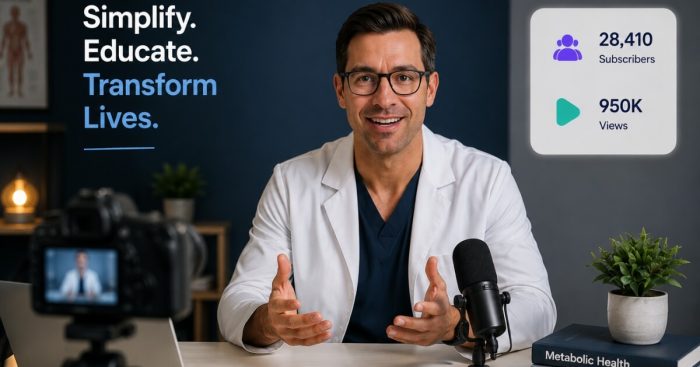
We helped one regenerative and aesthetics physician become the number one stem cell expert on YouTube, which let her hire four more doctors and scale herself out of day-to-day operations.
In a trust-driven category, becoming the educator patients already watched before they call is the strongest position you can hold.
What is the biggest patient-acquisition mistake regenerative clinics make in 2026?
Marketing on hype and price instead of credibility and education.
And relying on a single paid channel with no trust layer underneath.
The hype merchants are:
- Exactly who the FDA is targeting.
- Exactly who skeptical patients now avoid.
Clinics that discount their way in attract the least committed patients and undercut the premium positioning the category requires.
And clinics that run one ad account with:
- No SEO
- No reviews
- No educational content
- No nurture sequence
Have no foundation when a lead wants to research them before spending thousands of dollars in cash.
Build the trust assets first.
Then the paid traffic converts.
That principle sits at the center of the 10 best and worst ways to get stem cell patients in 2026, where the highest-performing clinics consistently prioritize authority, education, reviews, and patient trust over hype-driven marketing tactics.
What’s the next step?
The 2026 scrutiny is not the end of regenerative growth.
It is a sorting mechanism.
It pushes the hype merchants out and rewards the clinics that build real credibility.
If your marketing leads with:
- Credentials
- Education
- Honest outcomes
- A trust foundation of SEO and reviews
The rising-skepticism environment works in your favor.
Because skeptical patients are exactly the ones who reward a clinic they can finally believe.
If you run a stem cell, regenerative, or pain practice and you want a patient-acquisition system built on authority instead of hype — one that compounds while your competitors go quiet — that is the conversation to book.
We will map your trust assets, your content plan, and your channel mix on the call.