
The 10-Point Sales Call QA Scorecard for a Cash-Pay Medical Practice (Recording Review Rubric Used at CardioMender, NuLevel, and 40+ Clinics)
Most cash-pay clinics record inbound sales calls and never listen to them. The clinics that do listen score every call against a 10-point QA scorecard during a 30-minute weekly coaching session. As a result, inbound-to-booked conversion rates often move 15–30 percentage points within 60 days.
The scorecard catches the things team members do not realize they are doing. For example, they may pitch before capturing information, give control of the conversation to the patient, or push the patient into a logical state right before revealing price.
This FAQ explains the 10 scoring criteria, why losing control kills conversion, what a 5-out-of-5 call sounds like compared to a 3-out-of-5 call, and how to run weekly reviews without making the team defensive.
What is the 10-point sales call QA scorecard for a cash-pay medical practice?
Ten observable criteria are graded on every recorded inbound or outbound sales call. Each category receives a score from 1 to 5. The total score is then reviewed during a weekly coaching session.
The 10 Scoring Categories
The scorecard evaluates:
- Pickup speed and tone — rings short, voice warm, energy high.
- Identifies the lead source quickly — qualified vs unqualified, ad/SEO/referral.
- Captures contact information inside the first 60 seconds — name, phone, email.
- Runs the four-question discovery before pitching anything.
- Practices the listen-back rule — repeats the patient’s most important phrase verbatim.
- Stays in control of the conversation — patient does not dictate the flow.
- Keeps the patient in emotional state — does not push them into logic too early.
- Pitches only after understanding name, needs, goals, and pain points.
- Stacks value before stating any price.
- Asks for the consult booking — not the program purchase — at the close.
What the Scores Mean
Generally speaking:
- 45–50 = Top quartile calls
- 35–44 = Acceptable calls
- Under 35 = Calls requiring immediate coaching
Therefore, the weekly review should focus first on calls scoring below 35.
Why does losing control of the sales call kill cash-pay conversion rates?
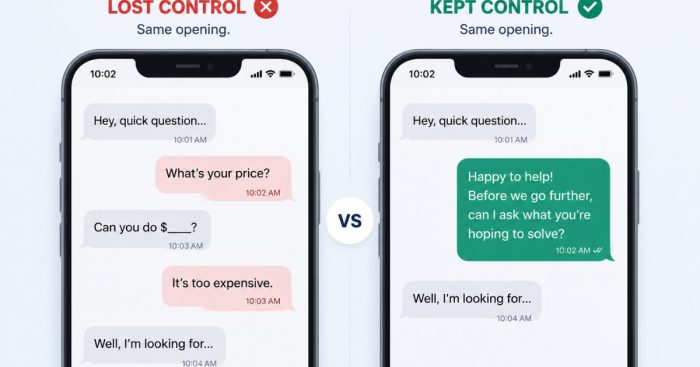
Because when the patient drives the conversation, pricing becomes the first topic discussed. Consequently, any price quoted without a value stack sounds expensive.
The Common Mistake
Listening to a real CardioMender weight-loss call, the patient asked:
“Do you offer weight loss shots?”
The team member immediately responded:
“Absolutely, we offer those — along with a B12 injection to help with your energy level…”
At that point, control was lost.
The team member began explaining features before learning:
- The patient’s name
- What the patient had tried before
- Whether the patient was a first-time GLP-1 user
- What outcome the patient actually wanted
As a result, the conversation shifted into comparison-shopping mode.
The Better Framework
Instead, the conversation should follow a structured path.
For example:
“Absolutely, we offer those. Who am I speaking with today?”
First, get the name.
Next, begin qualification:
- Were you looking for semaglutide or tirzepatide?
- Is this your first time taking it?
- Have you tried anything similar before?
Only after discovery should the team member begin presenting solutions.
Why Control Matters
Once control is established:
- Discovery improves.
- Qualification improves.
- Value stacking becomes easier.
- Consult bookings increase.
What does it mean to keep a cash-pay sales call in the emotional state vs the logical state?
Emotional state is where patients begin. Logical state is where many clinics accidentally push them.
What Emotional State Sounds Like
Patients call because they are:
- Frustrated
- Concerned
- Uncomfortable
- Ready for change
In other words, they are thinking about outcomes.
Examples include:
- “I want my energy back.”
- “I need to lose weight.”
- “I’m tired of living with pain.”
What Logical State Sounds Like
Once the conversation shifts into features, patients begin asking:
- How much does it cost?
- What exactly is included?
- Is this better than another clinic?
At that point, conversion becomes harder.
How to Keep Patients Emotional
Tie every feature to a meaningful outcome.
For example:
“We bundle the EKG because you’re going to be on a medication that can affect cardiac rhythm and we want to make sure you’re cleared safely.”
The patient hears safety.
The patient hears protection.
Therefore, the conversation stays outcome-focused.
Simply saying:
“We include an EKG.”
pushes the discussion toward logic.
Why This Appears on the Scorecard
Line item #7 exists for this reason.
The recording reveals whether the patient remained emotionally connected to the outcome or shifted into comparison mode.
A regenerative medicine clinic we worked with hit a 79.4 percent conversion rate from lead to booked appointment partly because the team graded itself against this exact rubric every week.
How does a cash-pay clinic actually run a weekly sales call QA review?
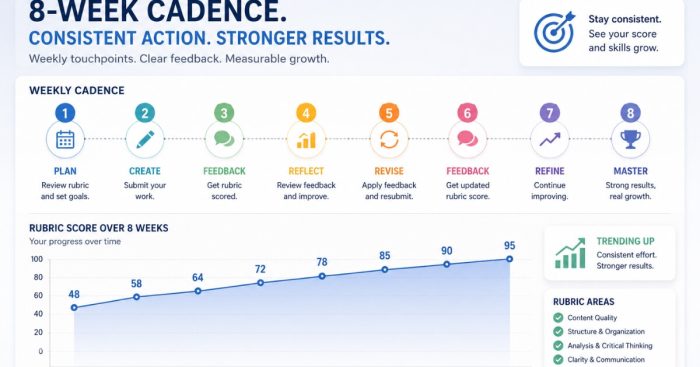
Thirty minutes.
Same day.
Same time.
Every week.
Selecting Calls
Managers should choose calls from the prior week.
Typically, the mix includes:
- Two strong calls
- One missed-opportunity call
This balance keeps reviews constructive.
Running the Session
Play each recording in full.
Then score the call live against the 10-point rubric.
During the review:
- Highlight one win to repeat.
- Identify one mistake to fix.
- Limit coaching to three points or fewer.
Why Audio Matters
Written feedback helps.
However, hearing the call creates the breakthrough.
Most team members instantly recognize mistakes when they hear themselves.
Therefore, audio review consistently outperforms transcription-only coaching.
Typical Results
Clinics implementing this process often see:
- 10–25 percentage point improvements in inbound-to-booked conversion
- Measurable gains within 90 days
- Stronger consistency across the team
What’s the difference between a 5-out-of-5 sales call and a 3-out-of-5 sales call on this scorecard?
A 5-out-of-5 call sounds like a consultation. By contrast, a 3-out-of-5 call sounds like a transaction.
What a 5-Out-of-5 Call Sounds Like
The team member:
- Answers with energy
- Captures contact information immediately
- Runs discovery before pitching
- Uses the listen-back rule
- Controls every transition
- Keeps the patient emotional
- Stacks value before discussing price
- Offers two specific consult times
As a result, the patient feels guided.
What a 3-Out-of-5 Call Sounds Like
The team member:
- Jumps into features
- Lets the patient control the flow
- Reveals pricing too early
- Asks open-ended closing questions
The call still books some consults.
However, it books fewer consults and creates weaker expectations.
Which line items on the scorecard move the conversion rate the most when fixed first?
Capture (line 3), control of the conversation (line 6), and emotional state (line 7) — in that order.
Priority #1: Capture
Capture is the fastest win.
When a team member secures:
- Name
- Phone number
- Email address
within the first minute, the lead can still be recovered if the call drops unexpectedly.
Priority #2: Control
Control is the foundation of the framework.
Once the team member controls the flow:
- Discovery happens naturally.
- Qualification improves.
- Value stacks land more effectively.
- Closing becomes easier.
Priority #3: Emotional State
Keeping the patient emotional changes how pricing is perceived.
Instead of thinking:
“That’s expensive.”
patients begin thinking:
“That seems reasonable for the outcome I want.”
Why This Order Works
Most cash-pay clinics that improve these three areas see conversion rates increase by 15–30 percentage points within 60 days.
After that, refining the remaining seven scorecard items typically adds another 5–10 points.
A medspa where we added $6.7M in revenue across 3,727 new patients in one year ran the QA loop weekly across its 2,500 monthly inbound calls per location, every week, for years.
What’s the next step?
If your clinic records inbound calls but does not review them against a structured rubric, valuable conversion data is being wasted every day.
What Happens on the Strategy Call?
During the call we will:
- Listen to a recorded inbound call
- Score it against the 10-point framework
- Identify conversion leaks
- Design a weekly QA process
- Establish score-tracking benchmarks
Why the Process Works
Most clinics already possess the data.
The challenge is that they are not using it consistently.
The scorecard provides the framework.
The weekly listening session creates the behavior change.
The Opportunity
Clinics that install a weekly QA loop often improve inbound conversion rates by 15–30 percentage points within 60 days.
The reason is simple:
The team finally hears itself the same way patients hear it.