
How Profitable Is GLP-1 / Semaglutide at a Cash-Pay Clinic? (And How to 4× Patient Lifetime Value)
INTRO:
GLP-1 is the most popular cash-pay weight-loss product in the country right now — and the most under-monetized patient in cash-pay medicine. Most clinics keep about $600 in margin per GLP-1 patient over the first three to four months and then watch the patient disappear, forcing the clinic to spend on acquisition all over again. The clinics doing it right keep $2,200+ from the same patient over twelve months and retain them for years. This is the FAQ on what that journey looks like and why labs — not pitches — are the engine.
——————————————————————————
How profitable is a GLP-1 / semaglutide patient at a cash-pay clinic?
For most clinics, about $600 in margin over three to four months. For clinics running a structured patient journey, $2,200 or more in margin in the first twelve months — and a patient who stays for years.
The default cash-pay GLP-1 economics look like this: patient comes in, gets a script, pays $400 to $600 a month for three or four months, and the clinic collects $1,600 to $2,400 in revenue with a margin that depends on the vendor and dose. The conservative margin number is $600 per patient kept over the four-month treatment window. After month four, most patients are gone — they’ve hit their weight-loss goal, the price feels less justified once they’re stable, and nobody from the clinic is actively designing a next step.
The version of this that works is dramatically different. Same first four months ($1,600 to $2,400 revenue, $600 to $1,500 kept). Then a structured second phase (months 4–7) at $300 to $700 a month on peptides, hormones, or concierge care ($1,200 to $2,800 revenue, $800 to $2,000 kept on better margins). Then a third phase (months 8–12) at the same monthly price ($1,200 to $2,800 revenue, $800 to $2,000 kept). End of year one: $2,200+ kept per patient and a relationship that’s set up to renew. The acquisition cost paid back in month three; everything after that compounds.
This is the real story behind how profitable GLP-1 is for a cash-pay clinic. The prescription itself rarely creates extraordinary economics. The profitability comes from building a structured patient journey that turns a four-month weight-loss program into a twelve-month clinical relationship with multiple opportunities for retention, recurring revenue, and additional services.
——————————————————————————
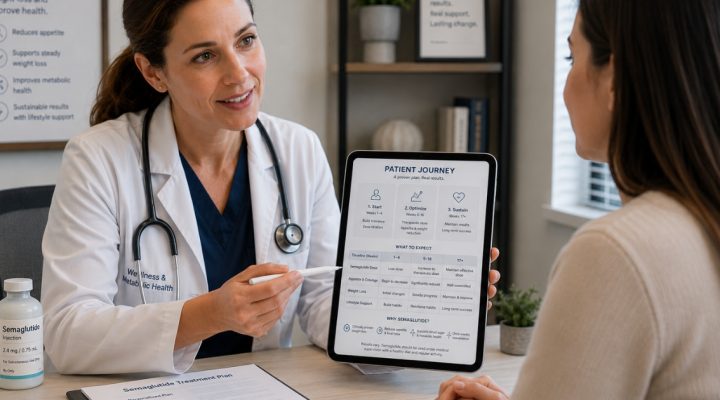
What does an ideal GLP-1 patient journey look like at a cash-pay clinic?
Four phases: baseline labs (day 1), GLP-1 protocol (months 1–4), retest labs and second program (months 4–7), retest labs and third program (months 8–12).
**Day 1 — Baseline labs.** New patient comes in. Before any prescription is written, the clinic pulls comprehensive baseline labs — testosterone, thyroid, metabolic panel, vitamin and mineral status, inflammation markers. The labs do two jobs at once. They confirm the patient is clinically appropriate for GLP-1 therapy (rules out the rare contraindication), and they surface adjacent issues (low T in men, hormone imbalance in women, vitamin deficiencies) that will become the basis for the next program.
**Months 1–4 — GLP-1 protocol.** Standard semaglutide or tirzepatide protocol at the clinic’s monthly price. The consult sets the expectation up front: at the end of month four, the clinic will run labs again to track progress and identify the next phase of care. This expectation is the key piece — without it, month four becomes a goodbye instead of a transition.
**Month 4 — Retest labs + 60-minute consult.** Roughly $150 to $200 in lab cost, built into the price so the patient doesn’t see a separate charge. The 60-minute consult reviews the bloodwork side by side with the day-one numbers. Weight is down. Some hormone numbers have shifted (GLP-1 affects testosterone in men). Some original deficiencies are still there. The clinic now has clinical data to recommend the second phase, and the patient is hearing about it from their own bloodwork rather than from a salesperson.
**Months 4–7 — Peptides, hormones, or concierge.** Whatever the clinic offers as a next step. Peptides ($300 to $500/month). HRT ($300 to $700/month). A concierge program if peptides and hormones aren’t in the clinic’s scope ($400 to $700/month). The math here is better than GLP-1 because the margins on peptides, hormones, and concierge are higher than on GLP-1 scripts.
**Month 8 — Retest labs + 30-minute consult.** Same structure. Quick lab review, “how are you feeling,” surface the next opportunity.
**Months 8–12 — Third program.** Continued hormones, expanded concierge, or graduation to a maintenance tier. The patient is now twelve months into the clinic and the relationship is durable.
Why are labs the most effective selling moment at a cash-pay clinic?
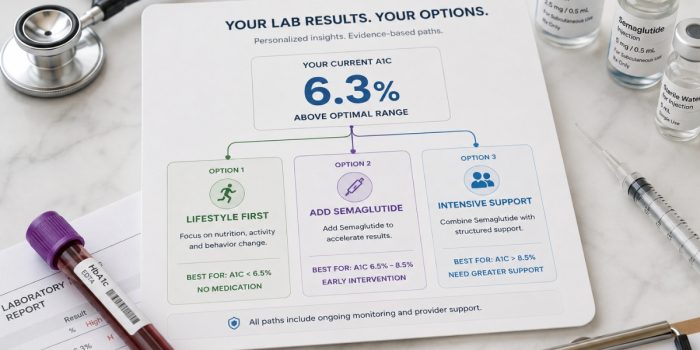
Because the bloodwork co-diagnoses with the patient. The patient isn’t being sold a new program — they’re being shown a number that’s still off and asked what they’d like to do about it.
The script that works at the month-four consult is roughly: “Your weight loss has been great. Your testosterone has come down from where it was at baseline, your thyroid is still in the lower end of the range, and your vitamin D is still deficient. Here’s what’s going on inside your body. You’ve got three options to address it: peptide therapy, hormone replacement, or a concierge program that covers all of the above. Which one do you want to do?” The clinic isn’t pitching. The bloodwork is.
This works for two reasons. First, the patient is choosing between options at the clinic — not between the clinic and a competitor. Once they’re in front of their lab results, the alternative isn’t a different clinic; it’s no treatment at all. Second, the consult presents the recommendation as the doctor and the patient co-diagnosing rather than the doctor selling. The patient’s trust in the recommendation is higher because they were shown the underlying data, and the doctor’s discomfort with “the sales conversation” disappears because they’re just explaining the labs.
What’s the math on the GLP-1 patient journey across a full year?
$600 kept (default 4-month GLP-1 only) versus $2,200+ kept (structured 12-month journey). Same first patient acquisition. Roughly 4× the lifetime value.
The conservative math: $600 kept on GLP-1 (months 1–4) + $800 kept on the second program (months 4–7) + $800 kept on the third program (months 8–12) = $2,200 kept in year one. The aggressive math: $1,500 kept on GLP-1 + $2,000 kept on the second program + $2,000 kept on the third program = $5,500 in year one. The realistic per-patient outcome sits somewhere in between depending on the clinic’s price points and margins.
Now apply that to the acquisition math. If a clinic is paying $200 per acquired GLP-1 patient and keeping $600 over four months, the unit economics are okay but every new month requires the same $200 in fresh acquisition spend just to maintain revenue. If the clinic is paying $200 per acquired patient and keeping $2,200 over twelve months, the same acquisition spend produces 3.5× the cash collected per patient. The clinic can either double its profitability without changing acquisition spend, or hold profitability steady and reinvest the difference into compounding acquisition. “A medspa we work with added $6.7M in revenue in a single year on the back of weight-loss-driven acquisition that was structured to continue past the GLP-1 program — 3,727 new patients moved through GLP-1 and a meaningful share of them onto adjacent recurring programs that kept the per-patient LTV well above the GLP-1-only number”.
——————————————————————————
Should a cash-pay clinic offer GLP-1 even if hormones and peptides aren’t in scope?
Yes, but only if a concierge program is built to catch the patient at month four. Otherwise the clinic is acquiring expensive customers and losing them at the moment they become most valuable.
If the clinic doesn’t prescribe hormones or peptides, the post-GLP-1 retention path has to be built differently. A concierge membership — monthly access to the nurse practitioner or PA, quarterly comprehensive labs, ongoing weight maintenance, nutritional and supplement support, optional aesthetic or wellness add-ons — priced at $300 to $700/month captures the same retention without requiring HRT licensure. The patient pays for the relationship and the access rather than the prescription. The clinic keeps the margin and the recurring billing.
The wrong move is to offer GLP-1 with no plan for month four. The clinic acquires patients at scale, runs them through a 4-month program, and watches them all walk out the door at the moment they’re most willing to spend on the next thing. Closing that retention gap is one of the biggest priorities in GLP-1 & weight loss clinic marketing because long-term profitability depends on extending the patient journey beyond the initial prescription. Acquisition spend compounds against the clinic instead of for it. The fix is operational, not clinical: build the next program, build the retest-labs trigger, build the consult script.
——————————————————————————
How do I transition a cash-pay clinic from GLP-1 transactional to GLP-1 + journey?
Three changes, in this order. Add baseline labs to the day-one intake. Set the month-four lab retest as a fixed expectation at the day-one consult. Build the second-program offer before the first wave of patients hits month four.
The intake change is the easiest. Every new GLP-1 patient gets a comprehensive lab panel on day one as part of the intake fee. Cost is $150 to $200 to the clinic, which folds into the existing program price. The clinical benefit is real (catching contraindications, baselining the patient). The strategic benefit is bigger (creating the dataset that justifies the month-four conversation).
The expectation-setting change is the second easiest. The day-one consult ends with: “We’ll do this again at the end of month four — same labs, full review, plan the next phase together.” Patients who hear this on day one don’t feel surprised at month four. Patients who don’t hear it on day one feel like they’re being upsold.
The third change is the hardest because it’s product work. Build the second-program offer (peptides, hormones, or concierge) with a clear monthly price, a clear inclusion list, and a clear delivery model before the first month-four labs come back. Without the offer ready, the consult either pitches nothing (patient gone) or pitches something improvised (patient skeptical). “An HRT clinic that grew from $1M to $4M over four years built its $1,000/month membership product first and then designed the patient journey to move new patients into it — 250 active members now produce $1.7M a year in recurring revenue alone”.
——————————————————————————
What’s the next step?
If you’re a cash-pay medical practice owner running GLP-1 and watching patients disappear at month four — or thinking about adding GLP-1 and not sure how to make the unit economics actually compound — book a strategy call. In 60 minutes we’ll audit your current GLP-1 patient journey, design the month-four trigger, and outline the second-program offer for your specialty. If it’s a fit, we’ll fly to your clinic and build it with your team over 90 days.